

Five Best Compostable Disposable Cups
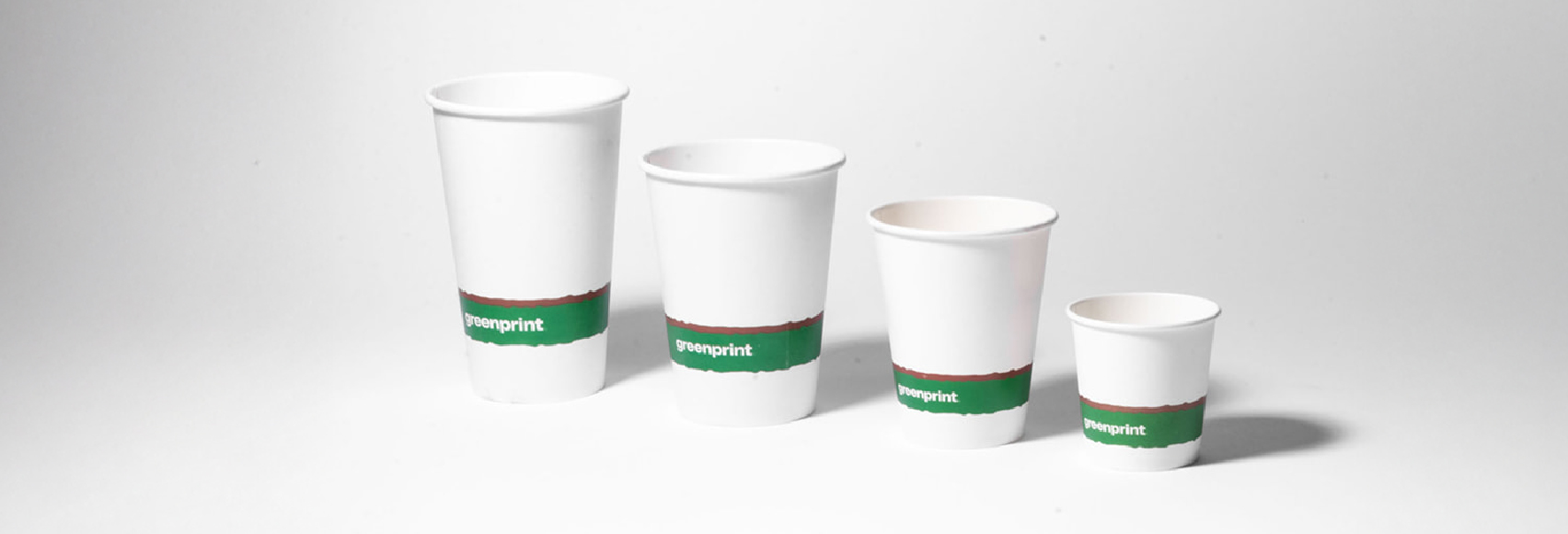


Choosing a disposable cup comes down to two practical questions: are you serving hot or cold beverages, and what disposal system does your operation have access to? In the foodservice industry, takeout cups and lids are a staple, so the right compostable cup depends on beverage temperature and your local composting access. Compostable disposable cups can be a strong fit when they match your waste stream. We’ve compiled a list of the five best compostable cups to help inform your choices in single-use items.
How to Choose the Best Disposable Cups for the Environment and for Your Business
Not all disposable cups are the same. Manufacturers make cups from different materials, which offer varied durability and require different disposal methods. Knowing the material is the first step, because it determines how the cup breaks down and where.
Here are the main options you’ll encounter:
- Paper with a plant-based lining: Paper cups lined with a bio-based coating instead of petroleum plastic, typically used for hot beverages.
- Clear PLA: Cups molded from polylactic acid, a plant-based bioplastic used for cold drinks, which breaks down only at a commercial composting facility.
- Bagasse and molded fiber: Sugarcane fiber pressed into cups and other foodware, common for compostable service items.
- PHA-lined paper: Paper coated with polyhydroxyalkanoate, a bio-based polymer, used by some hot cup makers.
The most important distinction is home compostable versus industrially compostable. Most compostable cups, including clear PLA cups, need an industrial or commercial facility that maintains 55 to 60°C, not a backyard pile. A smaller set of products are certified home compostable. The way to verify either claim is the certification on the packaging: look for BPI, ASTM D6400 or D6868, EN 13432, or TÜV Austria OK Compost (INDUSTRIAL or HOME). These certifications are how buyers confirm a compostability claim rather than taking it on faith.
Before choosing your cups, know whether you want compostable coffee cups or soda cups, as hot and cold beverage cups differ. Cups for hot beverages are usually thicker and stiffer to provide heat insulation. Use these compostable hot cups to serve coffee, hot tea, hot chocolate, or other hot drinks. Pour iced coffee, juice, smoothies, iced tea, soda, water, or other cold beverages into compostable cold cups. With a variety of products on the market, here’s a look at the options that suit your business.
1. Greenprint Hot and Cold Compostable Cups
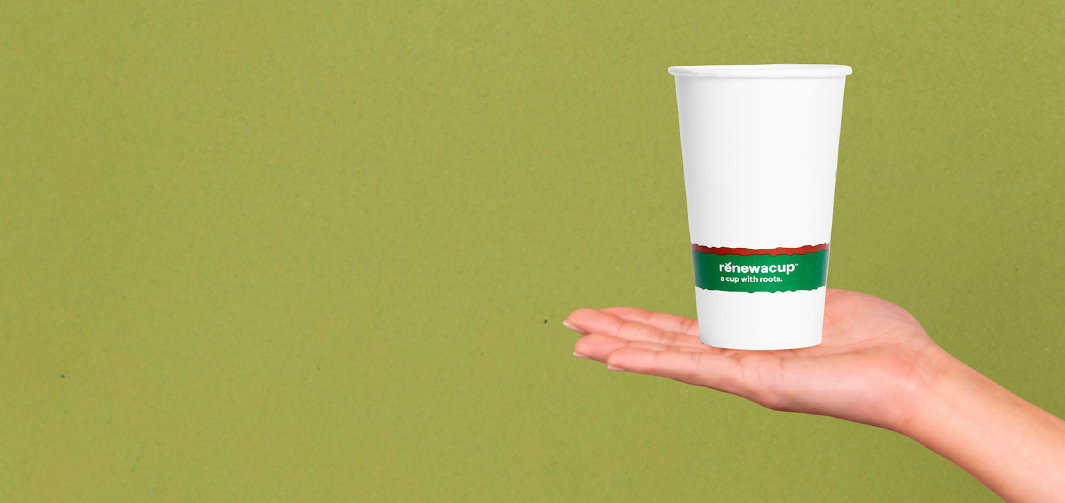
Greenprint® is an innovator in sustainable single-use products for foodservice applications. Our cups line covers two distinct products for hot and cold service, and we describe them separately because they use different materials and carry different certifications. You can explore both through our cups collection.
Our hot cups, Renewacups™, are made from Foopak Bio Natura, a bio-coated paper that is 98.75% plastic-free. They are verified PFAS-free by Intertek across 62 tested compounds, which is the most comprehensive PFAS panel in our portfolio, and migration testing confirms they are safe for hot beverages. Our clear cold cups, Clearly Compostable™, are made from PLA and are industrially compostable, certified by BPI Industrial Compostable (ASTM D6400/D6868) and TÜV Austria OK Compost INDUSTRIAL (EN 13432). Because they are industrially compostable, they need a commercial composting facility that reaches 55 to 60°C, not a backyard bin.
Greenprint Compostable Cup Pros and Cons
Pros:
- Renewacups™ hot paper cups are 98.75% plastic-free.
- Renewacups™ are verified PFAS-free by Intertek across 62 compounds.
- Clearly Compostable™ clear cold cups are industrially compostable, certified by BPI and TÜV Austria OK Compost INDUSTRIAL.
- Several sizes available.
- Hot and cold beverage cups available.
- Next day shipping and competitive pricing.
- Neutral appearance suits any brand.
- Custom design and printing options.
Cons:
- Clearly Compostable™ cold cups require an industrial composting facility, not home composting.
- PFAS testing for Clearly Compostable™ is not yet complete, so we make no PFAS-free claim for the clear cup.
- Only available in white.
2. Phade Compostable Cups
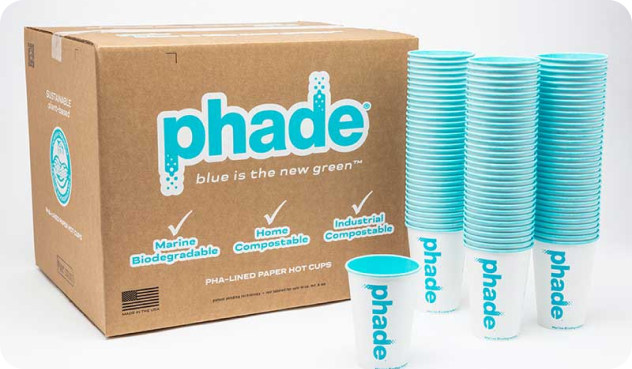
Phade single-use cups are made from paper and coated with PHA, a material derived from canola oil. Their features and attributes are much like our compostable cups, though their branding might not be the best match for all applications. You can serve any kind of hot drink in these cups.
Phade Compostable Cup Pros and Cons
Pros:
- PHA-lined paper, compostable per its certification.
- No plastic lining.
- Recycle or compost depending on your local program.
Cons:
- Phade branding is prominent and might clash with your branding.
- No style or color alternatives.
- Limited cup and package sizes currently available.
- Expensive compared to alternatives.
- Limited availability.
3. World Centric Compostable Cups
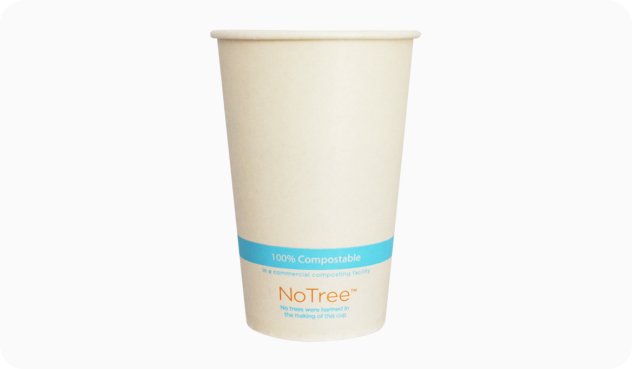
World Centric offers an extensive selection of hot and cold single-use cups and accessories, including lids and sleeves. Made from paper and PLA, their products are certified compostable. World Centric also donates a portion of its profit to grassroots social and environmental organizations.
World Centric Compostable Cup Pros and Cons
Pros:
- Lots of styles and sizes.
- Hot and cold cups.
- Paper and PLA construction.
- Neutral styles.
- Certified compostable.
- Mid-range pricing.
Cons:
- PLA may not be recyclable in your curbside program.
- PLA requires temperature-controlled storage to prevent warping.
4. Go-Compost Compostable Cups
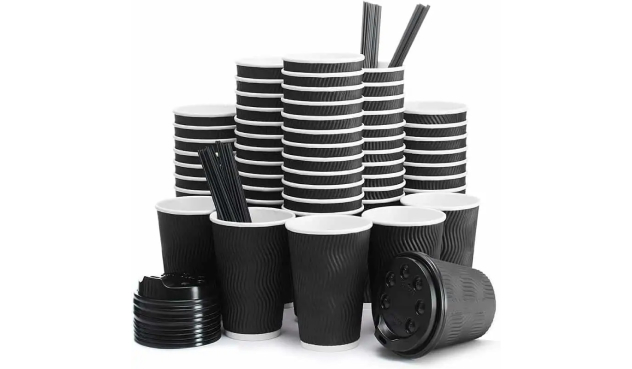
Go-Compost offers hot and cold beverage cups and accessories in various sizes and colors made from paper and PLA. They also supply lids made from recyclable plastic. Their company focuses exclusively on compostable products, offering a wide range of everyday items and composting equipment beyond foodservice items. When you opt for a Go-Compost cup, you might consider purchasing some of their composting equipment if composting services are not included in your curbside program.
Go-Compost Compostable Cup Pros and Cons
Pros:
- Diverse selection of styles and colors.
- Three sizes.
- Certified compostable.
- Neutral appearance.
Cons:
- PLA may not be recyclable in your curbside program, and must be composted.
- PLA requires temperature-controlled storage.
- Mid-to-high pricing.
5. Good Start Packaging Cups
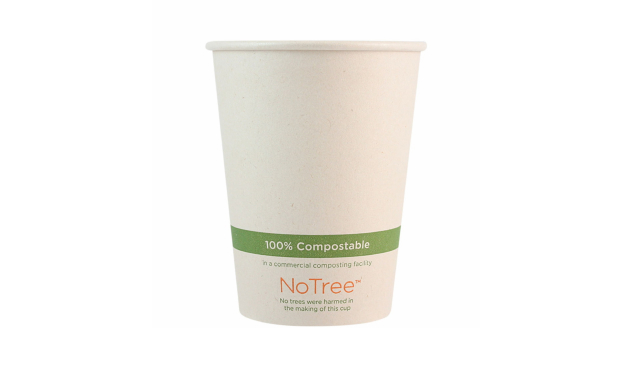
Good Start has been supplying sustainable products to the food industry for 15 years, and their compostable disposable cups are made from paper lined with PLA for hot beverages and PLA bioplastic for cold drinks.
Good Start Compostable Cup Pros and Cons
Pros:
- Hot and cold cups in various sizes.
- Excellent selection of lids and other accessories.
- Paper and PLA for hot, PLA for cold beverages.
- Neutral branding with compostable certification clearly displayed.
- Certified B Corp.
Cons:
- PLA may not be recyclable, and is compostable only.
- Cold beverage cups are not home compostable and require industrial composting.
- PLA requires temperature-controlled storage.
Frequently Asked Questions
Are Compostable Cups Home Compostable or Do They Need an Industrial Facility?
Most compostable cups, including clear PLA cups, need an industrial composting facility that maintains 55 to 60°C. Only products certified to TÜV Austria OK Compost HOME are verified to break down in a backyard compost setup.
Are Compostable Cups Recyclable?
Generally no. The PLA lining on most compostable cups contaminates paper recycling streams, so these cups should be composted rather than placed in recycling.
How Long Do Compostable Cups Take to Break Down?
In an industrial composting facility, certified cups typically break down within about 60 to 90 days. Home composting, where applicable, takes considerably longer.
What Certifications Should I Look For?
Look for BPI, ASTM D6400 or D6868, EN 13432, and TÜV Austria OK Compost (INDUSTRIAL or HOME). These are the standards that verify a compostability claim per FTC Green Guide guidance.
Are Compostable Cups Safe to Drink From?
Yes, compostable cups are made for food contact and are safe to drink from. Our Renewacups™ hot cups are also verified PFAS-free by Intertek across 62 tested compounds.
What’s the Difference Between Compostable and Other Sustainability Terms?
Compostable means a product is certified to fully break down to a defined standard, such as ASTM D6400 or EN 13432. We avoid vaguer terms because they are not tied to a verifiable standard, which is what FTC Green Guide guidance asks for.
For the best quality and value, shop Greenprint Products compostable cups today.

Earth Day facts that show the scale of the environmental crisis, from plastic and landfill waste to CO2 and wildlife loss. See what the numbers mean for you.

Minnesota plastic ban rules for businesses, including city bag fees, Green To Go takeout packaging, PFAS limits, compostable labels, and EPR dates to plan for.
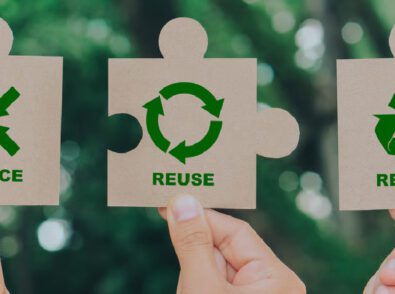
Reduce reuse recycle explained in plain terms. Learn what each of the 3 Rs means, why the order matters, and how compost completes the set as the 4th R.