

Virginia Plastic Ban: Single-Use Plastic Laws Guide



Virginia Plastic Ban and Single-Use Plastic Laws Explained
Virginia does not have one sweeping single-use plastic ban. The Virginia plastic ban is really a set of single-use plastic laws: a statewide ban on polystyrene foam food containers, plus a local-option tax on disposable plastic bags. These rules affect food vendors and shoppers, and they take effect on set dates. Here is what applies to your business, and when.
What Does Virginia’s Single-Use Plastic Ban Cover?
Virginia’s rules target two things: foam food containers and plastic checkout bags. The state bans expanded polystyrene (EPS) food service containers everywhere in the Commonwealth. Expanded polystyrene is the rigid foam commonly called Styrofoam, used for cups, plates, bowls, trays, and hinged clamshells.
The state does not have a blanket ban on straws, utensils, or plastic bags. Instead, any city or county can add a small tax on disposable plastic bags. So the single use plastic ban here is a patchwork: one statewide foam rule, plus local bag taxes that differ by locality.
That patchwork matters, because your obligations depend on your business size and where you operate. Neighboring states run their own systems, which we cover in our guides to Maryland’s single-use plastic law, Massachusetts’ single-use plastic rules, and Rhode Island’s plastic regulations.
Here is how Virginia’s two main rules compare at a glance:
Rule | What It Covers | Where It Stands |
|---|---|---|
EPS foam container ban (HB1902) | Foam cups, plates, bowls, trays, and clamshells used by food vendors. | Statewide. Full effect July 1, 2026. |
Disposable plastic bag tax | 5-cent tax on plastic checkout bags at grocery, convenience, and drug stores. | Local option. Applies only where a locality adopts it. |
Read each row as a separate obligation. A restaurant faces the foam ban but not the bag tax, while a grocery store in a participating locality faces both.
Virginia’s Polystyrene Foam Container Ban
The core of the Virginia plastic ban is HB1902, passed in 2021. It bars food vendors from dispensing prepared food in EPS foam food service containers. According to Virginia’s Department of Environmental Quality, the banned items include foam cups, plates, bowls, trays, and clamshell takeout containers.
The law defines food vendors broadly. It covers restaurants, grocery stores, supermarkets, delis, caterers, and food trucks, plus any organization or government entity that regularly provides prepared food. If you serve ready-to-eat food, the rule likely reaches you.
The Virginia styrofoam ban phases in by business size. Chains with 20 or more locations had to stop using foam containers by July 1, 2025. All remaining food vendors must comply by July 1, 2026, under the state’s phased compliance schedule.
There is limited relief. A locality can grant a one-year hardship exemption if a vendor shows that replacing foam would cause undue economic hardship, and the vendor can reapply if the hardship continues.
Penalties are real but modest. A food vendor that violates the expanded polystyrene ban can face a civil penalty of up to $50 for each day of violation. Collected penalties support litter-control and recycling programs.
The ban also reaches sales, not just service. A covered vendor cannot use, sell, or offer foam food containers once its deadline passes. State agencies point vendors toward reusable, recyclable, and compostable containers as the approved alternatives.
Why single out foam? Virginia’s environmental regulators report that very little expanded polystyrene is recycled, and the material breaks apart into long-lasting litter. It is also made with styrene, a compound flagged as a possible carcinogen.
Virginia’s Disposable Plastic Bag Tax
Virginia has no statewide plastic bag ban. Instead, a 2020 law lets any city or county adopt a 5-cent tax on each disposable plastic bag. The tax applies at grocery stores, convenience stores, and pharmacies.
A tax is not a ban. Shoppers can still take a plastic bag; they simply pay 5 cents per bag where the tax is in effect. Retailers collect the tax and file it with the state.
Filing runs through the Virginia Department of Taxation. Retailers report the bag tax on their sales and use tax return, and payment is due by the 20th of the month after the sale. Paper bags are not taxed, though a store may set its own paper-bag charge.
The Virginia plastic bag tax does not cover everything. It excludes durable reusable bags, bags used to wrap perishable or bulk food, bags for dry cleaning or prescription drugs, and packaged garbage or pet-waste bags. It also does not apply to restaurants.
Only localities that pass an ordinance charge the tax, so coverage varies across the state. Adopters include Fairfax County, Arlington County, and the cities of Alexandria and Fredericksburg. Revenue funds environmental cleanup, waste-reduction education, and reusable bags for SNAP and WIC recipients. For the national picture on where bags are restricted, see our roundup of states that ban plastic bags.
State Agency Rules Under Executive Order 77
In March 2021, Governor Ralph Northam issued Executive Order 77. It directed Virginia state agencies to phase out single-use plastic items such as bags, cutlery, water bottles, and foam.
Executive Order 77 was later rescinded in 2022, so it no longer binds state agencies. Some public institutions kept their own single-use plastic policies anyway. If you supply state facilities, confirm the current policy directly with each agency.
How Virginia Food Businesses Can Comply
Start by confirming which rules apply to you. Check your business size for the foam deadline, and check whether your locality charges the bag tax. Some localities publish their own compliance guidance, such as Virginia Beach’s polystyrene container ban page.
Then take practical steps:
-
Audit your foam inventory and flag every EPS cup, plate, bowl, tray, and clamshell.
-
Switch to approved non-foam containers before your July 1, 2026 deadline.
-
If your locality taxes bags, set up collection and reporting on your sales and use tax return.
-
Apply for a one-year hardship exemption through your locality if you cannot source alternatives in time.
-
Tell your staff and customers what is changing and why.
Acting early pays off. Sourcing and testing replacements before the deadline gives you time to compare cost, performance, and supply without a last-minute scramble.
Virginia is one state in a shifting national map. For a full compliance walkthrough that works across states, read our plastic regulation guide for businesses. This article covers the Virginia specifics, and the general playbook lives there.
Compostable Alternatives to Banned Foodware
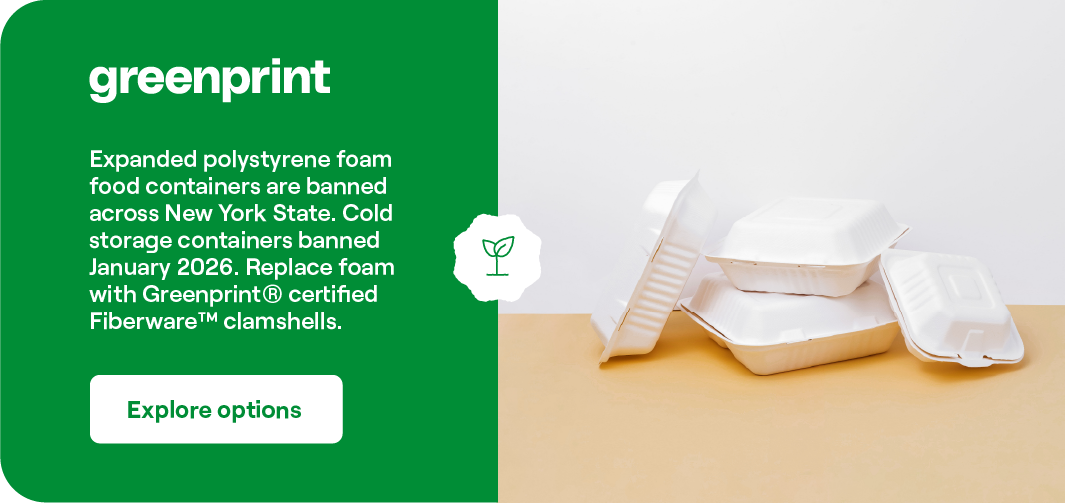
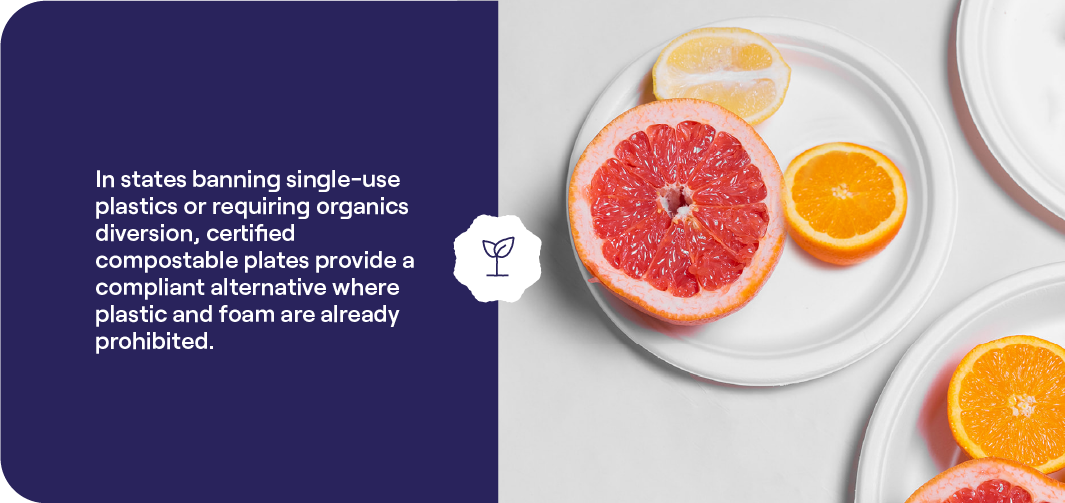
Once foam is off the table, you need replacements that perform and carry real certifications. Certified compostable foodware is a direct swap for banned EPS foam, and we build our lines around named certifications rather than broad labels.
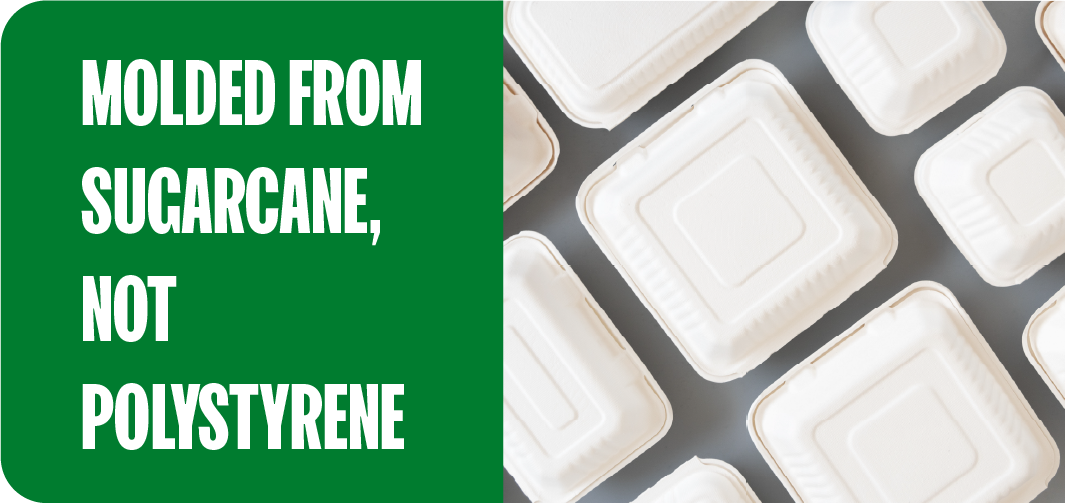
For foam clamshells, plates, and bowls, our Fiberware™ line is molded from bagasse, a sugarcane fiber, and is certified TÜV Austria OK Compost INDUSTRIAL. For cold drinks, our Clearly Compostable™ cups are made from PLA and carry BPI Commercial and TÜV Austria OK Compost INDUSTRIAL certification. Our cups are not made from our Agave Fibers.
These lines are built to hold up to real service, from hot entrees in fiber clamshells to cold drinks in clear cups. Matching the container to the food keeps quality high while you stay compliant.
For straws and cutlery, our Compostable Agave line is certified BPI Commercial compostable. Our agave straws also earn TÜV Austria OK Compost HOME certification, because an enzyme in the material breaks down the PLA at home compost temperatures. The cutlery uses the same base compound without that home-compost result, so it composts at industrial facilities.
Certifications tell you where an item actually breaks down, which keeps your claims honest under the FTC Green Guide. For a plain-English breakdown of what each seal means, see our guide to composting certifications. Ready to replace foam before your deadline? Explore our certified compostable foodservice packaging, or contact our team.
Frequently Asked Questions
Does Virginia Have a Statewide Plastic Bag Ban?
No. Virginia has no statewide bag ban, though any city or county may charge a 5-cent tax on disposable plastic bags at grocery stores, convenience stores, and pharmacies.
When Does Virginia’s Polystyrene Foam Ban Take Full Effect?
It takes full effect July 1, 2026, when all remaining food vendors must comply. Chains with 20 or more locations had to comply by July 1, 2025.
Can Restaurants Still Use Styrofoam Cups in Virginia?
Large chains already cannot. From July 1, 2026, all food vendors must stop dispensing prepared food and drinks in EPS foam cups and containers.
What Are the Penalties for Violating Virginia’s Foam Ban?
A food vendor can face a civil penalty of up to $50 for each day of violation.
References
- https://www.deq.virginia.gov/land-waste/waste-management/litter-prevention/foam-free-resources
- https://www.pwcva.gov/news/virginias-styrofoamr-ban-begins
- https://www.tax.virginia.gov/disposable-plastic-bag-tax
- https://foodpackagingforum.org/news/virginia-bans-polystyrene-and-single-use-plastics
- https://sustainability.virginia.edu/single-use-plastics
- https://communications.virginiabeach.gov/hot-topics/polystyrene-container-ban
- https://www.bpiworld.org/
- https://en.tuv.at/ok-compost-home-en/

Compostable straws vs plastic straws: compare materials, breakdown, certifications, and cost to pick the right certified compostable straw for your business.
Compare the best salad bowls with lids for takeout and catering, from bagasse to plastic, and choose industrially compostable options that keep salads fresh.
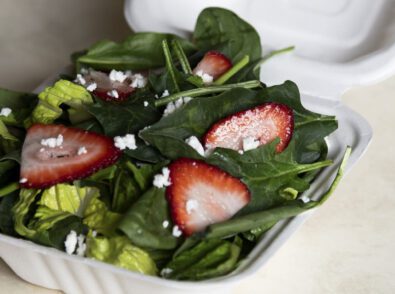
Compare the best compostable food containers for restaurants, from bagasse clamshells to PLA deli boxes. Choose certified, PFAS-free packaging with confidence.