

Agricultural Waste Material Innovation in Packaging


Content
- Types of Agricultural Waste Used in Packaging
- How Crop Residues Become Packaging Materials
- Agave Fiber and Other Plant-Based Packaging Breakthroughs
- From Field Waste to Finished Product
- Why Agricultural Waste Packaging Reduces Environmental Impact
- Choosing Agricultural Waste Packaging for Your Business
- Frequently Asked Questions
How Agricultural Waste Becomes Compostable Packaging
Every year, farms generate massive volumes of crop residues, husks, and processing byproducts. Farmers burn most of this material, bury it, or leave it to rot in open fields. But agricultural waste material innovation is changing that pattern. A growing number of packaging manufacturers now convert these discarded fibers into compostable foodservice products, turning a disposal problem into a material supply chain.
This shift matters for restaurant owners who want packaging that performs well, meets certified compostability standards from TÜV Austria or BPI, and holds up to third-party verification. Agricultural waste material innovation offers a path to packaging that starts as a crop byproduct and ends as compost.
Types of Agricultural Waste Used in Packaging
Agricultural waste falls into three broad categories, each with different properties for packaging.
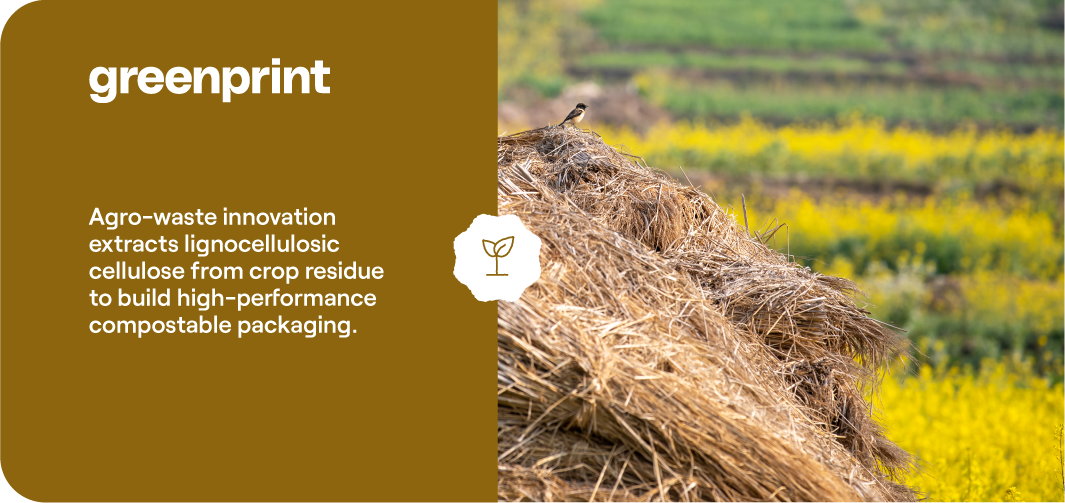
Crop residues include materials left after harvest: sugarcane bagasse (the fibrous pulp remaining after juice extraction), wheat straw, and rice husks. Bagasse is the most established packaging feedstock in this group because of its moldability and heat resistance.
Processing byproducts come from industrial manufacturing. Agave fiber, for example, is a byproduct of tequila production. Corn stover (stalks and leaves) also falls into this category. These materials often have strong fiber structures that translate well into durable packaging.
Food industry waste includes fruit peels, nut shells, and other organic remnants. These materials are less common in mainstream packaging today, but researchers are exploring them for coatings and fillers.
What makes all of these materials useful for packaging is their cellulose content. Manufacturers extract, pulp, and reform cellulose fibers into shapes that hold food, resist moisture, and decompose after use. The USDA Agricultural Research Service has documented how agricultural residues serve as viable feedstocks for bioplastic production.
How Crop Residues Become Packaging Materials
The conversion from field waste to finished packaging follows a general pathway. It moves through collection, cleaning, fiber extraction, molding or pressing, and finishing with coatings or treatments.
Each agricultural feedstock requires different processing conditions. Sugarcane bagasse goes through a hot-press molding process that shapes wet pulp into plates, bowls, and containers. For a detailed look at how bagasse becomes finished tableware, see the bagasse pulp molding process.
The processing step that matters most for final product quality is fiber preparation. Removing lignin, controlling fiber length, and managing moisture content determine whether the finished packaging holds up under real foodservice conditions.
Agave Fiber and Other Plant-Based Packaging Breakthroughs
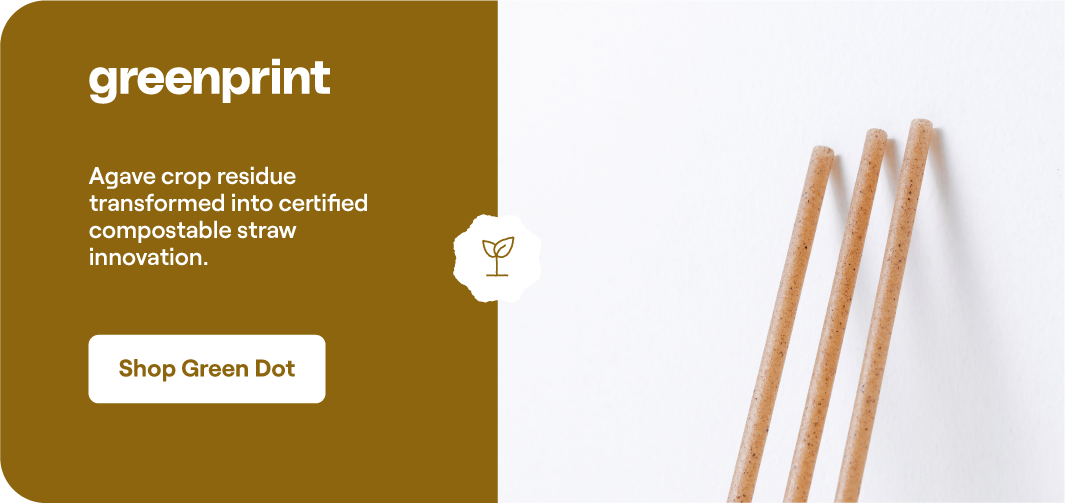
Among agricultural waste feedstocks, agave fiber stands out for its strength, availability, and untapped volume. In Jalisco, Mexico, tequila production generates over 350,000 tons of discarded agave fiber each year. Until recently, producers dumped or burned most of this waste.
Greenprint sources this post-tequila agave fiber and combines it (at 30 to 50 percent by weight) with PLA/PBAT and a proprietary enzyme masterbatch. The result is a bioplastic compound. The enzyme technology is the key differentiator. It catalyzes breakdown at ambient temperatures (20 to 30 degrees Celsius), enabling home compostability rather than requiring industrial composting infrastructure. For the full science behind agave fiber’s structural properties, see agave fiber structural composition and performance.
Beyond agave, other plant-based materials are entering the packaging space. Bamboo pulp offers rapid renewability. Palm leaf packaging uses fallen leaves pressed into rigid shapes without chemical processing. Researchers are also developing seaweed-based films as flexible wraps and sachets.
These materials represent the next generation of plant fiber packaging. They move beyond first-generation options toward feedstocks with stronger waste-diversion stories and broader geographic availability.
From Field Waste to Finished Product
Turning agricultural waste into compostable packaging certified to TÜV Austria OK Compost HOME or BPI requires a supply chain built for traceability and quality at every step.
It starts with sourcing: identifying consistent waste streams with reliable volume. Greenprint’s agave fiber supply comes from tequila distilleries in Jalisco, providing year-round feedstock tied to an established industry.
Next comes material processing: cleaning, fiber extraction, and compounding. For agave-based products, this means blending the fiber with PLA/PBAT and the enzyme masterbatch to create the bioplastic compound.
Manufacturing shapes the compound into finished products through injection molding (for straws and cutlery) or thermoforming.
Finally, certification validates that the finished product meets compostability standards. This involves standardized testing protocols that measure disintegration under controlled conditions. For more on how compostability testing works, see compostability disintegration and biodegradation testing. TÜV Austria OK Compost HOME certification confirms the product breaks down in home composting conditions. BPI certification, one of the most recognized commercial compostability marks in North America, requires passing ASTM D6400 standards. For details on BPI and the certification landscape, see emerging compostable certification standards.
Why Agricultural Waste Packaging Reduces Environmental Impact
Agricultural waste packaging addresses three environmental problems at once.
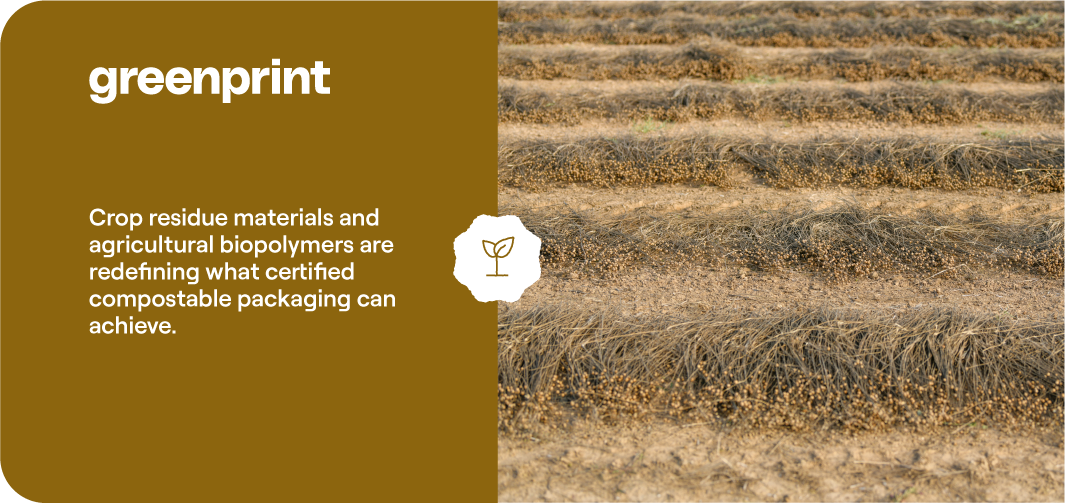
First, it diverts crop residues from burning and landfill. Open-field burning of agricultural waste is a major source of air pollution in farming regions. Converting that waste into packaging feedstock removes it from the burn cycle entirely. The USDA’s bioeconomy framework highlights the scale of opportunity in converting agricultural residues into biobased products.
Second, it displaces petroleum-based plastics. Every ton of plant-fiber packaging that replaces conventional plastic reduces dependence on fossil fuel extraction and petrochemical manufacturing.
Third, it closes the material loop through compostability. Packaging made from agricultural waste and certified compostable through TÜV Austria OK Compost HOME or BPI can return to soil after use. Waste fiber goes in, a compostable product comes out, and the product returns nutrients to the ground after its service life ends. For more on how the composting process works, see industrial composting facility operations.
This circular economy packaging model works best when home compostability is part of the picture. Products that require industrial composting facilities depend on infrastructure that many communities lack. For a closer look at those differences, see home versus industrial composting pathways. Products certified to TÜV Austria OK Compost HOME, like Greenprint’s agave-compound straws and cutlery, break down in backyard compost settings without specialized equipment.
Choosing Agricultural Waste Packaging for Your Business
If you operate a restaurant or small chain, evaluating agricultural waste packaging comes down to three questions.
Does it perform? Agricultural waste packaging must hold up under the same conditions as conventional options: hot food, cold drinks, sauces, and transport. Look for products tested under real foodservice conditions, not just lab settings.
Is it certified? Certification matters more than marketing language. Look for specific certifications by name. TÜV Austria OK Compost HOME confirms the product breaks down in home composting conditions. BPI confirms commercial compostability under ASTM D6400. Never accept a vague “compostable” claim without a named certifying body behind it. For a comparison of bioplastic types and their certification profiles, see bioplastic material types and certification requirements.
Can you verify the supply chain? The best agricultural waste packaging comes with sourcing transparency. Knowing where the fiber originates, how it gets processed, and what third-party verification backs the final product gives you a story you can share with your diners.
Greenprint’s agave-compound products, including straws and cutlery, are certified to TÜV Austria OK Compost HOME and BPI, PFAS-free with third-party verification, and traceable to post-tequila agave fiber sourced from Jalisco, Mexico. To try them in your operation, Get Samples.
Frequently Asked Questions
What Types of Agricultural Waste Can Be Turned into Packaging?
Sugarcane bagasse, agave fiber, wheat straw, rice husks, corn stover, bamboo, palm leaves, and various fruit and nut processing byproducts all serve as packaging feedstocks. Each material offers different structural, moldability, and compostability characteristics.
How Does Sugarcane Bagasse Become Compostable Packaging?
Producers clean, pulp, and hot-press mold bagasse into plates, bowls, and containers. See the bagasse tableware manufacturing process for the full production steps.
Are Agricultural Waste Packaging Materials Certified Compostable?
Many are, but certification varies by product and manufacturer. Look for TÜV Austria OK Compost HOME (home compostability) or BPI (commercial compostability under ASTM D6400) on the product or packaging. See compostable certification standards and their differences for a full guide.
References
- https://www.ars.usda.gov/oc/utm/repurposing-ag-waste-to-create-bioplastics/
- https://okcert.tuvaustria.com/ok-compost-home-en/
- https://www.usda.gov/about-usda/news/press-releases/2024/03/14/usda-outlines-vision-strengthen-american-bioeconomy-through-more-resilient-biomass-supply-chain
- https://www.mygreenprint.com/samples


Learn how the Colorado plastic ban and single-use plastic laws affect your business, from the bag fee and foam ban to local rules. Get compliant today.

See the Hawaii plastic ban and single-use plastic laws for Honolulu, Maui, Hawaii County, and Kauai, with dates, fines, and compliant foodware tips for 2026.

Nanoplastics vs. microplastics comes down to size. Learn how they differ, why researchers worry more about nanoplastics, and simple ways to reduce exposure.