

Agave Waste After Tequila Production: Where It All Goes


What Happens to Agave Waste After Tequila Production
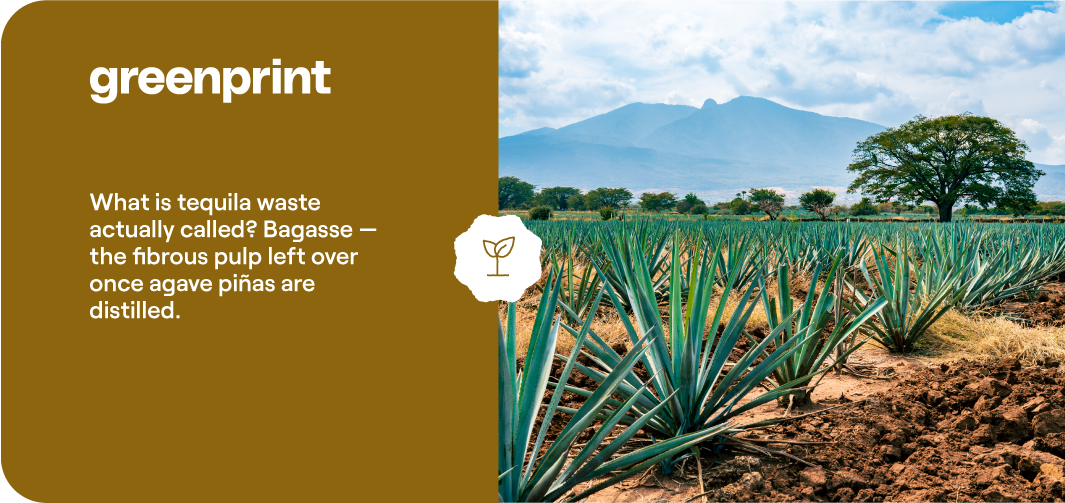
Every bottle of tequila starts with a blue agave plant. But what happens to the agave waste after tequila production? Distillers extract the sugary juice from the agave heart, or piña, and discard the remaining fiber. The scale of this leftover material is staggering. Mexico harvests over 100 million agave plants each year, according to Mexico’s Consejo Regulador del Tequila (CRT), generating hundreds of thousands of tons of fibrous waste with no clear destination.
That waste is called bagasse. For decades, it’s been treated as a disposal problem rather than a resource. But a growing number of industries are finding ways to turn tequila waste into something useful.
How Much Waste Does Tequila Production Create
Mexico’s tequila industry is one of the country’s largest agricultural sectors. The CRT reports that tequila production reached record levels in recent years, with over 600 million liters produced annually. Each agave plant yields only a fraction of its total weight as usable juice. The rest, roughly 40% of the harvested plant by weight, becomes fibrous waste.
That adds up fast. Industry estimates place annual agave bagasse output at approximately 350,000 tons or more across the Jalisco region alone. To put that in context, that’s enough organic waste to fill thousands of commercial trucks every year, piling up in rural areas with limited waste management infrastructure.
The tequila environmental impact goes beyond just the solid waste. The production process also generates vinasses, a liquid byproduct from distillation, which carries its own disposal challenges. But the sheer volume of solid agave bagasse is the more visible and persistent problem for farming communities across western Mexico.
Most distillers don’t have the equipment or economic incentive to process bagasse into anything useful. So it accumulates, gets burned, or ends up in places it shouldn’t.

What Is Agave Bagasse
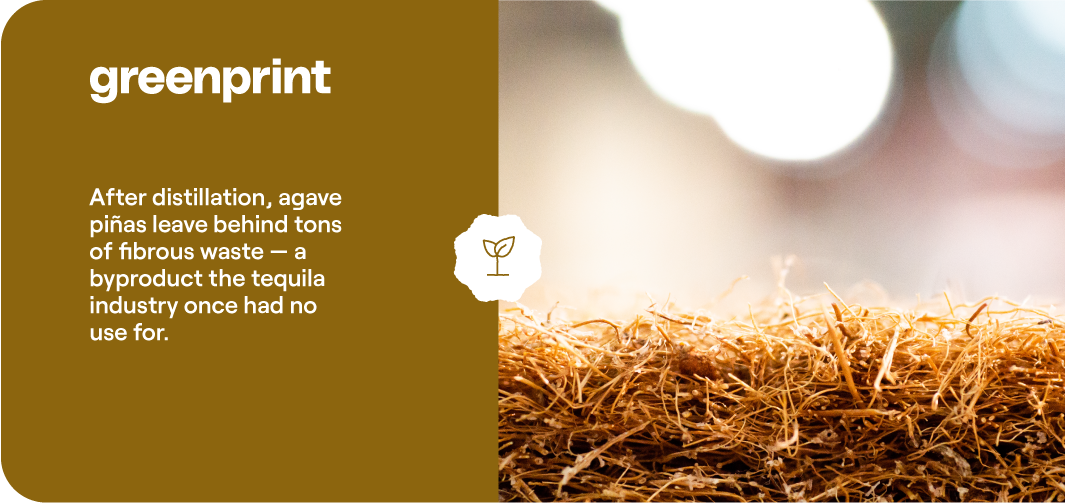
Agave bagasse is the fibrous material left after juice extraction from the agave piña during tequila production. If you’ve ever seen the stringy, pulpy remains at a distillery, that’s bagasse.
Its composition is primarily cellulose, hemicellulose, and lignin. You can read more about the science behind agave fiber composition in our detailed breakdown. These are the same structural compounds found in wood and other plant fibers. This makes bagasse tough, slow to break down naturally, and resistant to simple composting without processing.
The high cellulose content is actually what makes it interesting as a raw material. Cellulose provides structural rigidity. Hemicellulose acts as a binding agent between fibers. And lignin provides resistance to microbial breakdown, which is why untreated bagasse sits in piles for months without decomposing significantly.
It’s worth distinguishing bagasse from vinasses. Vinasses are the acidic liquid waste generated during the distillation step. They contain residual sugars, organic acids, and other compounds that can contaminate water sources if released untreated. Bagasse is the solid fiber. Both are byproducts of tequila production, but they present different environmental challenges and require different solutions.
When researchers and manufacturers talk about “tequila waste,” they’re usually referring to bagasse specifically, since it’s the larger-volume, more visible byproduct.
Why Untreated Agave Waste Harms the Environment
When agave bagasse has no productive destination, it creates real problems for the communities around it. Three disposal methods dominate in regions where waste management infrastructure is limited.
Open burning. Farmers and distillers burn bagasse piles to clear space. This releases particulate matter, carbon monoxide, and volatile organic compounds into the air. In Jalisco’s agave-growing valleys, burning contributes to local air quality issues that affect surrounding communities, according to Mexico’s environmental agency SEMARNAT. The smoke is especially harmful during dry months when air circulation is limited.
Illegal dumping in waterways. When burning isn’t practical, bagasse sometimes ends up in rivers and streams. The high organic load depletes dissolved oxygen in the water, harming aquatic life and contaminating downstream water supplies. This is a particular concern in rural areas where water treatment infrastructure is limited and communities depend on surface water.
Landfill accumulation. Bagasse that reaches landfills decomposes slowly due to its lignin content. It takes up space and generates methane as it breaks down without oxygen. Lignin’s resistance to microbial breakdown means bagasse can persist in landfills for years, taking up capacity that could otherwise go to non-recoverable waste.
None of these outcomes make sense when the material itself has useful properties. The cellulose and hemicellulose in agave bagasse can be processed into products that meet real market demand. Agricultural waste material innovation is turning these fibers into functional packaging, and agave sustainability starts with keeping this fiber out of waste streams entirely.
How Agave Waste Gets a Second Life
The growing awareness of agave sustainability has driven researchers, entrepreneurs, and manufacturers to find productive uses for this waste stream. Several agave upcycling pathways are now active or emerging, each tapping into different properties of the fiber.
Biofuel. Agave bagasse can be converted into bioethanol or biogas through fermentation or anaerobic digestion. Research institutions in Mexico, including the Universidad de Guadalajara, have studied these pathways. Commercial-scale production remains limited, but pilot programs continue to show promise.
Construction materials. Mixed with clay and other binders, agave fiber has been used to make adobe bricks and insulation panels. The fibers add tensile strength to earthen building materials, a practice with roots in traditional Mexican construction methods that dates back centuries.
Animal feed supplement. After processing to improve digestibility, some agave bagasse is used as a roughage supplement in livestock feed. However, the high lignin content limits its nutritional value without additional treatment, so adoption has been slow.
Compost. When properly managed, bagasse can be composted at industrial scale. The process requires shredding, moisture management, and time, but it produces a useful soil amendment for agriculture. This pathway works best when combined with nitrogen-rich materials to balance the carbon-heavy fiber.
Compostable packaging. This is where agave fiber enters the agave circular economy in a more direct way. Companies are now compounding agave fiber with compostable polymers to create food packaging products that are designed to compost at end of life. If you’re curious about what “upcycled” means in a packaging context, we’ve written a full explanation of upcycled packaging that covers how waste materials become functional products.
Of these pathways, compostable packaging offers a particularly direct model for sustainable tequila waste management. It turns a waste material into a product that itself is designed to return to the earth after use. Understanding the full lifecycle of compostable products shows how this closed-loop model works in practice.
Agave Fiber in Compostable Food Packaging
At Greenprint®, we source post-tequila agave fiber from small farming families in Jalisco, Mexico, and compound it with a PLA polymer blend combined with PBAT and a proprietary enzyme masterbatch at our vertically integrated facility in Santa Catarina, Nuevo Leon, Mexico. The result is an agave bioplastic compound that we control from raw material to finished product.
We don’t buy pre-made compounds from third-party suppliers. We formulate our own proprietary three-component material system in-house. That gives us full control over what goes into every straw and every piece of cutlery, and it means our supply chain is transparent from start to finish.
The enzyme technology is the key differentiator. It catalyzes hydrolysis of PLA polymer chains, enabling full breakdown at ambient temperatures of 20 to 30 degrees C. This is what allows our agave straws to achieve TÜV Austria OK Compost HOME certification, meaning they can compost in a home compost bin, not just in an industrial facility. Standard PLA without enzyme technology requires industrial composting at 55 to 60 degrees C and cannot achieve HOME certification.
Our Compostable Agave Cutlery uses the same proprietary compound but follows a different composting pathway. Cutlery requires industrial composting at 55 to 60 degrees C and carries BPI Commercial Compostability certification. This distinction matters, and we state it clearly per FTC Green Guides: different products, different end-of-life requirements.

All of our agave products undergo third-party PFAS testing for compostable certifications. If you want to understand how compostability testing works and what certifications like BPI actually verify, we break that down in our guide to the science behind compostability testing.
Agave fiber has no competing use. Unlike bamboo, which requires long-haul shipping from Asia, or wheat straw, which can divert from animal feed markets, agave waste from tequila production is a pure waste-to-value material. Sourcing it also creates direct revenue for farming families in Jalisco who would otherwise treat it as a disposal cost.
If you’re looking for certified compostable products made from Upcycled Agave, you can explore our certified compostable agave straws or request a packaging consultation for your business.
Frequently Asked Questions
Is Agave Waste Compostable?
Yes. Agave fiber is an organic material that can be composted. When compounded with the right polymer blend and enzyme technology, it can be manufactured into products certified compostable under standards like TÜV Austria OK Compost HOME and BPI Commercial Compostability.
How Much Agave Bagasse Does Mexico Produce Each Year?
Mexico generates an estimated 350,000 or more tons of agave bagasse annually, primarily from the tequila-producing regions in Jalisco, according to industry data tracked by the Consejo Regulador del Tequila.
Can Agave Fiber Replace Plastic in Food Packaging?
Agave fiber can be compounded with compostable polymers like PLA and PBAT to create straws, cutlery, and other agave fiber products. These products serve the same function as conventional plastic but are designed to compost at end of life, with certifications from organizations like BPI compostability certification and TÜV Austria.
What Is the Difference Between Agave Bagasse and Vinasses?
Agave bagasse is the solid fibrous waste left after juice extraction from the agave piña. Vinasses are the acidic liquid byproduct generated during the distillation process. Both require responsible management, but they present different environmental challenges and have different potential for reuse.


Virginia’s plastic ban covers polystyrene foam containers and a local bag tax. See what’s banned, key deadlines, and compliant compostable foodware options.
Compostable straws vs plastic straws: compare materials, breakdown, certifications, and cost to pick the right certified compostable straw for your business.
Compare the best salad bowls with lids for takeout and catering, from bagasse to plastic, and choose industrially compostable options that keep salads fresh.