

Compostable Cutlery Mix Pack at Costco LA and Hawaii



Compostable Cutlery Mix Pack at Costco LA and Hawaii
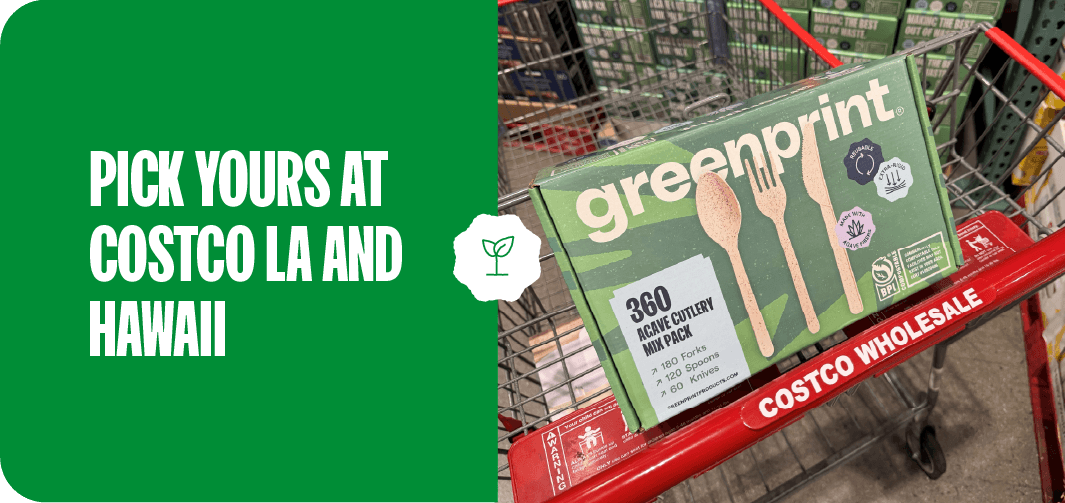
The Greenprint® Compostable Cutlery Mix Pack for Costco LA and Hawaii delivers 360 pieces of BPI-certified cutlery in one box. Every fork, spoon, and knife is heavy-weight and certified for industrial composting.
Each piece is made from our proprietary agave-bioplastic compound. This pack is built for parties, catered lunches, BBQs, and everyday meals.
If you’ve been searching for the best compostable cutlery in a large-count pack, this is what we made it for. One box, one purchase, and you’re stocked for weeks of events.
What Is in the Greenprint Cutlery Mix Pack
The pack includes 360 pieces of compostable cutlery: 180 forks, 120 spoons, and 60 knives. That ratio isn’t random. It matches how people actually use cutlery.
Forks go fastest at any gathering. Almost every buffet dish needs one, from salads to pasta to cake. Spoons follow for sides, and desserts.
Keep in mind that these are made for cold and lukewarm foods, not hot dishes. Because the utensils are built from our proprietary agave fiber and PLA compound, they’re not designed to hold up above 104°F (40°C), so skip them for hot entrées, soups, or anything straight off the stove. They’re a solid fit for salads, sandwiches, cold desserts, grab-and-go meals, and catering spreads served at room temperature or below.
Knives see the lightest rotation. Most party and catered food is already cut or fork-tender. The 180-120-60 split means you won’t run out of forks mid-event.
We designed this count so you don’t end up with extra knives and zero forks. That’s a common problem with packs that use equal counts.
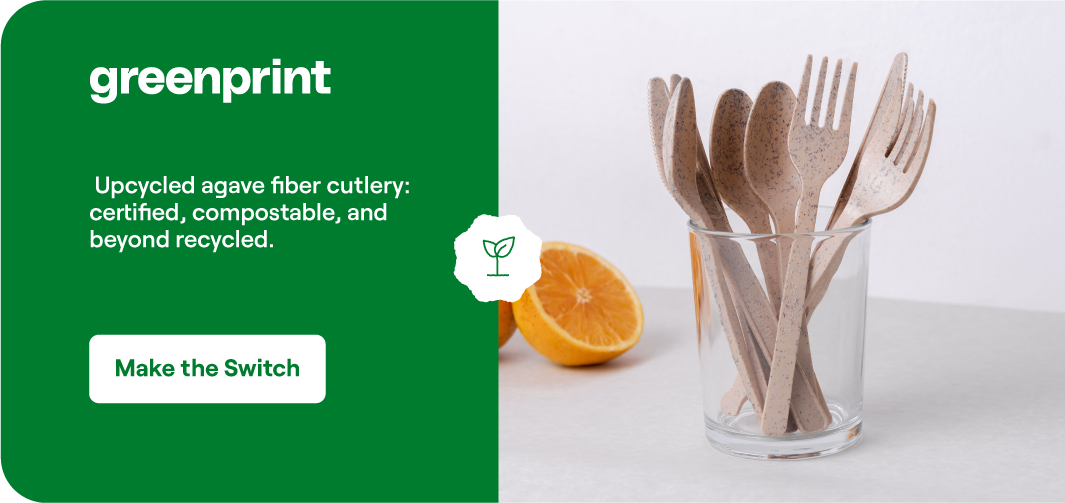
Each piece is heavy-weight. Our compostable agave forks hold up to grilled chicken, thick chili, and dense sides. The spoons scoop without flexing.
The knives cut through a bratwurst or a brownie without snapping. That durability is the baseline for replacing plastic at any table.
Performance is the point. Compostable cutlery only replaces plastic if people trust it. Flimsy utensils get tossed aside, and that defeats the purpose.
The 360-piece count also reduces how often you restock. For a catering company running weekend events, one box goes a long way. At roughly five cents per piece, the value holds up well.
For an office manager keeping the breakroom supplied, this count covers about a month. For a family hosting holiday gatherings, it stretches across multiple events.
Cleanup is simpler too. After the event, used cutlery goes into the compost collection bin. No sorting plastic from food waste. No wondering if it’s recyclable (plastic cutlery usually isn’t, despite what people assume).
One less decision at the end of a long event. That’s worth something when you’re managing 60 guests and a stack of dirty serving trays.
What Agave Cutlery Is Made Of
Our compostable forks, spoons, and knives are made from Upcycled Agave fiber. This fiber is a byproduct of tequila production in Jalisco, Mexico.
Every year, over 100 million agave plants are harvested in the region. After the sugars are extracted for tequila, the fibrous material is left behind. We turn that waste into agave cutlery.
The Agave Fibers are blended with a PLA/PBAT polymer. The compound is made entirely in-house at our facility in Mexico. We control the formulation from raw fiber to finished product.
This isn’t a generic bioplastic from a third-party supplier. Our formulation is proprietary and not easily replicated. That’s a direct result of vertical integration.
That level of control matters for transparency. We know exactly what goes into every piece. There are no intermediary compounds or unknown additives.
Agave waste has no competing commercial use. Bamboo requires long-haul shipping from Asia. Wheat straw can divert from animal feed.
Agave byproduct is a pure waste stream with no other market. Using it creates direct revenue for the farming families who grow and harvest the plants.
The region generates over 350,000 tons of agave plant waste per year. That volume makes it a reliable, scalable source. It’s a waste-to-value model that doesn’t compete with food or feed supply chains.
For the full story on how agave waste becomes compostable foodware, read our article on how agave waste from tequila production becomes cutlery.
BPI Certification and Compostability
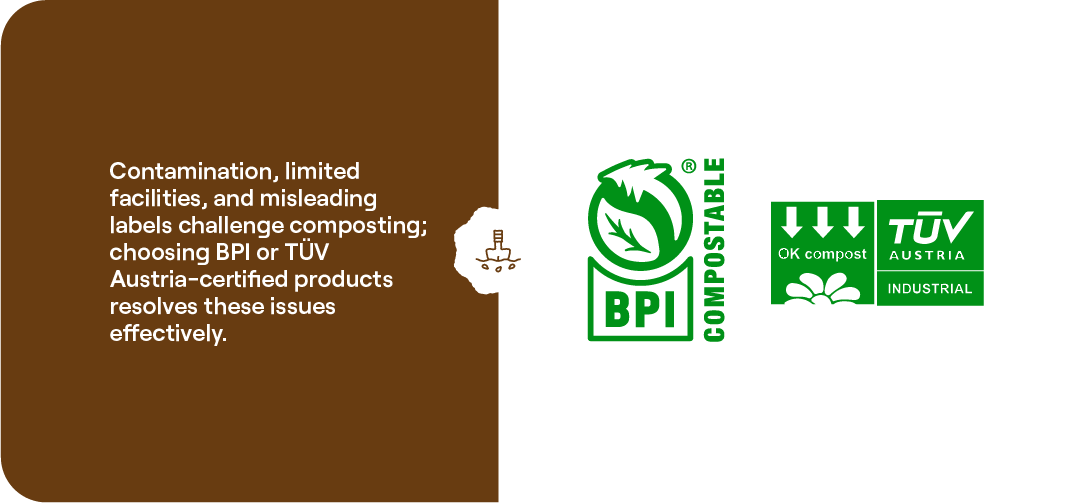
The Greenprint® Compostable Cutlery Mix Pack carries BPI Commercial Compostability certification. BPI is the leading certification body in North America for compostable products.
Their mark means each piece has been tested to break down in an industrial composting facility. BPI testing follows ASTM D6400, the standard for compostable plastics.
This is third-party certification, not a self-declared label. Products must show disintegration and full breakdown within a defined timeframe. That rigor separates certified products from vague claims.
This cutlery requires industrial composting at 55 to 60 degrees Celsius. It does not carry home compost certification. Industrial facilities maintain the sustained high temperatures that PLA-based materials need.
The distinction between industrial and home compostability comes down to material science. Our agave straws use an enzyme-enhanced formulation. That enzyme catalyzes PLA hydrolysis, enabling breakdown at home compost temperatures (20 to 30 degrees Celsius).
Our cutlery uses a different compound without that enzyme technology. That’s why our straws carry TÜV Austria OK Compost HOME certification. Our cutlery carries BPI Commercial certification only.
We’re transparent about this because accurate disposal matters. A product sent to the wrong waste stream won’t compost, no matter what the label says.
If your area has a commercial composting program, this cutlery is accepted. Many municipal programs and private haulers now collect compostable foodware. If yours doesn’t yet, check for drop-off options at your local waste hauler.
The number of composting facilities accepting certified products has grown steadily. As that infrastructure expands, the disposal path for BPI-certified cutlery becomes more accessible.
For more detail on BPI certification, see our compostable forks certification guide. For a look at testing methods, read how compostability testing validates product claims.
Why Choose This Pack for Your Next Event
A 360-piece compostable cutlery set covers a lot of ground. Birthday parties, neighborhood BBQs, and company picnics all burn through forks fast. Graduation celebrations and catered lunches are no different.
The fork-heavy ratio means you won’t run short. For seated dinners, plan one fork and one spoon per guest. For buffets, plan two to three forks per person.
The 180-fork count covers a 60-person buffet. It also works for a 180-person single-course event. Scale from there based on your menu and setup.
For event planners and caterers, predictable counts reduce waste. You order what you need and don’t overbuy on knives that sit unused. That’s a cost and logistics win.
If you’re running a taco bar, you need forks and spoons. If you’re doing a pasta station, forks dominate. The mix pack’s ratio handles both scenarios without leftover inventory.
Consider the alternative: buying separate packs of compostable forks, spoons, and knives. You pay more per piece, manage three SKUs, and often end up with uneven quantities. The mix pack simplifies that.
When you compare compostable utensils vs plastic, this pack offers similar strength. You don’t sacrifice performance. Standard plastic cutlery sits in a landfill for generations. Our article on agave silverware compared to plastic alternatives breaks down the performance data.
Plastic utensils are also increasingly restricted. Cities and states across the U.S. are banning single-use plastic foodware. Having a compostable cutlery set on hand puts you ahead of those regulations.
Our agave-based cutlery breaks down into organic matter at an industrial composting facility. That matter returns nutrients to soil. The difference is real, but it requires the right disposal path.
You need access to industrial composting for these products to compost as certified. Tossing them in regular trash sends them to a landfill.
Our guide on the difference between home and industrial composting explains what each method requires. It also helps you find disposal options in your area.
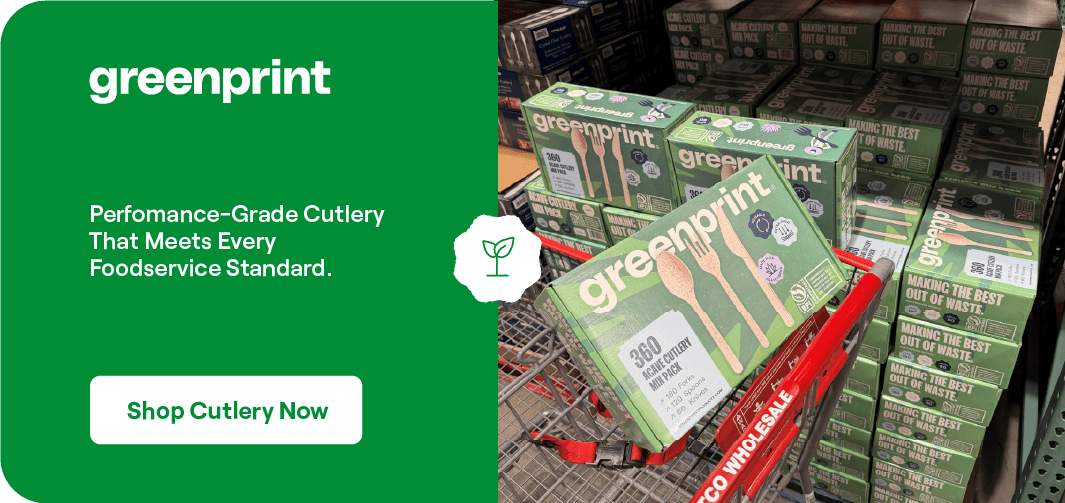
If you want compostable plates and cutlery that hold up, the Greenprint® mix pack works. Pick up BPI-certified compostable agave cutlery from our store.
Where to Buy the Greenprint Cutlery Mix Pack
The Greenprint® Compostable Cutlery Mix Pack is available at Costco LA and Hawaii. You can find it in-store and online. The retail price is $17.99.
That’s about five cents per piece for certified compostable cutlery in bulk. For compostable forks at Costco, this is one of the strongest per-unit values available.
Compare that to buying compostable cutlery online in smaller packs. Those often run eight to twelve cents per piece. The Costco price point makes switching from plastic a much easier call.
Beyond Costco, you can find Greenprint® products at Walmart and through Instacart. Those are solid alternatives if you want home delivery or Costco isn’t nearby.
For our full product line, visit the Greenprint® agave cutlery collection. We carry compostable agave straws, Renewacups™ paper cups, and Clearly Compostable™ cold cups.
We also carry Fiberware™ plates and bowls. The direct store stocks individual cutlery SKUs too. If you need forks or spoons on their own, you can order separately.
Costco availability varies by location and season. If you don’t see it on the shelf, check Costco’s website. Stock rotates, and regional demand affects what’s carried.
For guaranteed supply, our online store always has the full range. The direct channel also gives you access to our latest products as they launch.
If you’re a foodservice operator, school district, or event planner, volume pricing is available. Contact our team about wholesale compostable cutlery orders to discuss recurring supply.
We work with businesses across the country that are switching from plastic disposables. Whether you need a single event order or a monthly supply, we’ll help you find the right fit.
Frequently Asked Questions
Is the Greenprint Cutlery Mix Pack Certified Compostable?
Yes. The Greenprint® Compostable Cutlery Mix Pack carries BPI Commercial Compostability certification. Each piece meets ASTM D6400 standards for industrial composting.
Can You Compost Agave Cutlery at Home?
No. This cutlery requires industrial composting at 55 to 60 degrees Celsius. It does not carry home compost certification.
Check with your local waste hauler for accepted drop-off locations. Many cities now offer curbside compost pickup that accepts BPI-certified products.
How Many Pieces Come in the Greenprint Costco Pack?
The pack includes 360 pieces: 180 forks, 120 spoons, and 60 knives. The ratio reflects real-world usage patterns.
Does Costco Carry Compostable Utensils Year-Round?
Availability varies by Costco location and season. Check your local warehouse or Costco’s website for current stock.
You can also ask a store associate if a restock is planned. For guaranteed availability, order directly from the Greenprint® Compostable Agave Cutlery Mix Pack product page.


Massachusetts plastic ban rules vary by town. See which single-use plastics are restricted, how paper bag fees work, and how your business can comply.
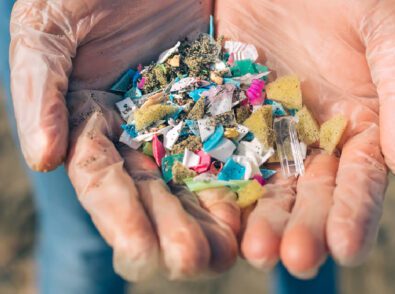
Learn how to avoid microplastics with easy swaps for your water, food, and kitchen, plus certified compostable foodware that cuts plastic in the waste stream.

Many meaningless eco certifications are just marketing. Learn the three signs of a real, third-party certification and how to verify one before you trust it.