

The Economics of Upcycled Materials: Cost vs Value


The Economics of Upcycled Materials
The economics of upcycled materials come down to a simple shift. You start with waste that already exists instead of paying for new raw inputs. That one change moves cost, risk, and value in your favor. This article explains how upcycled materials build economic value for restaurant owners and foodservice operators. We make the case qualitatively, without leaning on numbers or projections.
What Upcycled Materials Are
Upcycled materials are made from waste that gets a new, higher purpose. A byproduct that would otherwise be thrown away becomes the raw input for a useful product. If you want the full definition, see our guide on what upcycled means in packaging.
The key idea is value direction. This is also the heart of the difference between upcycling vs recycling. Recycling often turns a material into something of similar or lower worth. Upcycling aims higher. It turns discarded material into something more valuable than its starting point.
Downcycling sits at the other end. It takes a material and gives it a lower-value second life, such as ground-up plastic that becomes filler. That contrast is worth understanding before you weigh the economics.
The table below shows how these three paths compare on value retention. That single factor drives much of the economic story.
Path | Value Direction | Typical Second Life | Economic Effect |
|---|---|---|---|
Upcycling | Value goes up. | Waste becomes a higher-value product. | Turns a disposal cost into a revenue source. |
Recycling | Value holds or dips. | Material returns as similar or lesser stock. | Recovers some value, but often needs energy and processing. |
Downcycling | Value goes down. | Material drops to a lower-grade use. | Delays landfill, yet captures little upside. |
At Greenprint®, our Upcycled Agave foodware starts with post-tequila agave waste from farming families in Jalisco, Mexico. That waste has no competing use, so we turn it into foodservice products people actually want.
Where the Economic Value Comes From
The economics of upcycled materials rest on four sources of value. Each one lowers a cost or raises a return you can see in your own operation.
First, you replace virgin inputs with a waste stream. Virgin materials are tied to oil prices and global demand. A waste stream sits closer to home and carries less of that pressure. That means fewer surprises when commodity markets swing.
Second, upcycling avoids disposal cost. Waste that becomes a product does not need to be hauled away or dumped. Someone still pays to dispose of unused byproducts. Upcycling removes part of that bill from the system, a point backed by federal recycling economic impact data.
Third, upcycled products can command higher-value outputs. A discarded fiber becomes a straw or a fork that a customer pays for. The material moves from a cost line to a revenue line. That is the value climb at the center of upcycling.
Fourth, upcycled sourcing adds long-term resilience. When your inputs come from a steady local byproduct, you depend less on volatile commodity markets. You also gain a supply story you can explain to buyers and guests. For a closer look at where these inputs come from, see our guide on upcycled material sourcing in foodservice.
How Upcycled Materials Support a Circular Economy
A circular economy keeps materials in use instead of sending them to a landfill. Upcycled materials fit this model because they pull value out of waste that would otherwise be lost. You can read more in the EPA’s circular economy resources.
Here is the economic angle. In a linear system, you buy new, use once, and pay to throw away. Each step costs money and returns nothing. A circular approach recovers value at more than one point. That spreads your cost across more uses instead of a single trip to the bin.
For a foodservice operator, this matters because waste is a recurring expense. Products designed for a real end-of-life path can lower that recurring cost over time. A cost that repeats every week is worth more attention than a one-time purchase price. Our guide on the circular future of disposables covers this shift in more detail.
The circular model also reduces reliance on inputs that get scarcer and pricier over time. Agave waste is the subject of our guide on agave waste after tequila production, and the broader idea sits in our guide on agricultural waste streams. Both show why a steady byproduct beats a strained virgin supply.
Examples of Upcycled Materials in Everyday Products
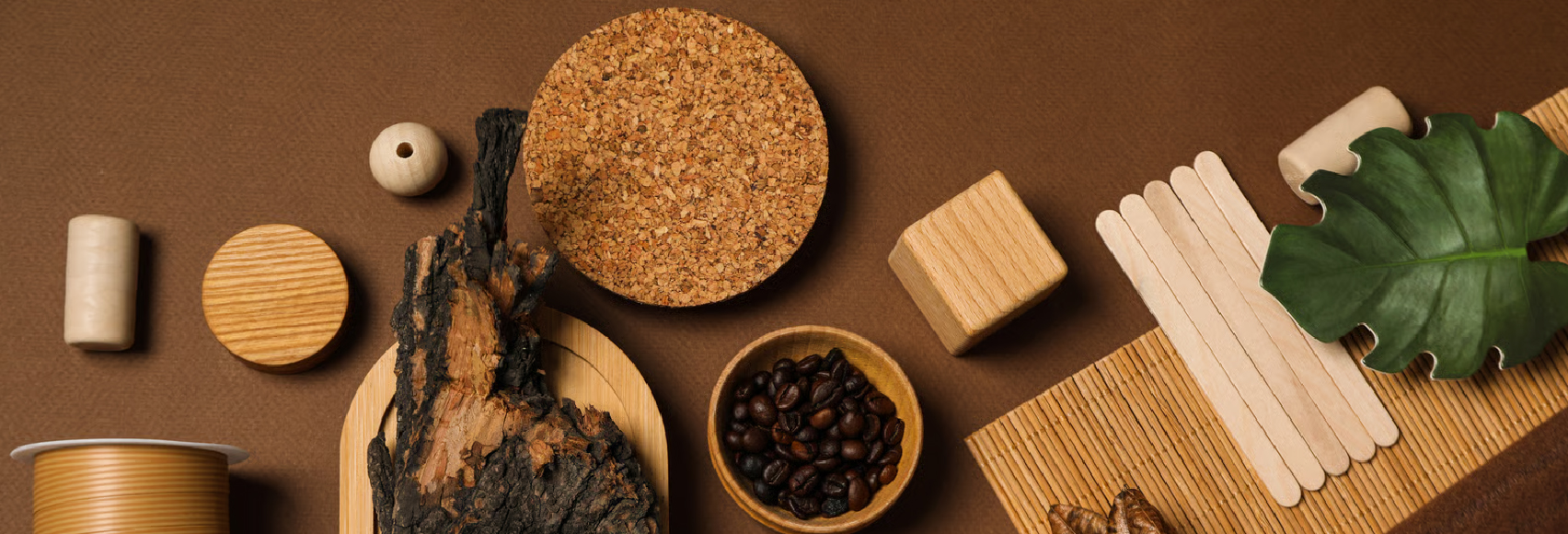
Upcycled materials show up in more products than most people expect. Reclaimed wood becomes furniture. Salvaged fabric becomes bags. Discarded plastic becomes new containers. These upcycled materials examples span many industries.
In foodservice, the clearest example is agricultural byproduct turned into serviceware. Our Upcycled Agave straws and cutlery use agave fiber left over after tequila production. The fiber science behind that input sits in our guide on agave fiber composition.
Our Green Dot Compostable Upcycled Agave Straws combine agave fiber with a PLA and PBAT blend and an enzyme masterbatch. The enzyme catalyzes hydrolysis of the PLA at ambient home compost temperatures (20 to 30°C). That is why these straws carry TÜV Austria OK Compost HOME and BPI Commercial Compostability certification. This home breakdown comes from the enzyme technology, not from PLA on its own.
Our Compostable Agave Cutlery uses the same agave-based approach but needs industrial composting at 55 to 60°C. It carries BPI Commercial Compostability certification. We keep this distinction clear so you know which waste path each product needs.
Our Fiberware™ plates, bowls, and clamshells are a separate story. They are made from bagasse, a sugarcane fiber byproduct, and carry TÜV Austria OK Compost INDUSTRIAL certification. They are not agave products, and our cups are not made with our compounded Agave Fibers. Each of these products turns a real waste stream into something a kitchen can use.
What Makes Upcycled Materials Harder to Scale
Upcycled materials carry real economic advantages, but scaling them is not automatic. Being honest about the friction helps you plan around it.
Collecting a waste stream takes work. Byproducts are often spread across many sources. Gathering enough consistent material can be harder than ordering a virgin input off a catalog.
Quality can vary. Waste is not made to a spec, so upcyclers must test and process it to reach dependable performance. That processing adds steps, and steps add cost before the savings show up.
End-of-life infrastructure is uneven. A product may be certified compostable, yet a home or industrial composting path still has to exist for the buyer. This is why we tie every claim to a named certification instead of a vague label, in line with the FTC Green Guide.
None of these hurdles cancels the economic case. They simply explain why upcycled sourcing rewards operators who plan for it rather than expecting instant savings. The operators who win are the ones who treat sourcing as a long game and pick suppliers who have already solved the collection and quality problems.
Choosing Products Made From Upcycled Materials
When you evaluate upcycled products, look past the marketing and check the substance. Ask where the waste stream comes from and whether it has a competing use. A byproduct with no competing use, like post-tequila agave fiber, makes a stronger circular case.
Then check the claims. A credible product ties each benefit to a specific, verifiable certification. For compostability, look for a named body and standard, and confirm the product meets certified compostable product standards.
Finally, match the product to your own waste systems. A home compostable straw and an industrially compostable fork solve different problems. Choose what your local infrastructure can actually handle. When you are ready to compare options, explore our certified compostable foodservice packaging and match each product to the waste path you have.
Frequently Asked Questions
Are upcycled materials more expensive than virgin materials?
Not always, because upcycled inputs replace purchased virgin materials and avoid part of the disposal cost that waste would otherwise carry. Upfront processing can add cost, but the sourcing and waste savings often offset it over time.
Do upcycled products perform as well as new ones?
Yes, when the upcycler tests and processes the waste stream to a dependable spec. Our Upcycled Agave products are engineered for reliable performance and carry third-party certifications that back it up.
Which industries use upcycled materials the most?
Foodservice, furniture, fashion, and construction are among the heaviest users, since each generates or absorbs large volumes of reusable byproduct. Foodservice is a natural fit because agricultural waste streams are steady and close to the source.


Washington DC’s plastic ban covers bags, foam, straws, and utensils. See the single-use plastic laws, the 5-cent bag fee, and how your business can comply.
What can you compost? Learn which food scraps, yard waste, and paper products break down, what to keep out, and how to balance greens and browns at home.
BPA-free plastic isn’t automatically safer than regular plastic. See what the label really means, why BPS and BPF matter, and smarter material choices.