

The Evolution of Plastic Regulation for Foodservice



Content
- How Plastic Regulation Started
- The Rise of Single-Use Plastic Bans
- Extended Producer Responsibility Laws
- The Global Plastic Treaty and International Agreements
- How Certified Compostable Packaging Fits Into the Regulatory Landscape
- What Plastic Regulation Means for Foodservice Operators
- Frequently Asked Questions
The Evolution of Plastic Regulation: What Foodservice Operators Need to Know
The evolution of plastic regulation has moved faster in the last ten years than in the previous four decades combined. If you run a restaurant, campus dining hall, or catering operation, you’re now navigating hundreds of overlapping state, local, and international rules targeting single-use plastics. Understanding how we got here helps you plan for what’s coming next.
How Plastic Regulation Started
For most of plastic’s commercial history, there was almost no regulation targeting the material itself. The first wave of environmental law in the 1970s focused on water and air pollution, not packaging waste. The London Convention of 1972 addressed ocean dumping. The Clean Water Act set discharge limits. The EPA established hazardous waste rules. But plastic packaging? It slipped through every net.
That started to change in the early 2000s. Cities like San Francisco and municipalities in Ireland and Bangladesh passed the first plastic bag ordinances. These early bans were narrow, targeting only thin-film carryout bags. Most of the industry dismissed them as outliers.
Those early ordinances turned out to be the leading edge of a plastic regulation movement that would reshape foodservice packaging within two decades. What started as a handful of local bag bans became the foundation for the complex web of state and local plastic ban laws you navigate today.
The Rise of Single-Use Plastic Bans
What began with bag bans quickly expanded. By the mid-2010s, cities and states were targeting straws, stirrers, utensils, polystyrene foam containers, and other single-use foodservice items. The single use plastic ban wave hit the U.S. and Europe almost simultaneously.
The shift accelerated when public awareness of ocean plastic pollution grew. Images of sea turtles tangled in plastic straws and beaches buried under packaging waste pushed lawmakers to act faster. Consumer demand for plastic pollution solutions gave legislators the political cover to pass stricter rules.
California led with some of the most aggressive state-level action. SB 54, the state’s landmark packaging reduction law, set enforceable targets for reducing single-use plastic packaging and required producers to meet recycling and composting benchmarks. Washington state followed with its own plastic ban laws covering expanded polystyrene foodservice containers and single-use plastic utensils.
Across the Atlantic, the EU’s Single-Use Plastics Directive banned specific items outright (plates, cutlery, straws, stirrers, balloon sticks) and set collection and recycling targets for others. This directive gave state-level U.S. lawmakers a working template for their own legislation.
The single-use plastics directive in Europe set a precedent that continues to influence U.S. policy. Many of the same items banned under the EU directive are now restricted in American cities and states. The policy language often mirrors European frameworks, adapted for U.S. legal structures.
For foodservice operators, the practical effect has been a patchwork. The same container that’s legal in one jurisdiction may be banned twenty miles away. That patchwork is why understanding the full regulatory timeline matters for your purchasing and California single-use plastic compliance planning.

Extended Producer Responsibility Laws
The latest shift in plastic regulation moves the cost of waste management from taxpayers and consumers to the companies that produce and sell packaged products. This model is called extended producer responsibility (EPR), and it’s gaining traction fast in the U.S.
States like California, Colorado, Maine, and Oregon have already passed extended producer responsibility plastics laws. These laws require packaging producers to fund collection, recycling, and composting infrastructure. For a deeper look at how EPR works and what it means for your supply chain, see our full guide on extended producer responsibility laws for plastics.
What does EPR mean for you as an operator? The packaging you purchase will increasingly reflect the cost of its end-of-life management. Producers who use certified compostable materials may face lower fees under EPR programs because those materials have a clear, verified disposal pathway. Producers using hard-to-recycle plastics will likely pay more. That cost difference will show up in your purchasing decisions.
The Global Plastic Treaty and International Agreements
Plastic regulation is no longer just a local or national issue. The United Nations has been negotiating a global plastic treaty aimed at creating a binding international framework for reducing plastic pollution across the full lifecycle, from production through disposal.
The Basel Convention’s 2019 plastic waste amendments were an early signal. Those amendments restricted the international trade of contaminated or hard-to-recycle plastic waste, forcing exporting countries (including the U.S.) to manage more of their own plastic waste domestically.
The global plastic treaty negotiations have brought together over 170 countries. While the final text is still being finalized, the direction is clear: international agreements will increasingly push national and state-level governments to tighten their own plastic packaging regulations.
Why should you care if you only operate domestically? Because international frameworks influence the state-level laws that directly affect your business. California’s SB 54, for instance, echoes the same producer-responsibility principles driving the global treaty. When you see an international agreement take shape, expect similar language to appear in your state legislature within a few years.
The trajectory is consistent across every level of governance. Local bans led to state frameworks. State frameworks are now influencing national policy conversations. And national policies are being shaped by global agreements. Each layer reinforces the next, creating a regulatory environment where the direction of change is predictable even when the specific timing is not.
How Certified Compostable Packaging Fits Into the Regulatory Landscape
Not all packaging marketed as “compostable” meets the bar that regulators are setting. The difference comes down to certification. Certified compostable packaging has been independently tested against recognized standards, giving you verifiable proof of compliance.
As plastic regulation tightens, regulators are drawing a clear line between packaging with verified compostability claims and packaging with unsubstantiated labels. Products that carry third-party certification give you documentation you can show to inspectors, landlords, and customers. Products without certification leave you exposed.
Two certifications matter most for foodservice operators. The table below breaks down the differences.
| Certification | Standard | Composting Condition | Regulatory Acceptance |
|---|---|---|---|
| BPI (Biodegradable Products Institute) | ASTM D6400 | Industrial composting facilities (high heat) | Required by most U.S. state-level plastic bans |
| TÜV Austria OK Compost HOME | EN 13432 (modified for home conditions) | Home composting (lower temperatures) | Meets the highest global standard for home compostability |
For the full science behind compostability testing, see our guide on certified compostable product standards and testing.
When making environmental claims about your packaging, the FTC Green Guides require that those claims be specific, qualified, and backed by evidence. For detailed guidance on marketing compostable products compliantly, see our article on implementing compostable packaging in your business.
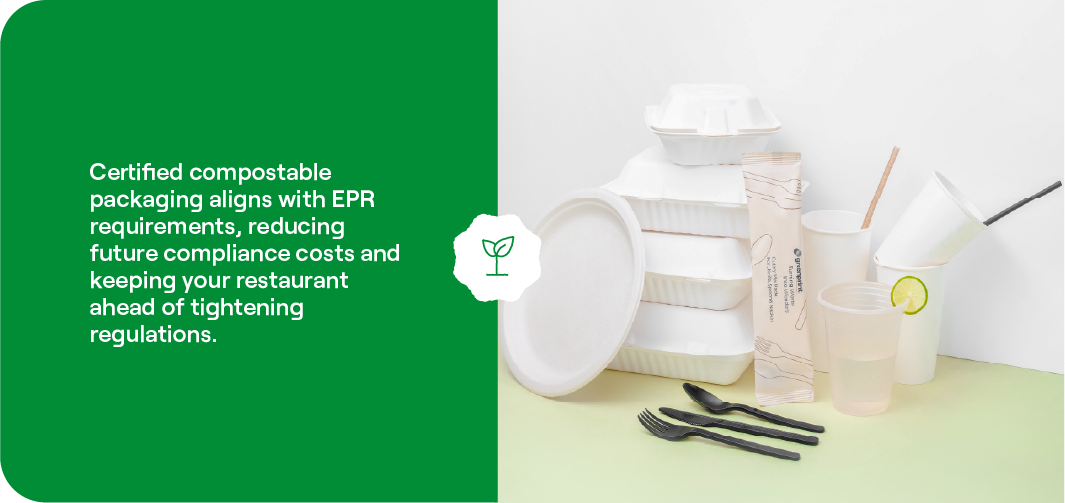
This is where Greenprint® products are built to help. Fiberware™ serviceware and Renewacups™ cups are made from Greenprint’s proprietary enzyme-enhanced agave-bioplastic compound and carry both BPI and TÜV Austria OK Compost HOME certifications. The Clearly Compostable™ mark on Greenprint products signals to your customers and to regulators that the packaging meets the highest available composting standards.
What Plastic Regulation Means for Foodservice Operators
If you operate in more than one city or state, you’re already feeling the compliance pressure. Here’s what the regulatory patchwork means in practical terms.
Purchasing decisions are now compliance decisions. The containers, cups, and utensils you buy must meet the rules in every jurisdiction where you operate. A polystyrene clamshell that’s legal in one county may carry fines next door.
Menu and packaging design require regulatory awareness. Switching from plastic to fiber or paper isn’t always enough. Some jurisdictions require packaging to be certified compostable to specific standards, not just labeled as an alternative to plastic.
Plastic waste management policy varies by location. Some cities mandate commercial composting. Others require source separation of packaging waste. Still others have pay-as-you-throw programs that penalize high volumes of non-recyclable, non-compostable packaging.
The cost of non-compliance is rising. Fines for violating single-use plastic bans or using non-compliant packaging are increasing. More importantly, enforcement is shifting from complaint-driven to proactive inspection in major metro areas.
Your customers are watching, too. Diners increasingly expect restaurants to use packaging that aligns with local waste reduction goals. Using banned or non-compliant packaging can damage your reputation as quickly as it triggers a fine. The operators getting ahead of this are treating packaging compliance as part of their brand, not just a legal box to check.
The good news: you don’t have to track every jurisdiction individually. Choosing packaging that meets the strictest current standards gives you a compliance buffer as regulations tighten. For foodservice operators, choosing certified compostable packaging is one of the most direct plastic pollution solutions available. It satisfies the strictest state-level requirements, reduces your exposure to future regulatory changes, and gives your customers confidence that your operation takes waste reduction seriously.
The evolution of plastic regulation shows a clear pattern: rules only get stricter. Products that meet today’s highest standards are the ones least likely to be disrupted by tomorrow’s new laws. Building your packaging strategy around certified compostable products means you’re preparing for the regulatory future, not just reacting to the present.
Ready to get ahead of tightening plastic packaging regulations? Explore our sustainable solutions or contact our team today to find certified compostable packaging that fits your operation.
Frequently Asked Questions
When Did Plastic Regulation First Start?
The earliest regulations affecting plastic waste came in the 1970s through broad environmental laws like the London Convention and the Clean Water Act. Plastic-specific bans targeting items like carryout bags began appearing in the early 2000s.
What Is the Global Plastic Treaty?
The global plastic treaty is a binding international agreement being negotiated through the United Nations. It aims to reduce plastic pollution across the full product lifecycle, from production and design through disposal and recycling.
Which U.S. States Have Banned Single-Use Plastics?
Multiple states have enacted single-use plastic bans covering items like bags, polystyrene containers, and utensils. For a complete state-by-state breakdown, see our U.S. plastic ban laws compliance guide.
What Is Extended Producer Responsibility for Plastics?
Extended producer responsibility (EPR) for plastics requires the companies that produce or sell packaged products to fund the collection, recycling, and composting of that packaging. For a full explanation, see our guide on EPR laws and foodservice packaging requirements.
References


Are styrofoam cups safe? See how styrene, heat, microwaving, and reuse change foam cup safety, and find foam-free cup options for hot and cold drinks.

The environmental impact of food waste runs from methane emissions to wasted water and land. See how it harms the planet and simple ways to cut it today.

New Jersey plastic bans and regulations cover bags, foam, straws, and utensils. Learn what is banned, who must comply, and compliant compostable swaps.