

Plant-Based Compostable Straw Supply Chain: Seed to Sip



Content
- Key Takeaways
- What Are Plant-Based Compostable Straws?
- Where Plant-Based Straw Materials Come From
- How Plant-Based Compostable Straws Are Manufactured
- Environmental Benefits of a Plant-Based Straw Supply Chain
- Why the Supply Chain Behind Your Straw Matters for Your Business
- Frequently Asked Questions About Plant-Based Compostable Straws
- Build a Better Straw Supply Chain With Greenprint
How Plant-Based Compostable Straws Are Made: Seed to Sip
Every compostable straw starts as a plant. But what happens between the field and your drink matters more than most people realize. We walk you through the full supply chain of plant-based compostable straws, from raw agricultural waste to finished product. You’ll learn about sourcing, manufacturing, certifications, and the environmental benefits that separate a genuinely compostable straw from a marketing claim.
Key Takeaways
- Plant-based compostable straws are made from renewable materials like Upcycled Agave Fibers and biopolymer blends, but only straws with third-party certifications like BPI or TÜV Austria OK Compost HOME meet verifiable composting standards.
- Vertical integration, where one company controls sourcing, compounding, and manufacturing, gives foodservice operators greater supply chain transparency and more reliable product performance.
- The raw material behind a straw shapes its entire sustainability story, from carbon footprint and transport distance to whether the sourcing creates competing demand for food or animal feed.
What Are Plant-Based Compostable Straws?
Plant-based compostable straws are foodservice straws made from renewable plant materials that are engineered to break down fully under composting conditions. This means they start as agricultural materials, perform like conventional straws during use, and then return to organic matter when composted properly.
These straws are different from conventional plastic straws, which are made from petroleum-based polypropylene and persist in the environment for decades. They’re also different from paper straws, which often lose their structure in drinks and may contain plastic or wax coatings that complicate composting.
The key distinction is certification. Under the FTC Green Guides, a product labeled “compostable” should be backed by third-party testing. Without certified compostable verification from organizations like BPI; certifying over 51,000 products, or TÜV Austria, a “plant-based” label doesn’t guarantee the straw will actually break down as promised.
Compostable vs. Recyclable Straws
Compostable and recyclable describe two completely different end-of-life pathways. Confusing them leads to products ending up in the wrong waste stream, which defeats the purpose of choosing a sustainable option in the first place.
| Attribute | Compostable Straws | Recyclable Straws |
|---|---|---|
| Material Origin | Renewable plant materials (agave fiber, PLA, PBAT) | Petroleum-based or post-consumer recycled plastics |
| End-of-Life Pathway | Break down into organic matter through composting | Collected, reprocessed, and remade into new products |
| Required Infrastructure | Home compost bin or industrial composting facility | Municipal recycling program with appropriate sorting |
| Relevant Certifications | BPI (industrial), TÜV Austria OK Compost HOME or INDUSTRIAL | Varies by resin type and local recycling acceptance |
Here’s what this means for your business:
- Compostable straws need to reach a composting system to deliver their environmental benefit. If they end up in a landfill, they won’t break down as intended.
- Recyclable straws need to be clean and sorted correctly. Food contamination often disqualifies them from recycling streams.
The FTC Green Guides require that compostability claims be backed by certification. Vague terms without verifiable standards can mislead consumers and expose your business to regulatory risk.
Home-Compostable vs. Industrial-Compostable Straws
Most compostable straws on the market only qualify for industrial composting, though BPI launched home compostability certification in 2025 to expand verification beyond industrial-only standards. Industrial composting facilities maintain sustained temperatures between 55 and 60°C that accelerate breakdown. A backyard compost bin operates at much lower, ambient temperatures and simply can’t reach the heat levels that standard PLA-based straws need to decompose.
This is where enzyme technology makes the difference. Our Green Dot Compostable Upcycled Agave Straws carry TÜV Austria OK Compost HOME certification because we integrate a proprietary enzyme masterbatch during compounding at 160–190°C. It catalyzes the hydrolysis of PLA polymer chains, enabling full breakdown at ambient home compost temperatures (20–30°C). Standard PLA without this enzyme technology requires industrial composting at 55–60°C and cannot achieve HOME certification.
For foodservice operators, this distinction matters. If your customers take straws home and compost them in their backyard, only HOME-certified straws will actually break down. Industrial-only straws will sit in that bin unchanged.
Where Plant-Based Straw Materials Come From
The sourcing stage of the supply chain determines a straw’s true sustainability story. Two straws can both be called “plant-based,” but the environmental and social impact of their raw materials can be vastly different.
What matters is where those materials originate, how far they travel, and whether sourcing them creates competing demand for food, animal feed, or other uses.
Agave Fiber as Post-Tequila Agricultural Waste
At Greenprint®, we source our Upcycled Agave Fibers from post-tequila agricultural waste. After the agave piña is harvested for tequila and mezcal production, the remaining husks and bagasse are left behind. This material has no competing use, which makes it a pure waste-to-value sourcing model.
The agave comes from small farming families in Jalisco, Mexico. By purchasing this agricultural byproduct, we create direct revenue for those families while keeping waste out of landfills.
Compare this to other common plant-based straw materials:
- Bamboo: Typically shipped long distances from Asia, adding significant transportation emissions to the supply chain.
- Wheat straw: Diverts material from animal feed markets, creating competing demand for an agricultural resource.
Agave waste is abundant regionally, travels a short distance to our manufacturing facility, and doesn’t compete with food systems. That combination is what makes it an ideal input for a circular supply chain.
PLA, PBAT, and Biopolymer Blends
PLA stands for polylactic acid. It’s a biopolymer typically derived from fermented plant starches like corn. PBAT stands for polybutylene adipate-co-terephthalate. It’s a flexible polymer that improves durability and compostability when blended with PLA.
Together, these biopolymers form the backbone of many compostable straw formulations. They give the straw its structure and performance characteristics.
Here’s the important distinction: on its own, standard PLA requires industrial composting temperatures (55–60°C) to break down. That’s why our proprietary enzyme masterbatch is critical. Integrated during compounding at 160–190°C, it catalyzes the hydrolysis of PLA polymer chains, enabling full breakdown at ambient home compost temperatures (20–30°C). Without enzyme technology, a PLA-based straw cannot achieve home compostability certification.
How Plant-Based Compostable Straws Are Manufactured
Manufacturing is where raw materials become a finished straw. Understanding this stage of the supply chain helps you evaluate whether a supplier truly controls their product quality or is simply repackaging someone else’s compound.
In-House Compounding and Formulation Control
We compound our own material system in-house. This means we blend the Upcycled Agave Fibers, the PLA/PBAT polymer blend, and our proprietary enzyme masterbatch at our own facility rather than purchasing pre-made compounds from third-party suppliers.
Most competitors buy their compounds ready-made. This limits their control over formulation, consistency, and material performance. By compounding in-house, we maintain full formulation control over every batch.
This is what makes our material proprietary and difficult to replicate. It also means we can trace every straw back to its raw material inputs, giving you the supply chain transparency you need to back up your sustainability commitments.
Extrusion, Shaping, and Quality Checks
Once the compound is ready, we form straws through extrusion. Extrusion is a manufacturing process where heated material is pushed through a shaped opening called a die. This creates a continuous tube that’s then cut to the correct straw length.
After extrusion, each production run goes through quality control checks. We verify consistent diameter, wall thickness, and structural integrity across all SKUs. This ensures that every straw; including our Upcycled Agave Straws; performs reliably in a drink, whether it’s a standard size or a jumbo straw for smoothies and bubble tea.
Vertical Integration and Wind-Powered Production
Our manufacturing facility in Santa Catarina, Nuevo León, Mexico handles everything from raw material sourcing through finished product under one roof. This is called vertical integration.
Vertical integration eliminates the handoff points where quality, traceability, and accountability often break down in conventional supply chains. When you source from a vertically integrated manufacturer, you’re dealing with one company that controls and stands behind the entire process.
The facility is also partially wind-powered, which lowers the carbon footprint of production. When you combine regional agave sourcing with renewable energy at the manufacturing stage, the result is a supply chain designed to minimize environmental impact at every step.

Environmental Benefits of a Plant-Based Straw Supply Chain
The way a straw is sourced and made directly shapes its environmental impact. A well-designed plant-based supply chain delivers real, measurable benefits for your business and the planet.
Faster Decomposition at Home Compost Temperatures
Our enzyme technology enables our Green Dot Compostable Upcycled Agave Straws; available as home compostable straws; to fully break down at ambient home compost temperatures (20–30°C). The TÜV Austria OK Compost HOME certification is the verifiable proof point for this claim.
Our internal biodegradation study (GP-BIO-001), validated in triplicate, documented full breakdown by Week 20 in home compost conditions (20–30°C) with no visible residue. This data supports and corroborates the TÜV certification but is not itself a standalone certification claim.
For your customers who compost at home, this means the straw they take from your restaurant will actually break down in their backyard bin. That’s a promise most compostable straws can’t make.
Lower Carbon Footprint from Renewable Inputs
Using regionally sourced agricultural waste and renewable biopolymers reduces reliance on fossil-fuel-based plastics from the very start of the supply chain.
Our agave fiber travels a short distance from Jalisco to our facility in Nuevo León. Compare that to bamboo-based straws, where raw materials often cross an ocean before manufacturing even begins.
Shorter supply chains mean fewer transportation emissions. Plant-based inputs mean less petroleum extracted in the first place. Together, these factors add up to a meaningfully lower carbon footprint.
Waste-to-Value Circular Economy Model
Converting post-tequila agave waste into compostable straws creates a true circular loop. Agricultural byproduct that would otherwise sit unused becomes a functional product. After composting, that product returns organic matter to the soil.
This model also generates income for the farming families who supply the agave fiber. What was once a waste management challenge becomes an economic opportunity. It’s circularity that works for people and the planet.
Why the Supply Chain Behind Your Straw Matters for Your Business
For foodservice operators, the supply chain behind your straw is a compliance and brand protection issue. States like California, New York, Washington, Vermont, and Massachusetts have enacted organics diversion legislation that requires genuinely compostable products.
Supply chain transparency lets you verify exactly what your straws are made of, where the materials come from, and which certifications back up the claims on the box. This protects your business from greenwashing risk and gives you a defensible answer when regulators, customers, or distributors ask questions.
If you’re looking for an alternative to paper straws that actually performs in drinks and composts as promised, try our Upcycled Black Agave Straws or explore our full line at greenprintproducts.com/our-store. You can also contact our team at greenprintproducts.com/contact to learn how we can support your operation.
Frequently Asked Questions About Plant-Based Compostable Straws
How much does it cost to manufacture a plant-based compostable straw compared to a plastic straw?
Costs vary depending on material inputs, production volume, and supply chain complexity. Vertical integration helps keep pricing competitive by eliminating third-party compound markups.
Can plant-based straws break down in a backyard compost bin?
Only if they carry TÜV Austria OK Compost HOME certification. Our Green Dot Compostable Upcycled Agave Straws qualify because our proprietary enzyme technology enables PLA breakdown at ambient temperatures (20–30°C).
What certifications should foodservice operators look for when sourcing compostable straws?
Look for BPI certification for industrial composting in the U.S. and TÜV Austria OK Compost HOME or INDUSTRIAL for verified home or industrial compostability. Under the FTC Green Guides, uncertified “compostable” claims may be considered misleading.
Build a Better Straw Supply Chain With Greenprint
A compostable straw is only as good as the supply chain behind it. We built ours around vertically integrated manufacturing, regionally sourced Upcycled Agave Fibers with no competing use, proprietary enzyme technology that enables verified home compostability, and third-party certifications from BPI and TÜV Austria that back every claim we make.
When you choose a straw supplier, you’re choosing a supply chain partner. We designed ours so you can trace every straw from field to finished product and feel confident in the sustainability story you’re telling your customers. The same supply chain also produces our agave stirrers and cutlery for a complete compostable serviceware program.
Browse our full product line at greenprintproducts.com/our-store to see what’s available, or contact our team at greenprintproducts.com/contact to find the right fit for your operation.
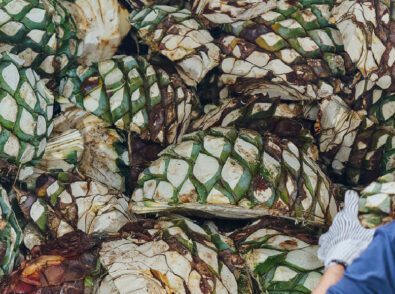

What happens to agave waste after tequila production? Learn how agave bagasse becomes biofuel, compost, construction material, and compostable food packaging.
Industrial composting produces far lower carbon emissions than landfill. Learn how aerobic decomposition reduces methane and why it matters for your business.
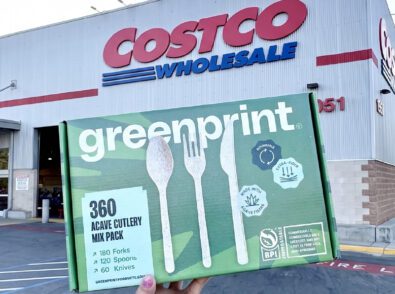
Greenprint compostable cutlery mix pack at Costco: 360 BPI-certified agave forks, spoons, and knives. Heavy-weight, industrial compostable, and built for events.