

The Different Types of Compostable Straws



Content
- The Benefits Of Compostable Straws
- What Are The Different Types Of Compostable Straws?
- How To Read Compostability Claims And Certifications
- PHA Straws
- PLA Straws
- Paper Straws
- Agave Straws
- Bamboo Straws
- Grass Straws
- Sugarcane Straws
- Where Can You Get Compostable Straws?
- Home-Compostable vs. Industrial-Compostable Straws
- Frequently Asked Questions
- Straws From Greenprint
The Different Types Of Compostable Straws
Of the nearly eight million tons of plastic waste generated each year, plastic straws are among the top 10 contributors to ocean marine debris. Plastic straws are not recyclable, partly because of their size but also because most are tossed into the trash and end up in a landfill.
Business owners and shoppers have become more committed to adopting alternative plastic straw options due to the increase in environmental impact research on single-use plastics. Businesses that switch to sustainable straws often report positive feedback from customers who appreciate their commitment to sustainability. With this, compostable straws are starting to replace plastic straws, but with so many different types of straw materials on the market today, you might be wondering how to choose.
In this guide, we examine different plant-based drinking straws made from plant fiber and compare their sustainability and durability so you can make informed choices that align with your values to contribute to a healthier planet.
| Term | Definition | Key Characteristics | Cons |
|---|---|---|---|
| Compostable | Designed to degrade in composting facilities under controlled conditions. | Breaks down into nutrient-rich compost. Diverts waste from landfills, enriches soil. | Rustic look may not suit all brands. |
| Plastic Straws | Conventional petroleum-based single-use straws that are not designed to break down. | Do not compost and are rarely recycled; persist for hundreds of years and fragment into microplastics. | Contribute to landfill and ocean pollution; among the top 10 marine debris items. |
Plastic Straws vs Compostable Straws
Plastic straws can take hundreds of years to decompose and often end up in landfills or oceans, where they can harm wildlife and pollute waterways.
Compostable straws are made from renewable resources and, if disposed of correctly, will become compost through a commercial compost facility.
The Benefits Of Compostable Straws
While compostable straws and post-consumer recycled straws have multiple benefits over virgin plastic straws, they have different environmental impacts. PCR (Post-Consumer Recycled) straws help reduce waste and conserve resources by being processed from reused products or materials.
Compostable straws provide more benefits to the environment by combating pollution:
- Environmental impact: Compostable straws break down naturally, reducing waste in landfills and oceans.
- Renewable resources: Renewable sources lessen straw manufacturing’s dependence on finite fossil fuels.
- Healthier option: Compostable straws are made from plant-based materials and offer a safer choice to health-conscious individuals than plastic straws that may contain toxic additives.
- No microplastics: Compostable straws can decompose in a composting facility without forming harmful microplastics that can impact ecosystems and human health.
- Greenhouse gas emissions reduction: Using compostable straws reduces the demand for plastic, leading to lower greenhouse gas emissions associated with plastic production and disposal.
- Safety and hygiene: Compostable straws provide a safe and convenient alternative for situations where reusable straws are not available or practical.
What Are The Different Types Of Compostable Straws?
Businesses and consumers have a choice of multiple plastic straw alternatives, from reusable straws to certified compostable drinking straws. Let’s compare some of the best sustainable straw solutions that can be used instead of virgin plastic.

How To Read Compostability Claims And Certifications
Not every straw labeled “compostable” performs the same way. The difference lies in third-party certification, which verifies that a product breaks down within a specific timeframe under defined conditions. Without certification, claims are unverified and may not hold up under FTC Green Guide standards.
Two certifications matter most for compostable straws:
- BPI Commercial Compostability** (ASTM D6400/D6868):** Verifies that a product breaks down in an industrial composting facility operating at 55 to 60°C. This is the standard for most PLA-based straws.
- TÜV Austria OK Compost HOME: Verifies that a product breaks down at ambient temperatures (20 to 30°C) in a backyard compost bin. This is a rarer, more rigorous certification because most bioplastics require industrial heat.
When evaluating straws, look for the certification logo and the certifying body’s name on the packaging. If a product claims to be compostable but does not name a certification, treat the claim with caution. Generic terms like “breaks down naturally” or “plant-based” do not guarantee compostability.
PHA Straws
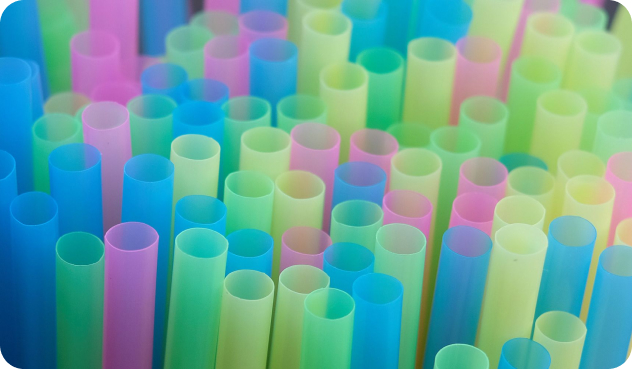
Polyhydroxyalkanoate (PHA) is a plant-based thermoplastic produced from renewable resources such as cornstarch, sugarcane, and canola and soy seeds. Usually beige or tan in color, PHA straws resemble plastic straws, can withstand high temperatures, and are FDA-approved for food service. Compared to paper straws, PHA straws are more versatile and have a longer shelf life, making them a more sustainable and durable option for restaurants and other food service outlets.
PHA Straws Pros
- Compostable in industrial composting, home composting, and marine environments.
- Made from renewable sources and sustainable.
- Durability performs and looks like plastic.
- Lots of color, size, and style options.
PHA Straws Cons
- Most expensive option in the market.
- Limited supply.
- Recycling programs for PHA materials are limited.
- The degradation time of PHA materials varies depending on the conditions.
PLA Straws
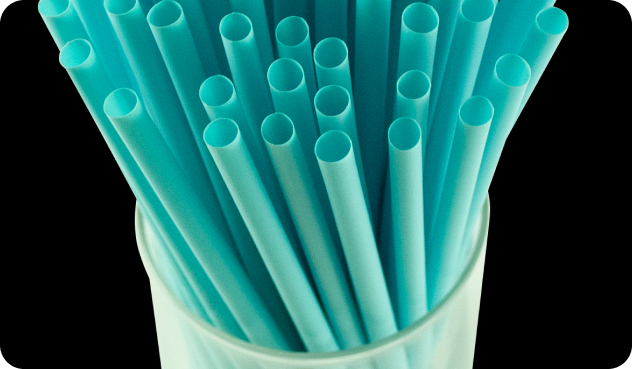
Polylactic acid (PLA) is a critical innovation in plastic alternatives. PLA straws are a sustainable alternative to traditional plastic straws. PLA is a bioplastic made from natural resources like agave, cornstarch, or sugarcane.
The process of making PLA straws involves a delicate balance of temperature, pressure, and chemistry to turn these raw materials into a sturdy, flexible, and safe product. Once heated, the material is molded into straw-shaped tubes and cut to size. The result is a product that can serve the same function as traditional plastic straws while reducing the environmental impact caused by conventional plastics.
Standard PLA requires specific conditions to break down. PLA straws cannot be sent to landfills as they require high temperatures to break down. Proper disposal and efficient breakdown of PLA require industrial composting.
PLA Straws Pros
- Compostable in commercial composting facilities.
- Made from renewable sources.
- Durable.
- Sustainable.
- Performs and looks like plastic.
- Lots of color, size, and style options.
PLA Straws Cons
- Will not break down efficiently in a landfill.
- Requires industrial composting.
Paper Straws
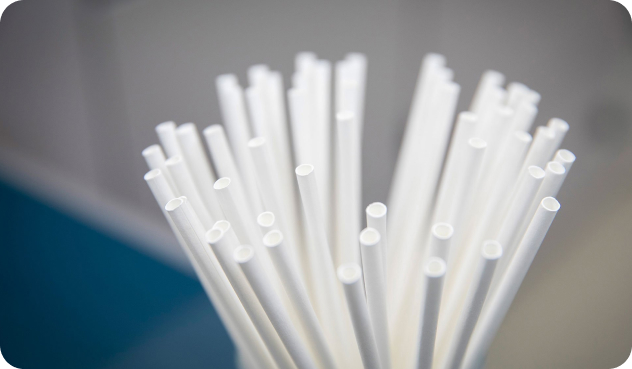
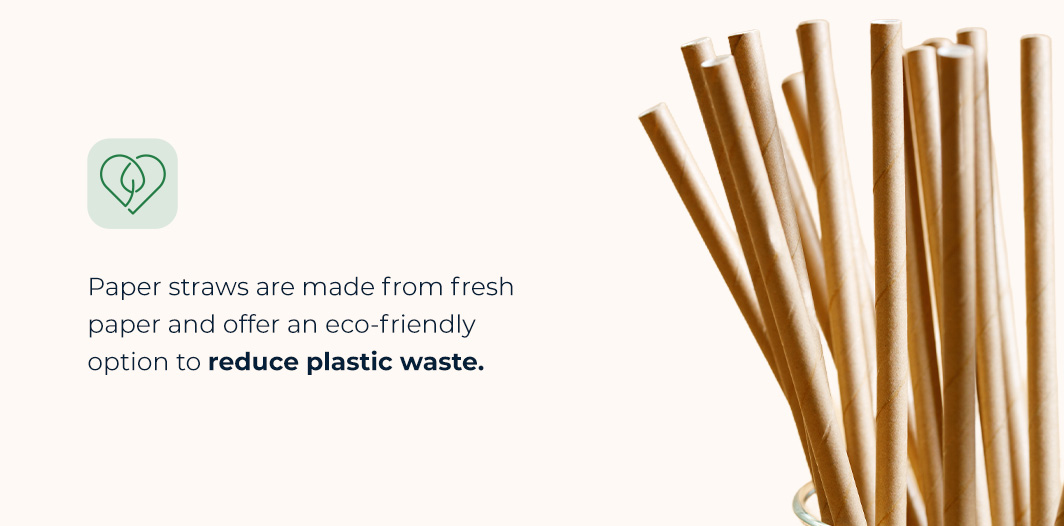
Paper straws have gained popularity due to their compostable nature and sustainability. Unlike plastic straws, they do not harm the environment and can be easily disposed of with regular trash or compost. Paper straws are a viable, cost-effective solution to reduce plastic waste and are significantly more sustainable.
Paper straws are made from FDA-approved food-grade paper and do not contain BPA plastics; however, use cases and durability are considerations. Paper straws will get soggy if left in liquid, and some consumers don’t like the feel of paper in their mouths.
Paper Straws Pros
- Degrade faster than plastic straws.
- Safe and toxin-free.
- Inexpensive.
- Availability in various designs and colors.
Paper Straws Cons
- Becomes soggy in liquid.
- The majority contain chemicals known as poly- and perfluoroalkyl substances (PFAS) that don’t break down in the body or the environment.
- Food-contaminated paper straws are non-recyclable.
- They can be just as energy-costly to produce as plastic straws.
Agave Straws
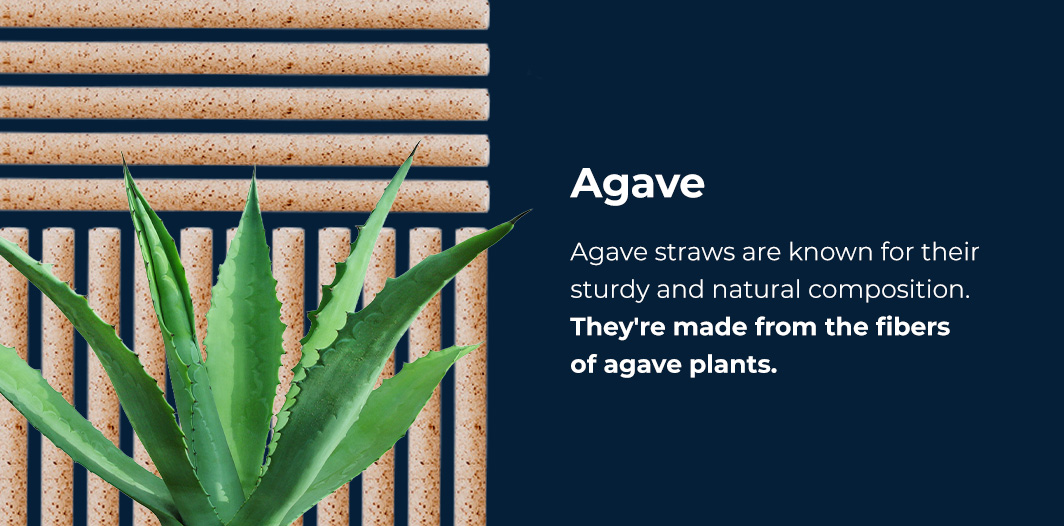
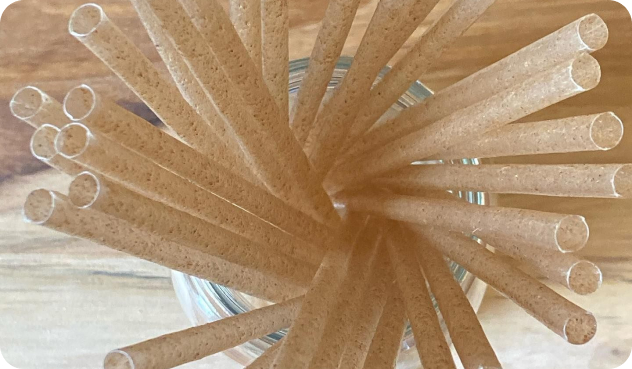
Greenprint®’s Green Dot Compostable Upcycled Agave Straws are among the few straws on the market certified TÜV Austria OK Compost HOME, meaning they break down in a backyard compost bin at ambient temperatures (20 to 30°C). This is a rare achievement: standard PLA-based straws require industrial composting at 55 to 60°C and fail home compostability certification.
The difference is our proprietary enzyme-enhanced agave-PLA/PBAT compound. The enzyme masterbatch, integrated during compounding, catalyzes hydrolysis of PLA polymer chains, enabling full breakdown at lower temperatures. Our biodegradation study GP-BIO-001, validated in triplicate, documented full breakdown by approximately Week 20 in home compost conditions. This is supporting evidence alongside the TÜV certification, not a standalone claim. Our agave straws also hold BPI Commercial Compostability certification.
The agave fiber we use is sourced as post-tequila agricultural waste from small farming families in Jalisco, Mexico, where the region generates over 350,000 tons per year of agave plant waste. Unlike bamboo (shipped from Asia) or wheat straw (diverts from animal feed), agave waste has no competing use. The primary purpose of agave is to produce Tequila and Mezcal, an industry that uses quite a lot of the plant but leaves behind massive amounts of unusable waste. Turning that waste into products like straws is an upcycling approach that creates direct revenue for farming families while solving a waste problem.
Agave straws are sturdy and long-lasting, making them a durable and sustainable alternative to plastic. Agave straws are non-toxic, making them ideal for food service and hospitality industries that prioritize sustainability and customer demand for plant-based options.
Agave Straws Pros
- TÜV Austria OK Compost HOME certified, breaking down at backyard compost temperatures.
- BPI Commercial Compostability certified.
- Durable and maintains structural integrity even with prolonged use.
- Certified by the Forest Stewardship Council (FSC) for responsible sourcing.
- Suitable for hot and cold beverages, including smoothies and juices.
- Performs similarly to plastic straws.
Agave Straws Cons
- Limited suppliers of this product.
- Limited color and style options.
Bamboo Straws
Bamboo is a fast-growing, renewable resource that is durable and lightweight. Bamboo straws are known for their mild, neutral taste that doesn’t interfere with a drink’s flavor. They’re designed for multiple uses, further reducing waste.
Bamboo Straws Pros
- They are one of the best compostable straws since they break down naturally in compost.
- Chemical-free and safe for reuse, maintaining beverage taste integrity.
- Renewable, organic resource that lowers deforestation.
- Cost-effective option that supports sustainable practices.
- Versatile shapes and sizes make it suitable for a wide range of drinks.
Bamboo Straws Cons
- They can’t be recycled, but they break down and compost quickly.
- Over time, these straws can show signs of wear and need to be replaced.
- Bamboo can be sensitive to moisture and may form mold or degrade without proper drying after every use or wash.
- Bamboo straws have limited heat resistance to extremely hot beverages.
Grass Straws
Grass straws are made from various natural grass types, such as wheatgrass or hay. They are compostable, and they are made by cutting, washing, and drying grass.
Grass Straws Pros
- Since no chemicals are used, they pose no threat to wildlife if they’re accidentally ingested.
- These straws undergo minimal processing during a simple production process.
- Cost-effective alternative to plastic straws as it requires minimal resources.
Grass Straws Cons
- Limited availability.
- Shorter shelf life.
- Less durable.
- Not suitable for hot beverages.
Sugarcane Straws
Sugarcane straws are created from bagasse, a byproduct of sugarcane processing, making them sustainable options. The bagasse is cleaned and processed to remove impurities, then molded using heat and pressure.
Sugarcane Straws Pros
- They’re strong, durable, and water-resistant, which makes them suitable for cold beverages.
- Sugarcane straws aren’t edible but are compostable and safe for wildlife.
- They last longer in beverages than paper straws and are taste-free.
- These straws are fully home compostable.
Sugarcane Straws Cons
- Limited availability.
- Unsuitable for hot beverages.
- Energy-intensive production.
- Limited shelf life.
Where Can You Get Compostable Straws?
You can find compostable straws at various places, both online and in physical stores. Here are a few common places where you can purchase them:
- Online retailers: Well-known retailers often offer compostable straws for purchase.
- Sustainable businesses: Local and online sustainable businesses sell a wide range of plant-based compostable straws along with other sustainable products.
- Supermarkets: Some larger supermarkets or grocery stores may have a sustainable products section that includes compostable straws.
- Restaurant supply stores: Stores that cater to restaurants and food service businesses may carry bulk quantities of compostable straws.
- Specialty shops: Shops that focus on sustainable living, organic products, or responsible goods are likely to have compostable options.
- Farmers’ markets: Some farmers’ markets may have vendors selling sustainable products, including compostable straws.
- Bulk stores: Wholesalers that sell sustainable products may offer compostable straw options in large quantities.
Home-Compostable vs. Industrial-Compostable Straws
Compostable straws, such as those made of bamboo, paper, or sugarcane, are classified as those that can decompose in a home compost bin or straws that require disposal in an industrial compost facility.
Under normal conditions, home-compostable straws break down in home composting systems. As long as the heat, moisture, and microorganism conditions are similar to traditional composting, these straws will decompose effectively, although over a longer period of time. Look for TÜV Austria OK Compost HOME certification to verify home compostability. Greenprint®’s agave straws achieve this certification because our enzyme technology enables breakdown at ambient temperatures (20 to 30°C).
Industrial composting facilities deal with a broader range of compostable products in controlled environments. Industrial-compostable straws, including standard PLA straws, require higher temperatures (55 to 60°C) and microbial activity in industrial composting settings to fully break down within a shorter time frame. BPI Commercial Compostability certification (ASTM D6400) verifies industrial compostability.
Frequently Asked Questions
Are compostable straws really compostable?
Only if they carry third-party certification from bodies like BPI or TÜV Austria, and you dispose of them in the matching compost system. Without certification, “compostable” claims are unverified.
What are the drawbacks of compostable straws?
PLA and other industrial-only straws need commercial composting facilities, which aren’t available everywhere. Paper straws can go soggy and may contain PFAS. Home-compostable agave straws avoid the infrastructure gap but have limited color options.
What is the most sustainable straw?
The most sustainable straw matches your local waste system. For operators without industrial composting access, a TÜV Austria OK Compost HOME certified agave straw offers the most practical end-of-life pathway.
How long do compostable straws take to break down?
Roughly 90 to 180 days in industrial composting, depending on the material. Greenprint®’s agave straws reached full breakdown by approximately Week 20 in home compost conditions in our GP-BIO-001 study.
Can compostable straws be composted at home?
Only straws certified for home composting, such as those with TÜV Austria OK Compost HOME certification. Standard PLA straws require industrial composting at higher temperatures.
What certifications should I look for?
BPI Commercial Compostability (ASTM D6400/D6868) for industrial composting, and TÜV Austria OK Compost HOME for backyard composting. Both certifications should name the certifying body on packaging.
Straws From Greenprint
Making sustainable choices in everyday consumption habits will help create a more responsible future. Agave straws are compostable, making them ideal for businesses and consumers looking to reduce their environmental impact.
Greenprint® offers compostable straws as well as post-consumer recycled straws that are sturdy and durable. Whether you need small or bulk quantities, you can have peace of mind that our products will help prevent unnecessary pollution.
Ready to make the switch to sustainable alternative straws? Contact our team today to explore our sustainable solutions.

Earth Day facts that show the scale of the environmental crisis, from plastic and landfill waste to CO2 and wildlife loss. See what the numbers mean for you.

Minnesota plastic ban rules for businesses, including city bag fees, Green To Go takeout packaging, PFAS limits, compostable labels, and EPR dates to plan for.
Reduce reuse recycle explained in plain terms. Learn what each of the 3 Rs means, why the order matters, and how compost completes the set as the 4th R.