

The Lifecycle of Compostable Products: From Plant to Soil



Content
- What Makes a Product Compostable
- Where Compostable Materials Come From
- How Compostable Products Are Made
- How Compostable Products Perform in Use
- What Happens When Compostable Products Break Down
- How Certifications Verify the Lifecycle
- Why the Compostable Lifecycle Matters for Your Business
- Frequently Asked Questions
The Lifecycle of Compostable Products Explained
Every compostable product follows a circular path. It starts as a plant, becomes packaging you can use, and returns to soil when composting is done right. Understanding the lifecycle of compostable products helps you make smarter purchasing decisions and close the loop on waste. At Greenprint®, we design our products around this plant-to-soil journey.
What Makes a Product Compostable
A compostable product breaks down into water, carbon dioxide, and nutrient-rich humus under specific composting conditions within a defined timeframe. This is different from vague “green” labels that lack standardized timeframes or testing requirements. We’ve written a detailed comparison of certified compostable vs. other claims if you want the full breakdown.
For a product to earn the “compostable” label, it must meet rigorous testing standards. ASTM D6400 is the benchmark in the United States. It sets requirements for disintegration, biodegradation rates, and ecotoxicity in commercial composting conditions. You can read about the science behind compostability testing for a closer look at what the testing involves.
Not all packaging labeled “compostable” is created equal. Look for products backed by third-party certifications rather than self-declared claims. The testing standard and the certification mark are what give the word “compostable” real meaning.
Where Compostable Materials Come From
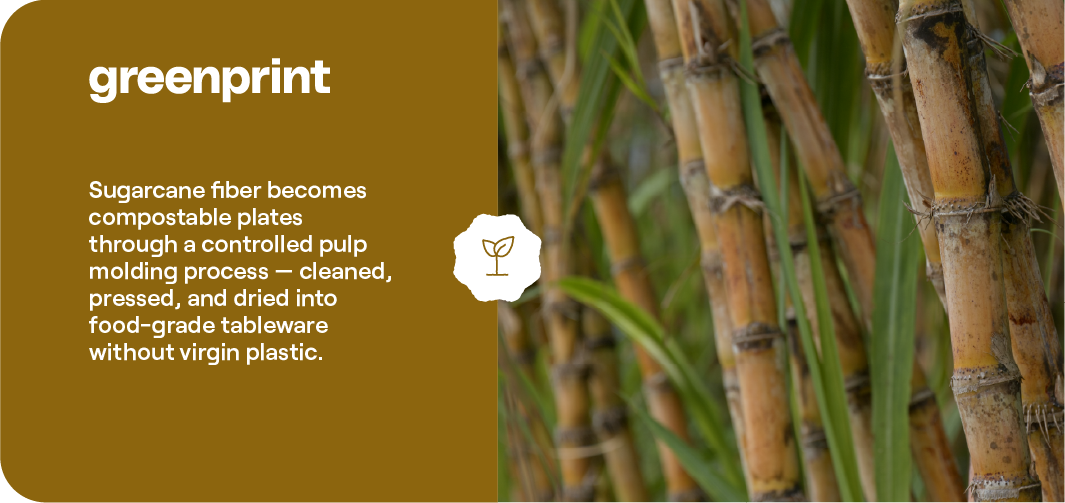
The raw materials behind compostable products come from renewable sources. Sugarcane bagasse, bamboo, corn starch (used to make PLA), palm leaves, and other agricultural byproducts all serve as feedstock. Many of these materials are upcycled from waste streams that would otherwise sit unused.
Bagasse is one of the best examples. It’s the fibrous material left over after sugarcane juice is extracted. Instead of being discarded or burned, it gets a second life as plates, bowls, and clamshells. We’ve written a full guide on how bagasse becomes tableware if you want the complete story.
Other feedstocks follow a similar logic. Corn starch is processed into PLA (polylactic acid), a plant-based polymer used in cups, lids, and cutlery. Palm leaves are pressed into plates without any chemical binders. Each of these materials starts as something that grew in a field, not something drilled from underground.
When you’re sourcing compostable packaging materials for your operation, knowing where your raw inputs come from matters. Renewable, waste-derived feedstock keeps virgin resources in the ground and supports circular supply chains.
How Compostable Products Are Made
Manufacturing turns those raw materials into the plates, cups, straws, and containers you see on shelves. The process depends on the material.
Bagasse is mixed with water to create a pulp, then pressed into molds under heat and pressure. The molds shape it into plates, bowls, or clamshells. The finished products are dried and trimmed. No petroleum-based coatings are needed.
PLA pellets follow a different path. They’re melted and either extruded (for straws) or injection-molded (for cutlery and cups). The process is similar to conventional plastic manufacturing, but the input material comes from plants rather than fossil fuels.
Compared to petroleum plastic production, compostable packaging manufacturing avoids many of the toxic chemical additives associated with conventional processes. The result is a finished product that performs during use and breaks down after. You can learn more about PLA and how it’s made in our PLA guide.
How Compostable Products Perform in Use
One of the most common misconceptions is that compostable packaging for food is flimsy or unreliable. That’s not the case.
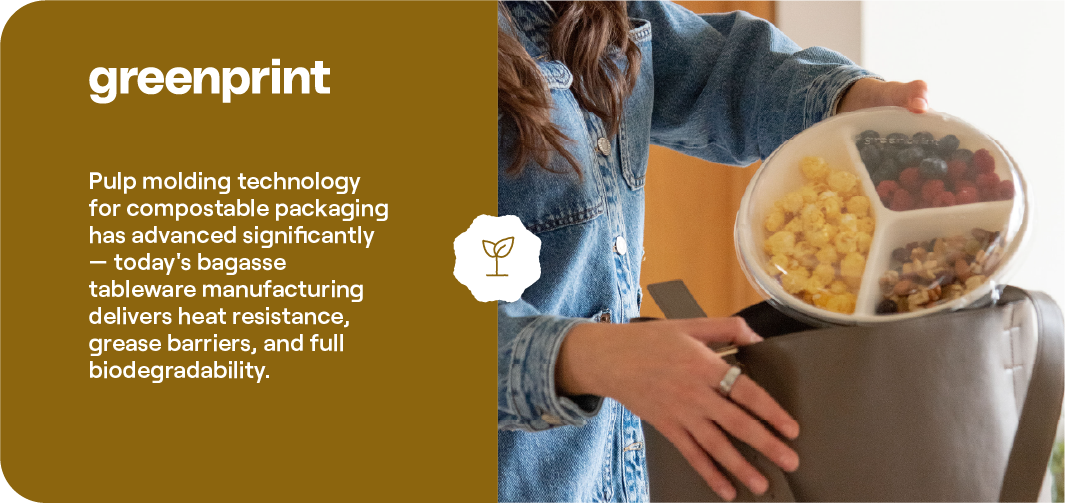
Compostable plates handle hot, greasy, and wet foods without buckling or leaking through. Compostable cups hold hot beverages at serving temperature. Compostable food packaging materials maintain their structure through an entire meal. These products are engineered to perform under real-world foodservice conditions.
If you’re a foodservice operator, performance is non-negotiable. Your containers need to survive a delivery run across town. Your cutlery needs to cut through a steak. Your cups can’t soften halfway through a customer’s coffee. Compostable products built from quality materials meet these demands without compromise.
The difference between compostable and conventional packaging shows up after the meal, not during it. Your customers get the same functional experience. Your waste stream gets a better outcome.
Heat resistance is worth highlighting specifically. Bagasse-based products like Fiberware™ clamshells and compostable plates and bowls stand up to microwaving and hot food holding. PLA-based compostable clear cups are designed for their intended temperature range and perform reliably within it.
What Happens When Compostable Products Break Down
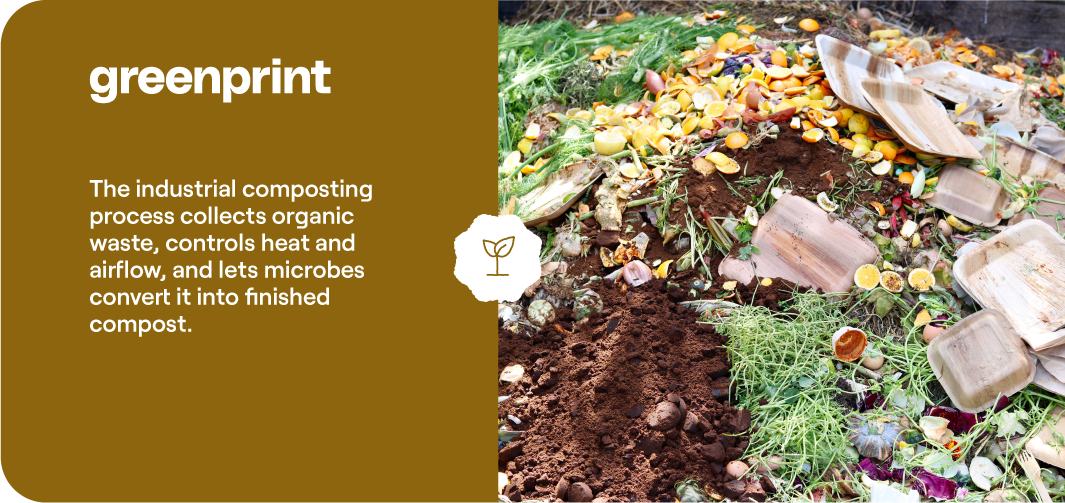
This is the stage that completes the lifecycle of compostable products. After use, microorganisms, heat, and moisture work together to break down compostable materials into three outputs: water, CO2, and humus (a nutrient-rich soil amendment).
In an industrial composting facility, this process takes roughly 90 to 180 days. Conditions inside these facilities are carefully managed. Temperatures reach 55 to 60°C. Moisture levels stay consistent. Oxygen flow is maintained through regular turning of the compost pile.
The finished compost can go back to farms and gardens. That’s the circular loop: plants become products, products become compost, compost feeds new plants.
What’s left behind is not waste. Humus improves soil structure, helps retain moisture, and supports plant growth. When compostable products are processed correctly, the end result is a resource, not refuse.
Industrial vs. Home Composting
Industrial and home composting differ in temperature, scale, and timeframe. Industrial facilities process materials faster because they maintain higher, more consistent heat. Home compost piles operate at ambient temperatures and take longer to break down the same materials. For a complete comparison of industrial and home composting methods, we’ve put together a detailed guide.
How to Dispose of Compostable Products Correctly
Proper disposal is the step that determines whether a compostable product actually closes the loop. Check whether your community offers curbside composting or has a commercial composting drop-off program. Many cities and counties are expanding access, so it’s worth checking even if it wasn’t available a year ago.
If compostable products end up in a landfill, they won’t break down as intended. Landfills are sealed environments that lack the oxygen, moisture, and microbial activity composting requires. That’s why disposal infrastructure matters as much as the product itself.
If you don’t have local composting access, there are still options. Some private haulers serve commercial accounts, and regional composting networks are growing. We cover what to do when local composting infrastructure isn’t available in a separate guide.
How Certifications Verify the Lifecycle
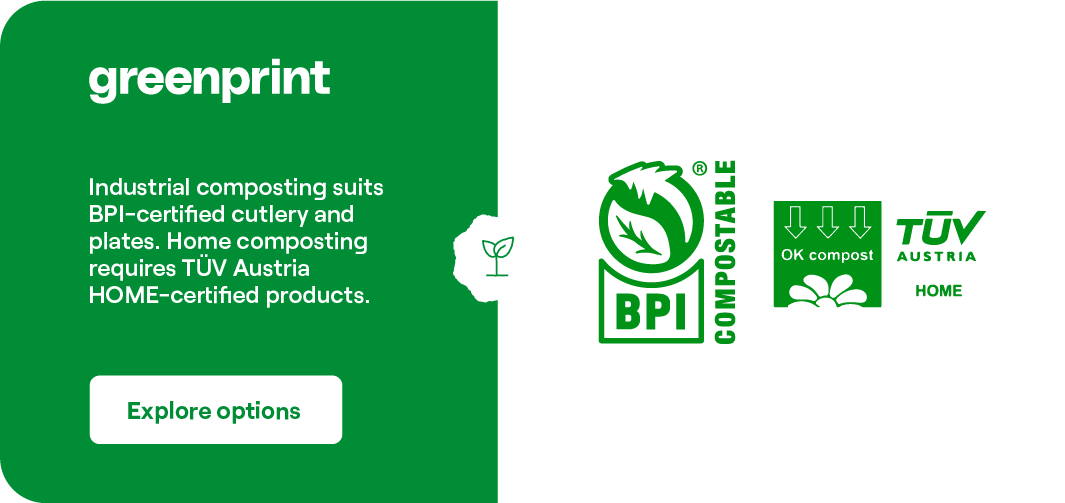
Certifications exist to verify that a product actually completes the composting lifecycle as claimed. BPI certification confirms that a product meets ASTM D6400 standards for commercial compostability. It’s the most widely recognized compostable certification in North America.
TÜV Austria provides certifications for both industrial composting (OK Compost INDUSTRIAL) and home composting (OK Compost HOME). Each certification requires independent third-party testing that verifies disintegration rates, biodegradation percentages, and the absence of harmful residues in finished compost. You can read about the full testing process for compostable products for more detail.
PFAS contamination is another concern worth addressing. Persistent fluorinated chemicals have been found in some food packaging, including products marketed as compostable. Third-party PFAS testing ensures that certified products don’t introduce these chemicals into the compost stream. We’ve written about how PFAS testing works within compostable certification programs if you want to understand how that verification works.
When you see a BPI certification mark on a product, it means that product has been independently tested and verified. It’s not a self-declared claim. You can also explore emerging compostable certification standards to stay ahead of where the industry is headed.
Why the Compostable Lifecycle Matters for Your Business
Switching to compostable products isn’t just about materials. It’s about positioning your business for what’s coming.
Waste reduction mandates are expanding across states and municipalities. Customers are asking where your packaging goes after the meal. Regulators are tightening restrictions on single-use plastics and greenwashing claims.
Compostable packaging gives you a verifiable answer to all three. You reduce landfill-bound waste with products that return to soil. You give customers packaging backed by certifications, not vague marketing language. And you align with regulatory trends instead of reacting to them.
The lifecycle, from sourced material to certified compost, is the proof. When every step is verified by third-party testing, your sustainability story holds up to scrutiny.
That matters more than ever as the FTC Green Guides continue to raise the bar on what companies can claim. Vague language and unsubstantiated labels are increasingly risky. Products with clear certification trails give your business a defensible position.
Ready to make the switch? Explore certified compostable foodservice packaging from Greenprint and find the right compostable products for your operation.
Frequently Asked Questions
How Long Do Compostable Products Take to Break Down?
In an industrial composting facility, most certified compostable products break down within 90 to 180 days. Home composting takes longer, depending on temperature, moisture, and pile management.
Do Compostable Products Break Down in Landfills?
No. Landfills lack the oxygen, moisture, and microbial conditions that composting requires. Compostable products need proper composting infrastructure to break down as intended.
What Is the Difference Between Compostable and Biodegradable?
“Compostable” means a product breaks down into natural elements within a specific timeframe under defined composting conditions, verified by third-party testing. “Biodegradable” has no standardized timeframe or conditions and can be misleading without further context.
How Do You Know if a Product Is Truly Compostable?
Look for third-party certifications like BPI (which verifies ASTM D6400 compliance) or TÜV Austria OK Compost. These certifications confirm that the product has been independently tested and meets composting standards.
Can You Compost Compostable Products at Home?
It depends on the product and its certification. Products certified under TÜV Austria OK Compost HOME are verified for home composting conditions. Products certified only for industrial composting need a commercial facility to break down properly.
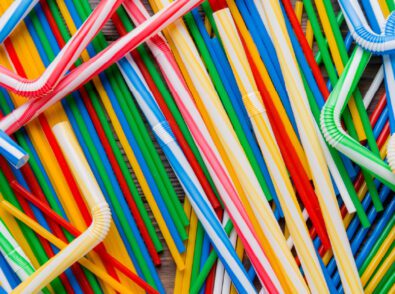

Compostable straws vs plastic straws: compare materials, breakdown, certifications, and cost to pick the right certified compostable straw for your business.
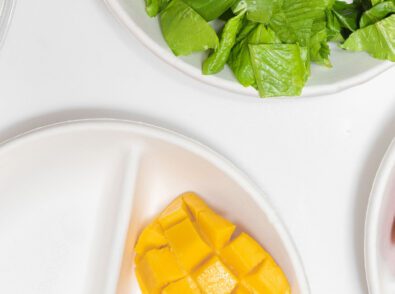
Compare the best salad bowls with lids for takeout and catering, from bagasse to plastic, and choose industrially compostable options that keep salads fresh.
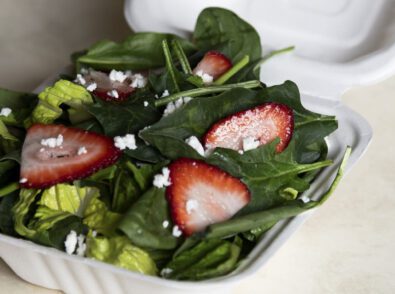
Compare the best compostable food containers for restaurants, from bagasse clamshells to PLA deli boxes. Choose certified, PFAS-free packaging with confidence.