

What Is PLA Plastic? A Practical Foodservice Guide



What Is PLA Plastic? A Practical Guide for Foodservice Operators
PLA plastic is one of the most common plant-based alternatives to conventional plastic in foodservice. This guide explains what PLA is, how it’s made, where it works best, and what you need to know about composting before you buy.
Key Takeaways
- PLA plastic comes from plant starches instead of petroleum, but standard PLA only composts in industrial facilities with high heat.
- PLA made with Greenprint®’s proprietary enzyme technology; where an enzyme masterbatch integrated during compounding at 160–190°C catalyzes hydrolysis of PLA polymer chains; can break down at home compost temperatures (20–30°C), which matters if your area lacks industrial composting pickup.
- Choosing PLA products with BPI or TÜV Austria certification protects your business from compliance risk under FTC Green Guides.
What Is PLA Plastic and What Is It Made Of?
PLA is polylactic acid, a plant-based plastic made from fermented starches like corn or sugarcane. This means you get cups, straws, and cutlery that look and feel like regular plastic but start from renewable crops instead of petroleum.
For restaurant owners, PLA offers a way to serve customers with familiar disposables while reducing your reliance on fossil fuels. The material is food-contact safe and works well for cold and lukewarm applications. You’ll see PLA called polylactic acid plastic or bioplastic in different contexts, but these terms all describe the same material.
The important thing to understand is that “plant-based” tells you where PLA comes from, not where it goes after use. A product made from plants can still end up in a landfill if it doesn’t have the right composting pathway. That’s why understanding PLA’s end-of-life requirements matters just as much as knowing its origin.
How Is PLA Made?
PLA is made by converting plant starch into lactic acid through fermentation, then linking those lactic acid molecules into a plastic resin. This process turns a simple agricultural ingredient into a material you can mold into foodservice products.
Here’s how it works in plain terms:
- Starch extraction: Manufacturers take starch from crops like corn or sugarcane and break it down into simple sugars.
- Fermentation: Bacteria convert those sugars into lactic acid, similar to how yogurt or beer is made.
- Polymerization: Lactic acid molecules get chemically linked into long chains, forming the PLA resin that becomes finished products.
The resulting resin can be shaped into straws, cutlery, cups, and containers using standard manufacturing equipment. This makes PLA a practical swap for conventional plastic from a production standpoint. The challenge isn’t making PLA products. It’s making sure they actually compost when your customers are done with them.
Benefits and Limitations of PLA Plastic
PLA has real advantages over petroleum-based plastic, but it also has constraints you need to understand before making purchasing decisions. Getting the full picture helps you avoid surprises and choose products that actually work for your operation.
| Aspect | PLA Plastic | Conventional Plastic |
|---|---|---|
| Raw material source | Renewable plant starches | Petroleum (fossil fuels) |
| End-of-life pathway | Compostable under specific conditions | Landfill or limited recycling |
| Heat tolerance | Softens at lower temperatures | Higher heat resistance |
| Certifications available | BPI, TÜV Austria compostability | Recyclability varies by resin |
| Food safety | Food-contact safe | Food-contact safe |
Environmental and Performance Benefits
PLA replaces fossil fuel inputs with renewable plant sources, though the actual carbon footprint reduction depends on specific production processes and supply chains.
The material is food-contact safe and performs well for cold beverages, salads, and grab-and-go items. For your customers, seeing certified plant-based packaging signals that your restaurant is making specific, verifiable choices to reduce reliance on fossil fuel-based materials.
Per FTC Green Guides, environmental claims need to be specific and verifiable. That’s why certifications matter. A PLA product with third-party certification from bodies like BPI or TÜV Austria gives you documented proof that the item meets defined composting standards. Without certification, you’re relying on marketing claims that may not hold up to scrutiny.
Key Limitations for Foodservice Use
Standard PLA softens at relatively low temperatures. This means it’s not suited for hot food or beverages without special coatings or modifications.
The bigger limitation is composting. Standard PLA needs the sustained high heat found only in industrial composting facilities to break down. If your area doesn’t have industrial composting pickup, standard PLA products will likely end up in a landfill; the third-largest U.S. source of methane; where they won’t decompose in any meaningful timeframe. This infrastructure gap is the single biggest challenge with PLA in foodservice.
Common Uses of PLA Plastic
PLA works best for disposable items that don’t need to handle high heat. You’ll find it across restaurants, cafés, and catering operations in products designed for cold and room-temperature service.
Common PLA packaging applications include:
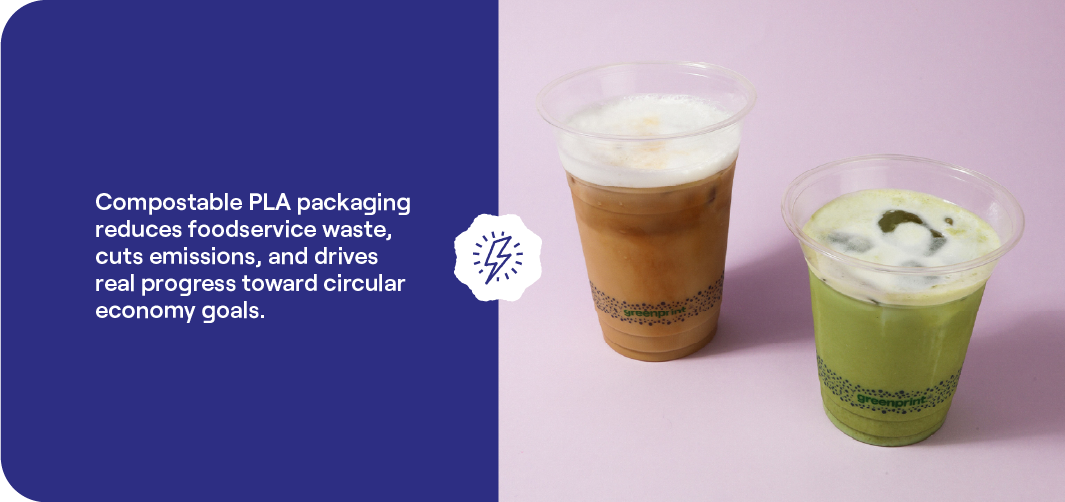
- Cold beverage cups: Clear PLA cups showcase iced coffees, smoothies, and cold drinks with the same transparency as conventional plastic.
- Straws: PLA-based straws offer the familiar feel customers expect from plastic straws.
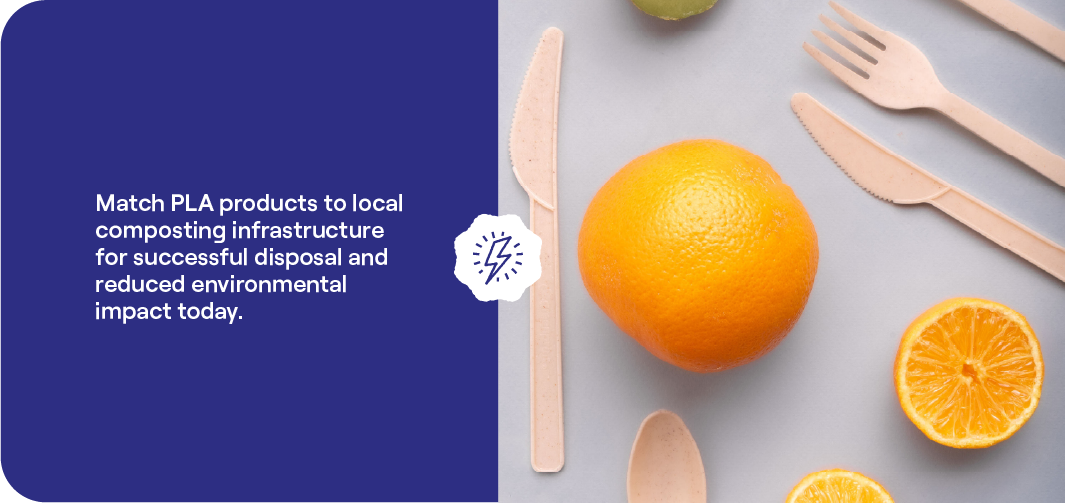
- Cutlery: PLA forks, knives, and spoons work well for salads, cold sides, and lukewarm meals.
- Takeout containers: PLA clamshells and deli containers handle grab-and-go items that don’t require heat retention.
Beyond foodservice, PLA appears in medical devices and 3D printing. But for restaurant operators, the applications above are where PLA makes the most practical impact on your daily operations.
The key question isn’t whether PLA works for your menu. It’s whether the composting infrastructure exists to give these products a proper end-of-life pathway.
PLA and Composting: Industrial vs. Home Compostability
Understanding the difference between industrial and home composting is essential before you invest in PLA products. The word “compostable” on a label doesn’t tell you where or how that product will actually break down.
Why Standard PLA Requires Industrial Composting
Standard PLA needs sustained high temperatures to break down completely. Only industrial composting facilities can maintain this heat consistently enough for PLA to decompose.
This creates a real problem for many restaurant operators. Industrial composting facilities aren’t available everywhere. Even where they exist, commercial pickup service may not extend to your location. If you’re buying standard PLA products without access to industrial composting, you’re paying more for a sustainability benefit that never materializes. The products look responsible, but they follow the same path to the landfill as conventional plastic.
Before purchasing standard PLA, check whether your waste hauler offers industrial composting pickup for commercial accounts.
How Enzyme-Enhanced PLA Composts at Home Temperatures
Our enzyme technology solves the infrastructure gap by enabling composting at the lower temperatures found in home compost systems. At Greenprint®, we integrate an enzyme masterbatch during compounding at 160–190°C. It catalyzes hydrolysis of PLA polymer chains, enabling full breakdown at ambient temperatures (20–30°C).
This isn’t a general property of all PLA. It’s a specific result of an enzyme masterbatch integrated during compounding at 160–190°C. The enzyme catalyzes hydrolysis of PLA polymer chains, enabling full breakdown at ambient temperatures (20–30°C) without the high heat that industrial facilities provide.
Our Upcycled Agave Straws carry TÜV Austria OK Compost HOME certification, which independently verifies they break down under home composting conditions. Our internal study (GP-BIO-001), validated in triplicate, documented full breakdown by Week 20 in home compost conditions (20–30°C) and supports this certification.
Not all of our PLA-based products carry HOME certification. Our Compostable Upcycled Agave Cutlery, which does not include enzyme technology, holds BPI Commercial Compostability certification and requires industrial composting at 55–60°C. We’re transparent about this distinction because accurate end-of-life claims matter under FTC Green Guides.
Is PLA Packaging Right for Your Restaurant?
PLA can work well for your restaurant if you match the right products to your menu, your local waste systems, and your compliance requirements. The key is making informed choices rather than assuming all PLA products perform the same way.
What to Look for in Certified Compostable PLA Products
Always look for third-party certifications from recognized bodies like BPI or TÜV Austria. Certified products have been independently tested and verified to break down within defined timeframes under specific composting conditions.
Here’s what to check before purchasing:
- Certification body: Look for BPI (U.S. industrial composting) or TÜV Austria, the world market leader in bioplastics certification (HOME or INDUSTRIAL certification), logos and documentation.
- Composting pathway: Verify whether the product requires industrial composting or works in home compost systems.
- PFAS testing: Ask for third-party verification that products are PFAS-free; BPI requires less than 100 ppm total organic fluorine; not just self-declared claims.
Uncertified claims carry real compliance risk. FTC Green Guides require that compostability claims be specific, substantiated, and qualified. A product labeled “compostable” without certification may not meet legal definitions, which could expose your business to regulatory scrutiny.
PLA itself is food-contact safe. But verifying that specific products carry proper testing and certification protects both your customers and your operation.
How to Match PLA Products to Your Local Waste Infrastructure
Start by checking whether your area offers industrial composting pickup for commercial accounts. If it does, BPI-certified PLA products will compost through that system. If industrial composting isn’t available, look for products with TÜV Austria OK Compost HOME certification.
Consider these questions when evaluating your options:
- Does your waste hauler offer commercial composting pickup? If yes, BPI-certified products are a good fit.
- Do your customers take items to-go? If they’re disposing of products at home, HOME-certified products give them a real composting option.
- What’s your menu temperature profile? PLA works for cold and lukewarm items but not hot applications.
We designed our product lines with this decision in mind. Our Upcycled Agave Straws with TÜV HOME certification work for operators without industrial composting access. Our Compostable Upcycled Agave Cutlery with BPI certification is built for operations connected to commercial composting programs. Matching the product to the infrastructure means your sustainability investment actually delivers results.
Explore Greenprint’s Plant-Based PLA Foodservice Products
We offer PLA-based product lines designed for different foodservice needs and composting pathways. Each carries its own certifications, and we believe in being clear about exactly what each product can and can’t do.
Our current PLA-based offerings include:
- Upcycled Agave Straws: Made with our enzyme-enhanced agave compound. Certified by TÜV Austria OK Compost HOME and BPI Commercial Compostability, with third-party verified PFAS-free status. These straws compost at home temperatures and are also accepted in industrial composting systems.
- Compostable Upcycled Agave Cutlery: Heavy-weight forks, knives, and spoons made from our agave-PLA compound without enzyme technology. BPI Commercial Compostability certified and third-party verified PFAS-free. These require industrial composting at 55–60°C and work best for cold and lukewarm meals.
- Clearly Compostable™ Cups: PLA-based clear cups for cold beverages like iced coffee and smoothies. Certifications are currently pending, so we do not make compostability or PFAS-free claims for this line until third-party verification is complete.
We manufacture all of our agave-based products at our vertically integrated facility, where we compound our own materials in-house. This gives us full control over formulation, quality, and traceability from raw material to finished product.
Ready to find the right PLA-based products for your restaurant? Explore our products at greenprintproducts.com/our-store or contact our team at greenprintproducts.com/contact to get recommendations matched to your menu and local waste infrastructure.

Paper vs. plastic environmental impact depends on material, reuse, and disposal. See what life cycle studies show and how restaurants can pick better packaging.

Learn how the Colorado plastic ban and single-use plastic laws affect your business, from the bag fee and foam ban to local rules. Get compliant today.

See the Hawaii plastic ban and single-use plastic laws for Honolulu, Maui, Hawaii County, and Kauai, with dates, fines, and compliant foodware tips for 2026.