

Certified Compostable vs. Recycled Content Packaging


Content
- What Certified Compostable Means
- What Certified Recycled Content Means
- How Compostable Certifications Work
- How Recycled Content Certifications Work
- Certified Compostable vs. Recycled Content: Key Differences
- PFAS, Microplastics, and Material Safety
- When to Choose Compostable vs. Recycled Content
- What This Means for Foodservice Buyers
- FAQ
Certified Compostable vs. Recycled Content: What to Know
When you see “certified” on packaging, the word can mean very different things. Certified compostable and certified recycled content follow separate testing standards, involve different certifying bodies, and lead to completely different end-of-life outcomes. If you’re sourcing foodservice packaging, understanding these two certification paths helps you make informed purchasing decisions and back up your sustainability claims with proof.
What Certified Compostable Means
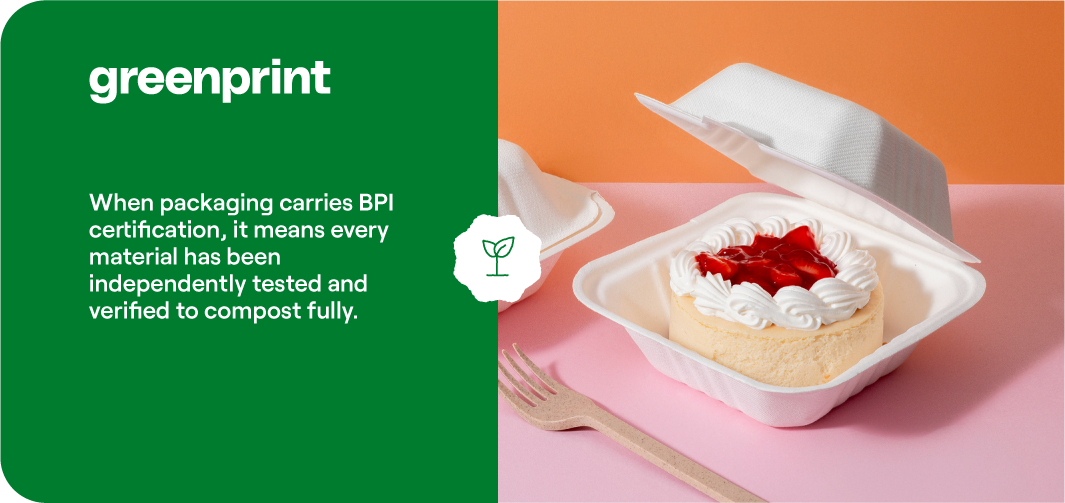
Certified compostable packaging has been tested and verified by a third-party organization to break down in a composting environment within a specific timeframe. In the U.S., the Biodegradable Products Institute (BPI) is the primary certifier. Products earn BPI certification by meeting standards like ASTM D6400 (for solid items) or ASTM D6868 (for coated products). For a deeper look at how these testing standards work, see our guide on compostable certification standards and what they measure.
The certification confirms three things: the product disintegrates within 12 weeks, it converts into organic matter through biological processes within 180 days, and it doesn’t leave harmful residues in the finished compost. Without this third-party verification, a “compostable” label on packaging is just a marketing claim with no standardized testing behind it.
What Certified Recycled Content Means
Certified recycled content means a product has been verified to contain a stated percentage of recycled materials. These materials fall into two categories:
-
Post-consumer recycled content comes from materials collected after a consumer used and discarded them (think curbside recycling bins).
-
Pre-consumer recycled content (also called post-industrial) comes from manufacturing scrap that never reached a consumer.
The certification doesn’t address what happens to the product after you use it. It only verifies what went into making it. A cup with 30% post-consumer recycled content may still end up in a landfill if it can’t be recycled again due to food contamination.
How Compostable Certifications Work
Compostable certification starts with laboratory testing. The manufacturer submits products to an accredited lab, which runs disintegration and biological breakdown tests under controlled composting conditions. The lab measures whether the product physically falls apart, whether microorganisms fully consume the material, and whether the resulting compost is safe for plant growth. A third-party certifier reviews the lab results, inspects the manufacturing process, and issues the certification if the product meets the standard.
Certification isn’t one-and-done. Certifiers like BPI, TÜV Austria, and the Composting Manufacturing Alliance (CMA) require annual renewals and can revoke certification if a product changes formulation. This ongoing oversight is what separates certified compostable products from items that simply claim to be “compostable” on the label.
BPI Certification and ASTM D6400
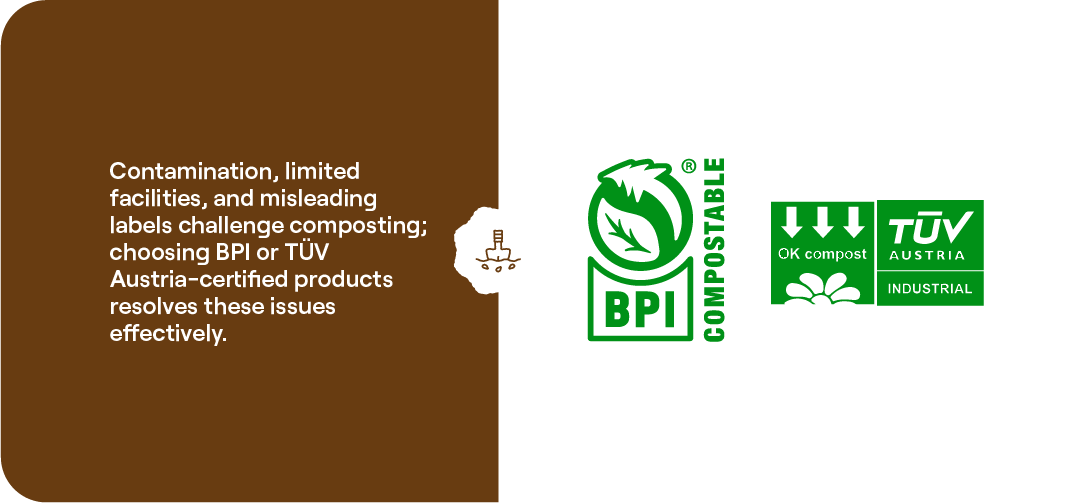
BPI certification is the most widely recognized compostable standard in North America. It’s built on ASTM D6400 and D6868 testing protocols, which measure disintegration rate, biological breakdown percentage, and ecotoxicity. Since January 2020, BPI has also required that certified products contain no intentionally added PFAS and test below 100 ppm total organic fluorine. For the complete breakdown of how these tests work, visit our article on how compostable certification testing works.
Home Compostable vs. Industrial Compostable
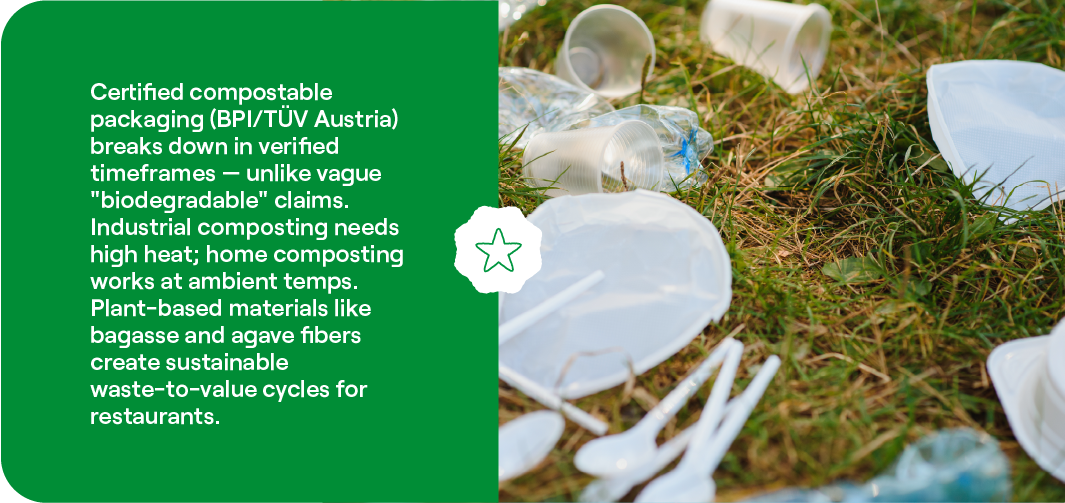
When comparing certified compostable to recycled content packaging, this distinction matters. Industrial composting facilities reach temperatures above 55°C, which most home compost piles can’t sustain. If your customers don’t have access to industrial composting, a home-compostable certification (like TÜV Austria OK Compost HOME) offers a more practical end-of-life path. For the full comparison of these two composting environments, see our guide on commercial composting and how it works.
How Recycled Content Certifications Work
Recycled content certifications verify the percentage of recycled material in a finished product. Unlike compostable certifications, they focus on what goes into a product rather than what happens when you’re done with it. This distinction is worth repeating: a recycled content certification tells you where the raw materials came from, not whether the finished product can be recycled again after use.
Two major standards govern this space: the Global Recycled Standard and SCS Recycled Content Verification. Both use independent auditors, but they differ in scope and requirements.
GRS and SCS Recycled Content Verification
The Global Recycled Standard (GRS), managed by Textile Exchange, requires a minimum of 20% recycled content for a product to qualify. GRS audits the entire supply chain, tracking recycled material from collection through processing to the final product. It also includes social and environmental criteria for manufacturing facilities.
SCS Recycled Content Verification takes a different approach. SCS Global Services verifies the specific percentage of recycled content a manufacturer claims, whether that’s 30%, 50%, or 100%. The verification involves chain-of-custody documentation and facility audits to confirm recycled material inputs match the stated claims.
Both systems rely on third-party auditors. The key difference is scope: GRS covers supply chain practices broadly, while SCS focuses specifically on validating the recycled content percentage.
Certified Compostable vs. Recycled Content: Key Differences
This side-by-side comparison highlights where these two certification paths diverge:
| Feature | Certified Compostable (BPI) | Certified Recycled Content (GRS/SCS) |
|---|---|---|
| What it proves | Product breaks down in composting conditions. | Product contains verified recycled materials. |
| End-of-life pathway | Commercial or home composting. | Recycling (if infrastructure exists and product isn’t contaminated). |
| Material origin | Plant-based, bioplastic, or fiber-based. | Post-consumer or pre-consumer recycled plastics, paper, or fiber. |
| PFAS testing | Required (BPI mandates below 100 ppm total fluorine). | Not addressed by the certification. |
| Contamination risk | Designed for food-soiled items. | Food contamination can prevent recycling. |
| Infrastructure needed | Composting facility (industrial or home, depending on cert). | Recycling facility that accepts the specific material type. |
| Regulatory alignment | Aligns with FTC Green Guides for compostable claims. | Must substantiate recycled content percentage per FTC Green Guides. |
PFAS, Microplastics, and Material Safety
The two certification paths handle material safety very differently. BPI’s compostable certification requires PFAS testing, with products needing to fall below 100 ppm total fluorine to earn or keep their certification. Recycled content certifications like GRS and SCS don’t include PFAS testing requirements at all. For a detailed look at how PFAS testing works in the compostable certification process, see our article on PFAS testing standards for compostable packaging.
For food-contact packaging, this gap matters. Recycled content products may contain PFAS or microplastics carried over from their previous life, and the recycled content certification process doesn’t screen for these substances. If material safety is a priority for your operation, certified compostable products offer a more rigorous verification process for food-contact items.
When to Choose Compostable vs. Recycled Content
The right choice depends on your operation and your local infrastructure. Here’s a practical framework:
Choose certified compostable when:
-
Your packaging touches food directly (plates, bowls, containers, cups).
-
Items will be food-soiled and can’t be recycled.
-
You have access to commercial composting pickup or a home-compostable product.
-
You want PFAS testing built into the certification process.
-
Local regulations require or incentivize composting of compostable foodservice packaging in your business.
Choose certified recycled content when:
-
The product won’t contact food directly (outer packaging, shipping materials).
-
Clean, dry items can realistically enter the recycling stream after use.
-
You’re working toward recycled content purchasing targets.
-
Local recycling infrastructure reliably accepts the specific material type for recycling.
Many foodservice operations use both. You might choose certified compostable for plates, bowls, and cutlery that touch food, and certified recycled content for carry-out bags or secondary packaging that stays clean. The two certifications solve different problems, and using them together gives you a defensible sustainability story backed by third-party verification on both sides of the equation.
What This Means for Foodservice Buyers
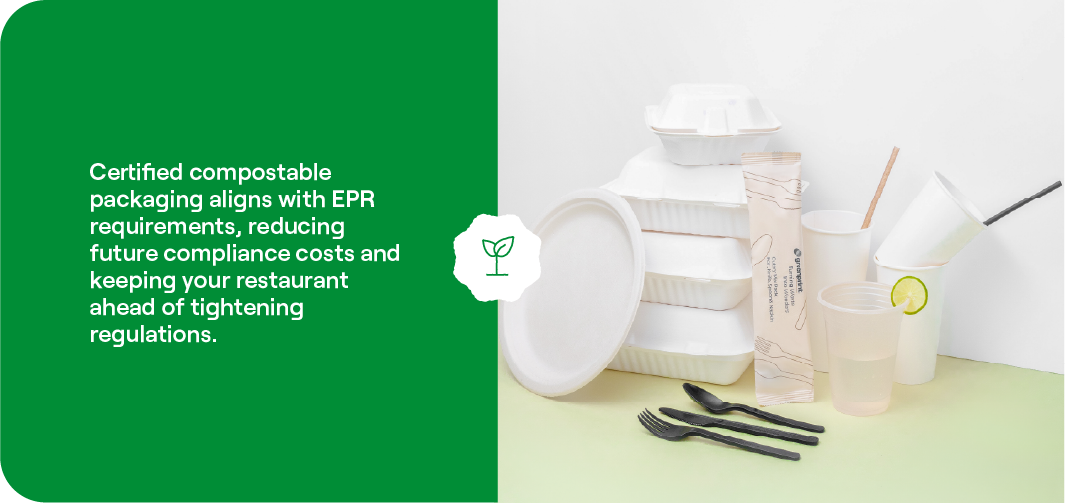
For food-contact packaging, certified compostable offers advantages that recycled content certification doesn’t match. PFAS testing, material safety verification, and a designed end-of-life pathway for food-soiled items make compostable certification a stronger fit for plates, cups, containers, and cutlery. If your packaging gets greasy, saucy, or wet during normal use, composting is the designed disposal path. Recycling facilities typically reject food-soiled materials.
At Greenprint®, our agave straws and cutlery are BPI Commercial Compostable certified and TÜV Austria OK Compost HOME certified. Our Fiberware™ plates, bowls, and clamshells carry TÜV Austria OK Compost INDUSTRIAL certification. Every verified product line has undergone third-party PFAS testing. We built our packaging around the understanding that foodservice items get messy, and they need an end-of-life path that accounts for that reality. Whether you’re looking at compostable agave straws or certified compostable plates and clamshells, every product is backed by verifiable certification data.
FAQ
Is Compostable Packaging Recyclable?
No. Compostable packaging should not enter the recycling stream. It can contaminate recycled materials and disrupt the recycling process.
What Does GRS Certified Mean?
GRS (Global Recycled Standard) verifies that a product contains at least 20% recycled materials, with third-party auditing of the entire supply chain from collection through final production.
Can Recycled Content Packaging Be Composted?
Not unless it also carries a separate compostable certification. Recycled content certification only verifies what materials went into the product, not whether it will break down in a composting environment.


Learn how to reduce carbon footprint at home with simple steps for energy, heating, food, and waste. Start with easy swaps your whole household can keep up.

Are styrofoam cups safe? See how styrene, heat, microwaving, and reuse change foam cup safety, and find foam-free cup options for hot and cold drinks.

The environmental impact of food waste runs from methane emissions to wasted water and land. See how it harms the planet and simple ways to cut it today.