

Compostable Packaging Without Composting: What to Do



Content
- Why "Compostable" Does Not Always Mean Compostable
- The Industrial Composting Problem Most Operators Face
- What Happens to Compostable Packaging in a Landfill
- How Home Compostable Packaging Changes the Equation
- Three Steps to Use Compostable Packaging Without a Local Composter
- Start With Packaging That Works Without Industrial Composting
- Frequently Asked Questions
What to Do With Compostable Packaging Without Composting
Dealing with compostable packaging without local composting feels like buying a car with no roads. You chose the sustainable option, but your municipality has no facility to process it. The good news: a Dual-Path Strategy built around home compostable products lets you move forward today, no industrial composter required.
Why “Compostable” Does Not Always Mean Compostable
The word “compostable” on a package creates an expectation. Operators and customers assume it will break down naturally after disposal. In practice, that assumption is often wrong. The gap between what the label promises and what actually happens at the curb is one of the biggest frustrations in foodservice sustainability.
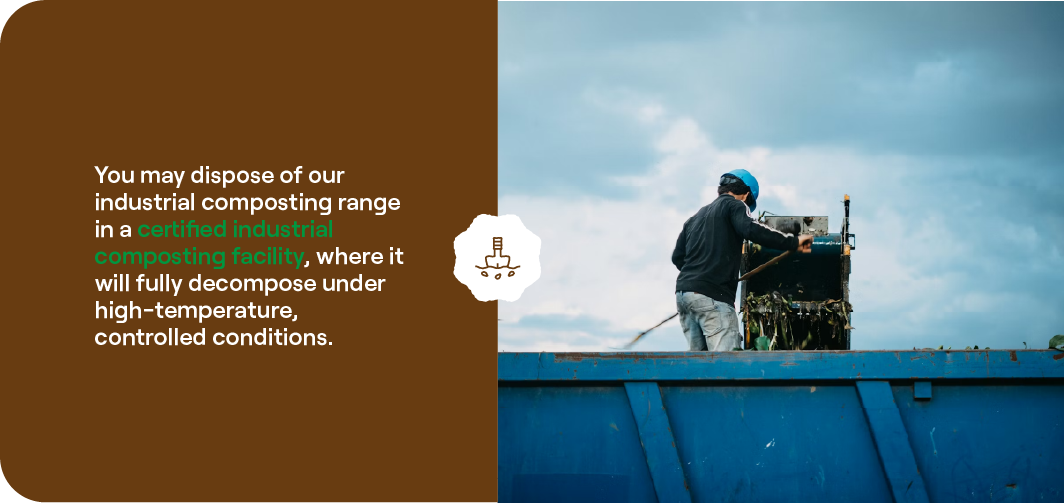
Most packaging labeled “compostable” is certified for industrial composting only. Industrial composting requires sustained temperatures of 55 to 60 degrees Celsius, managed moisture levels, and controlled airflow over several weeks. These conditions exist in commercial composting facilities, not in a restaurant dumpster or a backyard pile.
When an operator buys industrially compostable packaging and has no access to one of these facilities, the label becomes misleading. The product may sit in a landfill for years, performing no differently than conventional plastic. The cost premium you paid for “compostable” delivers no environmental benefit without the right disposal conditions.
The distinction between home compostable and industrially compostable packaging is the key detail most labels leave out. Read our guide to home compostable breakdown timelines for the complete picture of how these two categories differ.
The Industrial Composting Problem Most Operators Face
The infrastructure for processing compostable packaging for food is thin across the United States. Fewer than 200 full-scale composting facilities accept food-soiled packaging. The majority of restaurants, coffee shops, and quick-service operations sit outside the pickup zones for these plants.
This creates a real problem. An operator pays a premium for certified compostable containers, lids, and cutlery. But without a nearby facility, those items have no viable end-of-life path. They go into the trash alongside everything else.
Standard PLA, the most common plant-based plastic used in foodservice packaging, requires industrial-level heat to decompose. At ambient temperatures it holds its structure indefinitely.
For independent restaurant owners, this gap between intention and outcome is discouraging. You want to do the right thing. The infrastructure is not there to support it. That frustration is valid, and it is also solvable.
Multi-unit operators face the same problem at scale. A chain with locations in five different cities may find composting access in one market and none in the other four. Without a packaging solution that works everywhere, sustainability commitments become inconsistent and hard to report on.
What Happens to Compostable Packaging in a Landfill
When compostable packaging ends up in a landfill, the conditions are the opposite of what it needs. Landfills are anaerobic, meaning they lack the oxygen required for composting. Without airflow and microbial activity, compostable materials break down slowly, sometimes over decades.
During that slow decomposition, organic materials in landfills can produce methane. Methane is a greenhouse gas with roughly 80 times the warming potential of carbon dioxide over a 20-year period. The environmental benefit operators expected from choosing certified compostable packaging disappears entirely in this scenario.
The FTC Green Guides address this directly. Packaging cannot be marketed as “compostable” without disclosing the conditions needed for it to actually break down. Unqualified compostable claims on products that require industrial facilities are considered deceptive if most consumers lack access to those facilities. See our guide to spotting greenwashing in packaging claims for more on how to evaluate marketing language.
Disposal conditions matter as much as the material. A compostable product without a composting pathway is packaging in name only. For operators weighing cost and environmental impact, this is the question worth asking before placing your next packaging order: will this product actually break down in the conditions available to me?
How Home Compostable Packaging Changes the Equation
Home compostable certification shifts the equation for operators who lack nearby composting infrastructure. Products certified under TÜV Austria OK Compost HOME are tested and validated to break down at ambient temperatures, the kind of conditions found in a backyard compost bin, a garden pile, or even a covered tumbler behind a restaurant.
| Factor | Home Compostable | Industrially Compostable |
|---|---|---|
| Certification | TÜV Austria OK Compost HOME | BPI (ASTM D6400) |
| Temperature Required | 20 to 30°C (ambient) | 55 to 60°C (sustained heat) |
| Infrastructure Needed | Backyard bin, tumbler, or garden pile | Commercial composting facility |
| Breakdown Timeline | Within 20 weeks at ambient temperatures | 12 to 26 weeks at controlled facility conditions |
| Operator Control | Full control; on-site composting possible | Dependent on local facility access and hauler contracts |
Greenprint® products are certified home compostable under TÜV Austria OK Compost HOME. The proprietary enzyme-enhanced agave compound used in Greenprint’s product line catalyzes breakdown at 20 to 30 degrees Celsius. That is room temperature to mild outdoor warmth. No industrial facility, no special equipment, and no hauler contract needed.
Biodegradation Study GP-BIO-001, Greenprint’s internal validation study, confirmed full breakdown within 20 weeks at 20 to 30 degrees Celsius, tested in triplicate. This performance comes from the enzyme masterbatch integrated during manufacturing. It is specific to Greenprint’s agave-PLA/PBAT compound and is not a general property of PLA. Learn more about how compostability certification standards work and what testing is required.
For restaurant owners, this means home compostable packaging gives you a disposal path you control. You are no longer waiting on your city to build infrastructure or add a composting route. Your packaging performs the same way whether you are in Portland with a curbside composting program or in a rural town with no program at all.
Three Steps to Use Compostable Packaging Without a Local Composter
The Dual-Path Strategy works whether your area has composting access or not. These three practical steps help any restaurant put it into action.
Choose Home Compostable Certified Products
Start by reading the certification on your packaging. Look for the TÜV Austria OK Compost HOME mark. This certification confirms the product breaks down at ambient temperatures in a home or small-scale composting setting.
BPI certification is different. BPI validates products against ASTM D6400 standards, which apply to industrial composting at high temperatures. A BPI-certified product works well if you have access to an industrial facility. It does not guarantee the product will break down in a backyard bin or a restaurant tumbler.
When sourcing packaging that works without a local composter, home compostable certification is the standard to look for. Our certified compostable products guide walks through what each label means for your operation.
Set Up a Back-of-House Composting Option
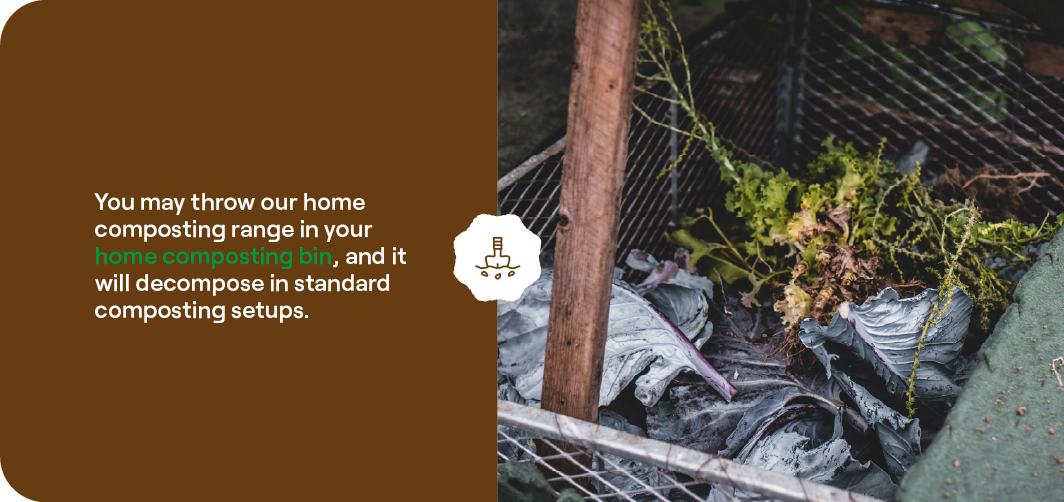
Home compostable packaging can go into a small composting setup alongside food scraps. A tumbler or enclosed bin near the back door handles the volume most independent restaurants produce. No specialized equipment is needed.
At ambient temperatures of 20 to 30 degrees Celsius, TÜV Austria OK Compost HOME certified products break down naturally in the mix. Food waste from the kitchen accelerates the composting process by adding moisture and microbial activity. Coffee grounds, vegetable trimmings, and plate scrapings all work well alongside home compostable packaging.
Start with a single bin. Track how quickly it fills. Most operators find a modest tumbler is enough to handle their daily compostable waste.
Community composting programs offer another path. Many local gardens accept compostable material and welcome the steady volume a restaurant can provide. This also creates a visible sustainability story your customers can connect with.
Educate Staff and Customers
Brief your team on which items go in the compost bin and which go in the trash. A one-page guide posted in the break room or next to the waste stations keeps things clear. Simple color-coded signage at each bin reduces contamination.
On the customer side, table signage or a short note on the menu lets diners know their packaging will break down after use. Many customers actively look for restaurants that follow through on sustainability claims. Visible composting builds trust and encourages repeat visits. It turns a back-of-house process into a front-of-house brand statement.
Staff training does not need to be complicated. Five minutes during a shift meeting covers the basics: what goes in the compost, what does not, and why it matters. Consistency across shifts keeps the system running smoothly.
For multi-unit operators, create a standard waste guide that each location can post. Consistent signage across stores simplifies training for new hires and makes sustainability practices part of the brand, not a location-by-location experiment. Learn more about incorporating compostable packaging into business operations.
Start With Packaging That Works Without Industrial Composting
The Dual-Path Strategy means you do not need to wait for your city to build a composting program. Greenprint’s home compostable product line, certified under TÜV Austria OK Compost HOME, removes the infrastructure barrier.
Whether you operate a single neighborhood restaurant or manage locations across multiple cities, home compostable products protect your sustainability goals. Each location can compost on-site regardless of local waste infrastructure. For multi-unit operators, this also strengthens ESG reporting with a consistent, verifiable disposal pathway.
Plastic packaging legislation is expanding across the US. States and cities are introducing restrictions on single-use plastics and requirements for compostable alternatives. Having a home compostable product line in place now positions your business ahead of regulations, rather than scrambling to comply later. See our compliance guide for compostable cups and packaging to understand what’s changing.
Products that break down at backyard temperatures put the decision back in your hands. You choose the sustainable option, and this time, it actually works.
Browse Greenprint’s certified home compostable straws, cutlery, and cups that perform without industrial composting infrastructure.
Frequently Asked Questions
Can Compostable Packaging Break Down in a Landfill?
Most compostable packaging does not break down effectively in a landfill. Landfills lack oxygen and controlled temperatures, so compostable materials decompose slowly and can release methane, a potent greenhouse gas.
What Is the Difference Between Home Compostable and Industrially Compostable?
Home compostable products break down at ambient temperatures (20 to 30 degrees Celsius) in a backyard or small-scale setting. Industrially compostable products require sustained heat of 55 to 60 degrees Celsius, available only at commercial composting facilities. Read our home compostable breakdown timeline guide for more detail.
How Do I Know if My Compostable Packaging Needs an Industrial Facility?
Check the certification label. BPI certification indicates the product is designed for industrial composting. TÜV Austria OK Compost HOME certification means it breaks down at home composting temperatures without an industrial facility


Learn how to reduce carbon footprint at home with simple steps for energy, heating, food, and waste. Start with easy swaps your whole household can keep up.
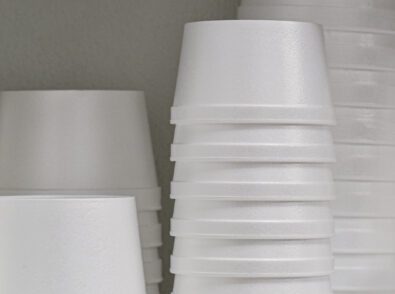
Are styrofoam cups safe? See how styrene, heat, microwaving, and reuse change foam cup safety, and find foam-free cup options for hot and cold drinks.

The environmental impact of food waste runs from methane emissions to wasted water and land. See how it harms the planet and simple ways to cut it today.