

How Bagasse Is Made Into Tableware: Full Process


How Bagasse Is Made Into Tableware: From Sugarcane to Plate
Every year, sugar mills worldwide crush billions of tons of sugarcane. The juice becomes sugar. The leftover fiber, called bagasse, used to get burned or thrown away. Today, that same fiber gets pressed into plates, bowls, and clamshell containers for restaurants like yours. This article walks you through the full process of how bagasse is made into tableware, from raw fiber to finished product ready for your kitchen.
What Is Bagasse?
Bagasse (pronounced “buh-GAS”) is the dry, fibrous material left over after sugarcane stalks are crushed to extract their juice. It looks like a tangled mat of pale, woody fibers.
Sugarcane is one of the world’s largest crops by volume. That means bagasse is available in enormous quantities, and it’s already a byproduct of sugar production. Using it for tableware repurposes agricultural waste rather than consuming trees, petroleum, or other virgin resources.
For restaurants, the practical takeaway is simple. Bagasse tableware comes from a material that would otherwise go unused. That origin story matters when your customers ask what their takeout container is made of. If you’re exploring alternatives to petroleum-based products, our polystyrene foodware alternatives guide is a good starting point.
Raw Materials and Sourcing
The manufacturing process starts with more than just raw bagasse. Here’s what actually goes into a finished plate or bowl.
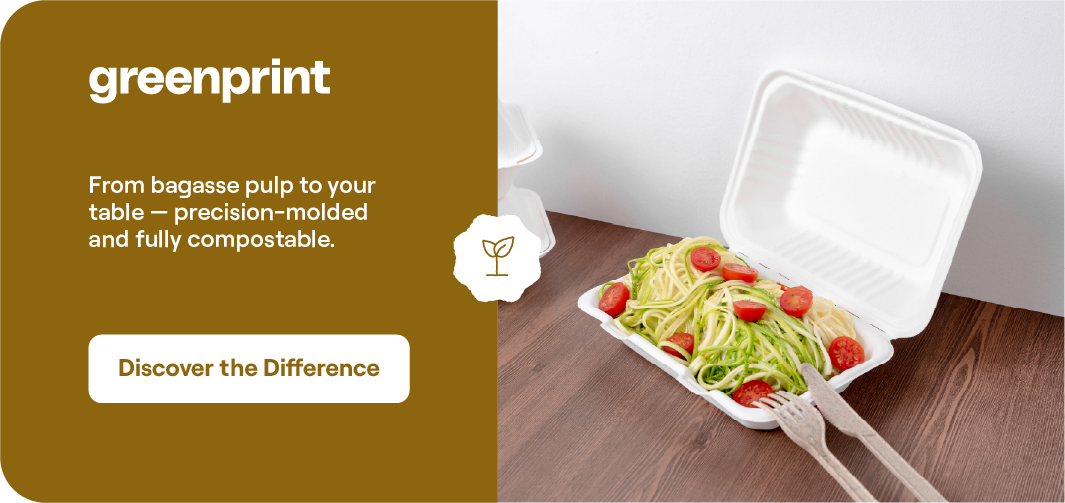
Dried bagasse pulp sheets are the primary input. Most manufacturers don’t feed loose, raw bagasse directly into their production lines. Instead, sugar mills dry and compress the fiber into flat pulp sheets. These sheets provide consistent fiber quality, ship more efficiently, and store longer than raw loose bagasse.
Beyond the bagasse itself, manufacturers add several other components:
-
Water, used to break the fiber down into a workable slurry
-
Food-grade oil-resistant additives, which help the finished product handle greasy foods without breaking down
-
Water-resistant agents, which prevent the tableware from getting soggy during normal use
The sourcing relationship is straightforward. Sugar mills produce bagasse as a byproduct of juice extraction. Tableware manufacturers purchase the dried pulp sheets from those mills or from intermediary suppliers who specialize in fiber processing. This supply chain keeps material costs relatively stable because it’s tied to the sugar industry, not to specialty material markets. Understanding the full range of compostable foodservice packaging materials helps explain why bagasse has become a leading option.
How Bagasse Tableware Is Made Step by Step
The process of turning raw sugarcane fiber into finished tableware has three main stages: pulping, molding, and finishing. Each stage directly affects the strength, surface quality, and food-safety performance of the final product.
Pulping
Dried bagasse sheets are loaded into a pulper, a large industrial mixing tank. Water is added to break the fiber down into individual strands. The target is a slurry with a controlled fiber-to-water consistency, typically around 0.3% to 0.5% fiber content.
During pulping, the mixture is screened and cleaned to remove dirt, silica, and non-fibrous impurities left over from the sugarcane. Clean, consistent pulp is what separates a quality plate from a flimsy one.
Molding and Pressing
The cleaned fiber slurry moves to the forming station. Vacuum suction pulls the wet fiber onto metal mesh molds shaped like the target product, whether that’s a round plate, a compartment tray, or a hinged clamshell container.
Once the fiber layer is formed on the mold, a hot press compresses it under high heat (typically 150 to 220 degrees Celsius) and significant pressure. This step does two things at once: it bonds the fibers into a rigid structure and creates the smooth, finished surface you see on the final product.
Mold design is what determines the product range. The same production line can make plates, bowls, and clamshell containers simply by swapping the mold tooling. This is how manufacturers produce everything from sugarcane fiber plates for hot meals to bagasse clamshell takeout containers.
Drying and Finishing
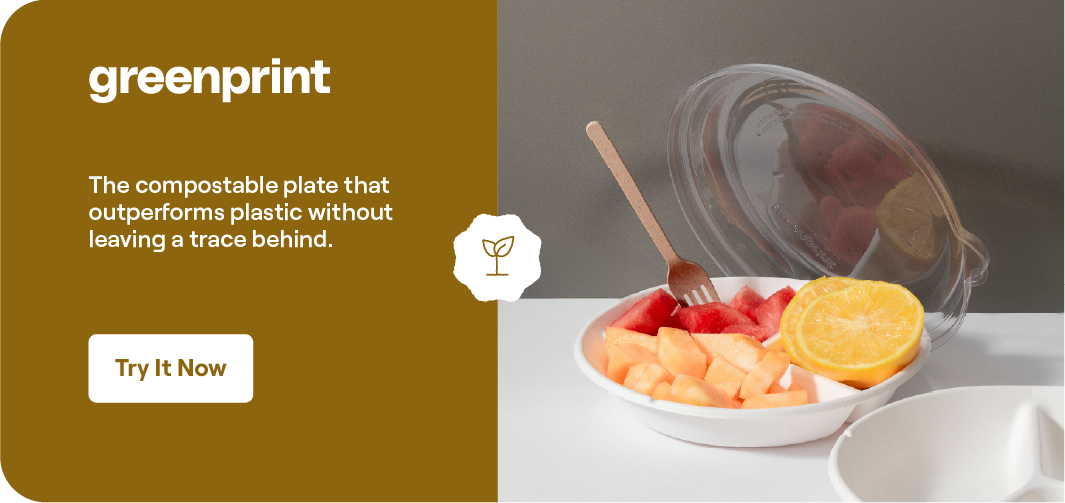
After pressing, the formed tableware goes through a controlled drying stage. This sets the structural strength of the product. Residual moisture is removed gradually to prevent warping or cracking.
Once dry, the products are trimmed and edge-cut to remove any excess fiber from the molding process. The finished pieces then undergo sterilization, typically using UV or heat treatment, followed by quality control testing to confirm food safety compliance. Products are inspected for dimensional accuracy, structural integrity, and surface finish before packaging.
The result is a rigid, grease-resistant plate or container ready for distribution to restaurants like yours. To learn how different certifications verify that process, check our compostable certification guide.
How Bagasse Compares to Other Tableware Materials
Choosing the right disposable tableware means weighing durability, cost, and compliance. Here’s how bagasse stacks up against the most common alternatives.
| Feature | Bagasse | Paper Plates | Plastic / Styrofoam | Palm Leaf |
|---|---|---|---|---|
| Material Source | Sugarcane fiber (agricultural byproduct) | Wood pulp (virgin or recycled) | Petroleum-based polymers | Fallen areca palm leaves |
| Heat Resistance | Up to ~200°F (93°C) | Low; weakens with heat and moisture | High for plastic; styrofoam deforms at high heat | High; naturally heat-resistant |
| Grease Resistance | High when oil-resistant coatings are applied | Low without wax or plastic lining | High | Moderate to high |
| Compostability | Yes, under industrial conditions when certified to ASTM D6400 or EN 13432 | Only if uncoated and unlined | No | Yes, under industrial conditions |
| Typical Cost Range | Mid-range | Low | Low | Higher |
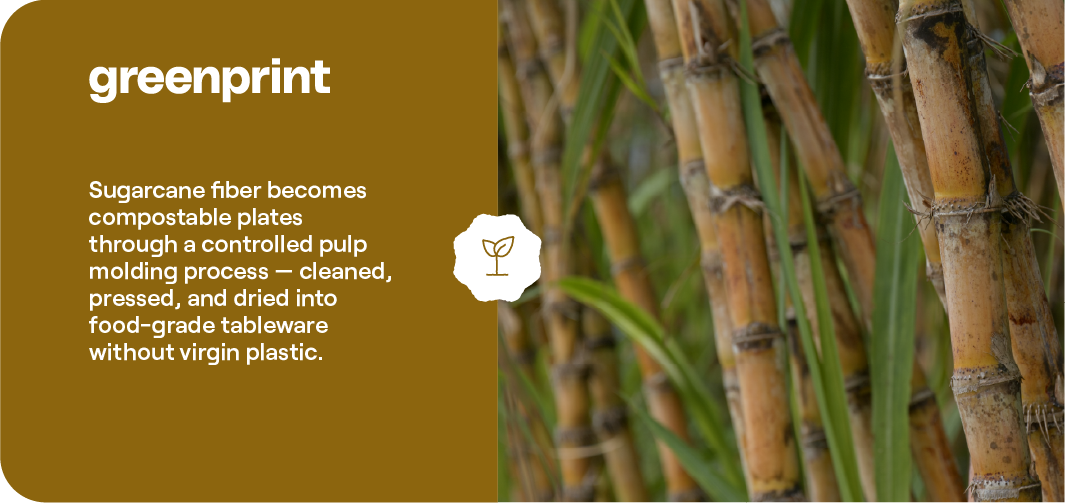
Our Greenprint® Fiberware™ products, including clamshells, plates, and bowls, are made from bagasse and hold TÜV INDUSTRIAL certification, which verifies their compostability under industrial composting conditions. For a deeper look at how bagasse compares to PLA and paper specifically, see our PLA, bagasse, and paper material comparison. The New York DEC alternatives to polystyrene foam report also details why municipalities are moving away from plastic and styrofoam options.
It’s also worth noting the difference between “compostable” and other environmental terms that can mean different things depending on context. We cover that distinction in detail in our comparison of bioplastics for foodware.
Why Restaurant Operators Choose Bagasse Tableware
Grease and heat tolerance. Bagasse plates and containers handle hot, oily foods without collapsing or leaking. Think fried chicken, loaded nachos, or a fresh stir-fry straight from the wok. Your staff won’t deal with plates buckling mid-service the way thin paper plates tend to.
Regulatory readiness. Plastic bans and single-use packaging restrictions are expanding across U.S. states and municipalities. Bagasse tableware already meets the requirements in most of these regulations. California’s foodservice packaging standards offer one example of the trend. Switching now means you’re not scrambling to find compliant alternatives when a ban reaches your area.
Customer perception. Diners notice when their takeout container feels sturdy and looks different from standard styrofoam. Bagasse’s natural fiber texture signals quality. It also gives you a straightforward talking point if customers ask about your packaging choices. Many operators pair bagasse with a broader shift toward plastic-free restaurant packaging.
Cost competitiveness. Bagasse tableware sits in the mid-range for disposable pricing. It’s typically more affordable than palm leaf options and competitive with coated paper products, while offering better performance with hot and greasy menu items. See how certified compostable restaurant plates compare across price tiers.
Ready to try bagasse for your restaurant? Browse our Fiberware plates and containers to see the full product lineup.
Where Bagasse Tableware Works Best
Not every material suits every use case. Here’s where bagasse earns its place in your daily operation.
Takeout containers for hot foods. Clamshell containers made from bagasse hold heat and resist grease, making them a strong fit for hot entrees, fried items, and saucy dishes that would soak through paper alternatives.
Event catering plates. If you cater weddings, corporate lunches, or community events, bagasse plates offer a polished look without the cleanup burden of reusable dinnerware. They hold up through a full meal. Our compostable plates for catering are a strong fit for event operations.
Deli and salad bowls. Bagasse bowls work well for cold applications too. Grain bowls, salads, and deli sides stay contained without leaking through the bottom.

Food trucks. Space is tight on a truck, and you need packaging that performs under pressure. Bagasse containers stack well, hold up during transport, and work across your full menu. Explore our Fiberware sugarcane fiber product line for sizes built for high-volume service.
Frequently Asked Questions
Does Bagasse Tableware Contain Microplastics?
Bagasse tableware made without plastic coatings or PFAS-based treatments does not introduce microplastics. Our Fiberware products are PFAS-free. For more on this topic, see our article on microplastics in foodservice packaging.
Is Bagasse Tableware Compostable?
Bagasse tableware certified to ASTM D6400 compostability standard or EN 13432 is compostable under industrial composting conditions. Look for the certification mark on the product or its packaging. Learn more about the science behind compostability testing.
Can Bagasse Plates Hold Hot and Oily Food?
Yes. Bagasse tableware handles temperatures up to approximately 200°F and resists grease when oil-resistant coatings are applied during manufacturing. It outperforms uncoated paper plates with hot, saucy, or fried menu items.
How Long Does Bagasse Tableware Last Before It Breaks Down?
In dry storage, bagasse tableware has a shelf life of one to two years. In an industrial composting facility, certified bagasse products typically break down within 45 to 90 days depending on facility conditions.
Ready to try bagasse tableware in your restaurant? Explore our Fiberware plates, bowls, and clamshells to find the right fit for your operation.


Minnesota plastic ban rules for businesses, including city bag fees, Green To Go takeout packaging, PFAS limits, compostable labels, and EPR dates to plan for.
Reduce reuse recycle explained in plain terms. Learn what each of the 3 Rs means, why the order matters, and how compost completes the set as the 4th R.
Worm composting turns kitchen scraps into rich castings. Learn which worms to buy, how to set up a bin, what to feed them, and how to harvest compost.