

The Impact of Plastic Utensils
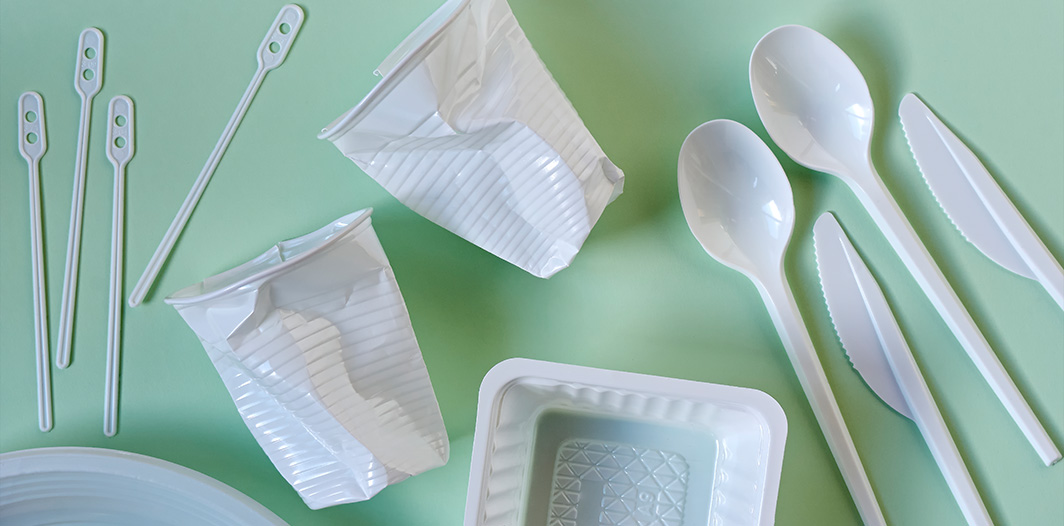


Plastic utensils play a notable role in the service plan of many restaurants and fast food establishments. The United States alone disposes of nearly 100 million plastic utensils daily. Worldwide, around 9,200 metric tons of plastic are produced annually. Single-use plastic utensils take up a significant portion and have an annual market value of nearly $3,000,000,000.
Despite the popularity of plastic utensils, scientists have found that they have significant negative environmental impacts. Discover the details and how you can take a step toward sustainability.
How Long Do Plastic Utensils Take to Decompose?
Plastic utensils can take hundreds of years to decompose in the environment.
In most standard landfills, no particular effort is made to facilitate material degradation. Waste is stacked, compacted, and left to decompose without oxygen. Even in landfills, plastic utensils may take 200 to 450 years to fully decompose.
Environmental Impact of Plastic Utensils
Slow decomposition rates mean that plastic utensils significantly impact the environment. Due to the difficulty of recycling them and their ready availability, you will find many disposable utensils in landfills, the ocean, and common pollution catchments.
Plastic utensils contribute significantly to ocean pollution, and conservationists consider them one of the deadliest forms of ocean pollution for sea animals. When land or sea animals consume plastic cutlery, it becomes lodged in their throat and intestines, leading to internal bleeding or suffocation.
What Happens to Discarded Plastic Utensils?
Unfortunately, it isn’t easy to recycle most plastic utensils for several reasons:
- Their design and size make them difficult to process—many recycling plants refuse to accept plastic cutlery because it falls through gaps in the machinery.
- Most single-use plastic cutlery consists of non-recyclable plastics.
- Inconsistent material use means it’s difficult to distinguish plastic types into recyclable and non-recyclable types.
- Their shape makes them difficult to bale.
Due to these challenges, most plastic cutlery goes to landfills. Even plastic cutlery sent to recycling plants is generally removed from the batch and sent to landfill sites. A few exceptional recyclers exist, but plastic cutlery only constitutes a minute percentage of the 9% of recycled plastic waste.
Explore Alternatives to Plastic Utensils
Research has shown that only about 2% of single-use utensils used are biodegradable, compostable, or otherwise sustainable. However, there are many excellent options in the market, including compostable utensils.
There are three main options when switching from single-use plastic cutlery, namely:
- Biodegradable options: Users can compost paper, agave, and single-use wooden cutlery after use.
- Reusable options: You may wash certain reusable options, like metal utensils, indefinitely.
- Reusable, recyclable options: Agave-plastic blends and similar washable options are reusable, but you will eventually need to recycle them.
Learn more about how agave utensils compare to plastic utensils ->
You significantly reduce your environmental impact when you choose to use reusable, recyclable, or compostable cutlery options like metal, agave, or wood utensils.
References
- https://nylcv.org/news/skip-the-stuff-a-simple-solution-to-the-single-use-plastics-epidemic/
- https://www.sciencedirect.com/science/article/pii/S0165993623000717
- https://pubs.acs.org/doi/full/10.1021/acssuschemeng.9b06635
- https://www.oecd.org/en/about/news/press-releases/2022/02/plastic-pollution-is-growing-relentlessly-as-waste-management-and-recycling-fall-short.html
- https://www.sciencedirect.com/science/article/pii/S0165993623000717?__cf_chl_tk=gKvWgi7SH537KEB0JLEOG5KFzL2Vpuy99KvfUhyQI0s-1747210840-1.0.1.1-44axO4CgqWrP6fIbTsCC8Yo.mDVzqzcW.Kmn5E2Kxt0

Paper vs. plastic environmental impact depends on material, reuse, and disposal. See what life cycle studies show and how restaurants can pick better packaging.

Learn how the Colorado plastic ban and single-use plastic laws affect your business, from the bag fee and foam ban to local rules. Get compliant today.

See the Hawaii plastic ban and single-use plastic laws for Honolulu, Maui, Hawaii County, and Kauai, with dates, fines, and compliant foodware tips for 2026.