

What Happens to Plastic Foodware in Landfills


Content
- How Landfills Handle Plastic Foodware
- How Long Plastic Foodware Takes to Break Down
- Why Plastic Foodware in Landfills Harms the Environment
- What Microplastics and Leachate Mean for Soil and Water
- Why Recycling Plastic Foodware Rarely Works
- Compostable Foodware as an Alternative to Landfill Plastic
- Frequently Asked Questions
What Really Happens to Plastic Foodware in Landfills
Every plastic cup, fork, and clamshell you toss in the trash ends up somewhere. For most plastic foodware in landfills, that “somewhere” is a sealed pit designed to store waste, not process it. The materials sit there for centuries, slowly fragmenting into smaller and smaller pieces that contaminate soil and water. Understanding what actually happens underground can change how you think about the disposables your business or household uses every day.
How Landfills Handle Plastic Foodware
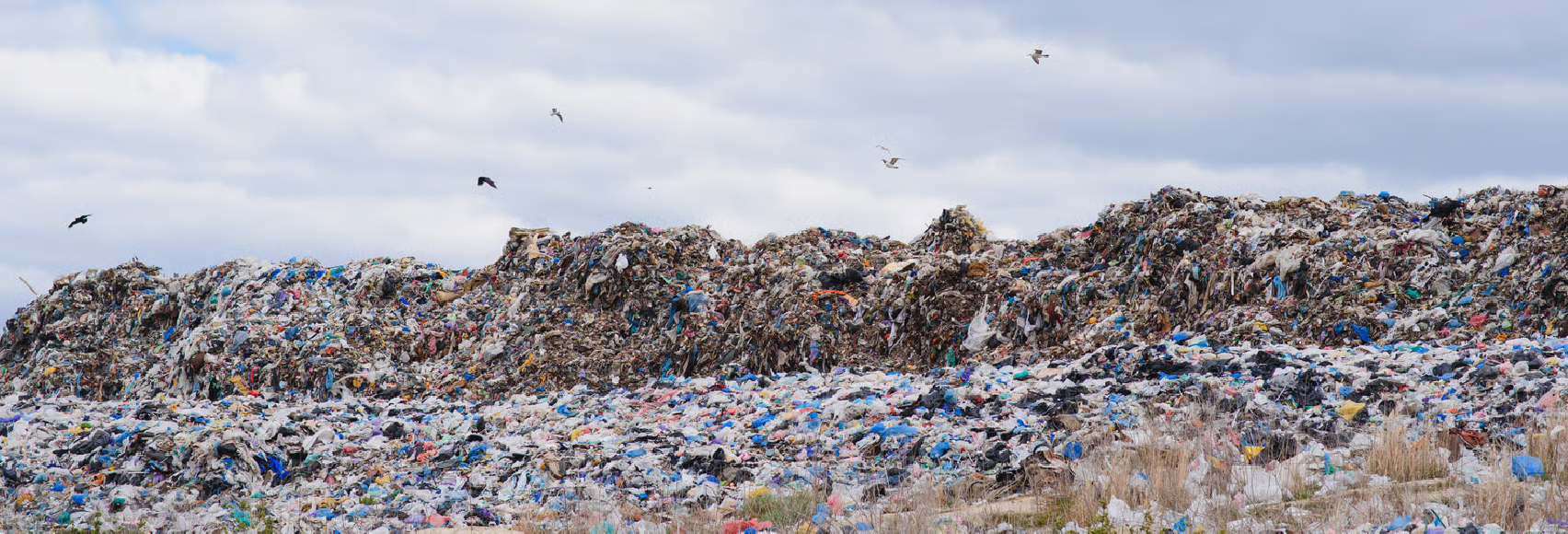
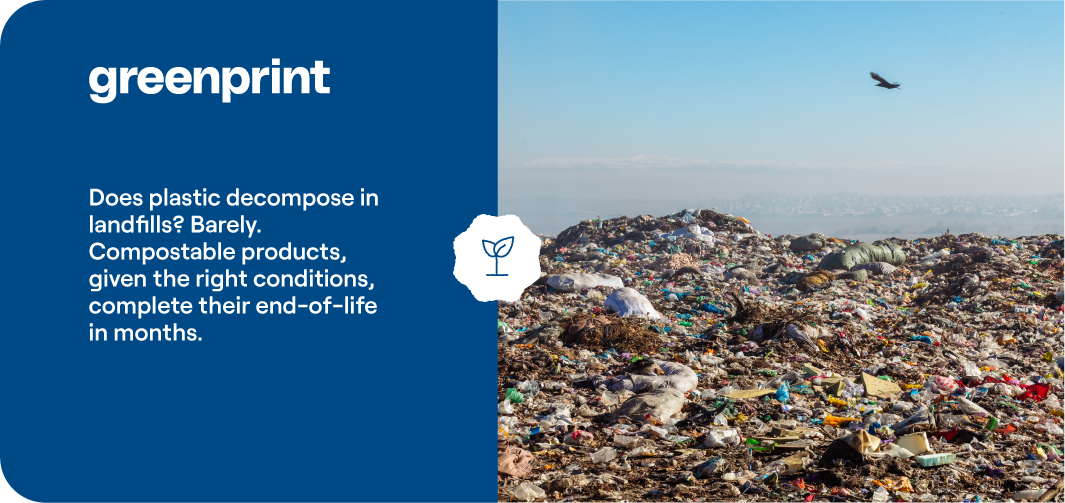
Modern landfills aren’t designed to break anything down. They’re engineered storage facilities. Waste is compacted into dense layers, covered with soil or synthetic liners, and sealed to minimize contact with air and moisture.
This creates an anaerobic (low-oxygen) environment. Organic materials like food scraps decompose slowly in these conditions. Plastic foodware doesn’t decompose at all in any meaningful way.
Cups, plates, utensils, and takeout containers get buried under layers of other waste. Without sunlight, oxygen, or microbial activity, the chemical bonds in plastic polymers stay intact. The plastic fork you threw away last week will look nearly identical decades from now.
Landfill operators manage leachate (liquid that filters through waste) and methane gas from organic decomposition. But plastic foodware doesn’t participate in either process. It just takes up space, permanently.
Most people assume landfills are temporary. They aren’t. Once a landfill reaches capacity, it’s capped and monitored for decades. The plastic foodware inside stays exactly where it was buried, occupying space that can never be reclaimed for other uses.
How Long Plastic Foodware Takes to Break Down
“Break down” is a misleading phrase for plastic. Plastic doesn’t decompose the way food or paper does. It fragments into progressively smaller particles called microplastics. The original polymer chains remain intact at the molecular level.
Here’s what the timeline looks like for common foodservice items:
-
Polystyrene foam containers (Styrofoam): These resist breakdown almost indefinitely in landfill conditions. Estimates from the U.S. National Park Service suggest polystyrene can persist for 500 years or more.
-
Polypropylene cups: PP plastics are highly stable. They fragment over several hundred years but never fully decompose into organic matter.
-
PET clamshells and containers: PET is one of the most common foodservice plastics. It can persist in landfills for 450 years or longer, according to NOAA’s Marine Debris Program.
-
Plastic cutlery (polystyrene or polypropylene): Forks, knives, and spoons share the same multi-century timelines as their parent resin types.
The distinction matters: fragmentation is not decomposition. A plastic fork that breaks into 1,000 tiny pieces doesn’t mean less plastic. You have 1,000 microplastic particles that are harder to contain and easier to spread through soil and water.
None of these timelines involve the plastic actually returning to the earth as organic material. Composting works that way. Plastic decomposition does not. The material persists in some form, whether as visible chunks or invisible microparticles, for the entire span of its estimated lifespan.
Why Plastic Foodware in Landfills Harms the Environment
The effects of plastic pollution from foodware extend far beyond the landfill itself. Plastic foodware creates environmental damage at every stage of its life cycle.
Production and transport generate greenhouse gases. Manufacturing plastic foodware requires fossil fuels as both raw material and energy source. The Center for International Environmental Law (CIEL) reports that plastic production and incineration could account for 56 gigatons of carbon emissions between 2015 and 2050. Single-use foodservice items represent a significant share of that production volume.
Landfill space is finite. Plastic foodware occupies landfill volume that doesn’t cycle out. Organic waste eventually reduces in volume through decomposition. Plastic doesn’t. The EPA’s data on containers and packaging shows that foodservice plastics are one of the largest categories in municipal solid waste by volume.
Plastic blocks organic decomposition nearby. Plastic wraps, cups, and containers layered with food waste create physical barriers. These barriers slow down or prevent decomposition of the organic materials around them. This reduces the landfill’s already limited capacity to process waste.
Understanding why plastic is harmful to the environment means looking at the full picture. The damage includes fossil fuels extracted, energy consumed during manufacturing, emissions from transport, and permanent space consumed underground. For a broader look at how this connects to sustainable material sourcing, read our overview of the carbon footprint differences between traditional and compostable cups.
What Microplastics and Leachate Mean for Soil and Water
As plastic foodware fragments over decades, it produces microplastics: particles smaller than 5mm in diameter. In a landfill, these particles don’t stay put. The harmful effects of plastic on human health and the environment start here.
Leachate is the main pathway. Leachate is liquid that percolates through landfill waste, picking up dissolved and suspended contaminants. Rainwater filters through a landfill, contacts plastic fragments, and carries microplastics, chemical additives, and colorants downward toward the soil beneath.
Modern landfills use liner systems and leachate collection to prevent groundwater contamination. But liners can develop tears, punctures, or degradation over time. A study published in Environmental Science & Technology confirmed the presence of microplastics in landfill leachate at concentrations that raise concerns about long-term containment.
Chemical additives migrate with the plastic. Plastic foodware contains plasticizers (like phthalates), flame retardants, UV stabilizers, and other additives. As the plastic fragments, these chemicals can leach into surrounding soil and water. Some of these compounds are endocrine disruptors, meaning they can interfere with hormone function in humans and wildlife.
Groundwater contamination is a documented risk. If leachate escapes containment, microplastics and their associated chemicals can enter local groundwater supplies. Communities near older landfills, or those with compromised liner systems, face the greatest exposure risk. The World Health Organization has called for more research into microplastics in drinking water, citing the need for better data on human health effects.
The problem compounds over time. Every year, more plastic foodware enters landfills. Every year, existing plastic continues to fragment. The microplastic load in landfill leachate grows continuously, with no natural endpoint.
Why Recycling Plastic Foodware Rarely Works
Recycling sounds like the answer, but for plastic foodware specifically, it almost never works in practice. Understanding what percentage of plastic is actually recyclable reveals how limited this option really is.
Food contamination disqualifies most items. Recycling facilities require clean materials. A plastic cup with dried smoothie residue, a clamshell with grease, or a fork with sauce on it gets rejected and sent to the landfill anyway. Most consumers don’t wash foodware before recycling it, and most facilities won’t process contaminated items.
Resin type confusion creates sorting problems. Foodservice uses multiple plastic types: polystyrene (PS), polypropylene (PP), PET, and others. Each requires separate processing. A single PP cup mixed into a PET recycling stream can contaminate the entire batch. Most municipal recycling programs don’t sort foodservice plastics by resin type. For a deeper look at what separates recyclable from compostable products, see our guide on compostable vs. recyclable packaging.
Collection rates are extremely low. Foodservice items are often used in settings like restaurants, events, parks, and stadiums where recycling bins aren’t available or are contaminated with non-recyclable waste. According to EPA plastics recycling data, the overall plastics recycling rate in the United States remains under 10%. For food-contaminated foodservice plastics, the effective rate is even lower.
Economics work against it. Virgin plastic is often cheaper to produce than recycled plastic. This removes the financial incentive for recyclers to process difficult-to-clean foodservice items. They focus instead on cleaner, higher-value streams like PET bottles.
The result: the vast majority of plastic foodware goes directly to a landfill regardless of whether you put it in a recycling bin. For foodservice operators, this means the “recyclable” label on a plastic cup or container is rarely meaningful in practice. The infrastructure to actually recycle food-contaminated plastics doesn’t exist at scale in most U.S. communities.
Compostable Foodware as an Alternative to Landfill Plastic
Certified compostable foodware offers a real alternative to the landfill cycle. Unlike conventional plastic, compostable products are designed to break down into organic matter under the right conditions. This represents one of the most practical plastic pollution solutions available today.
The key word is “certified.” Under the FTC Green Guides, compostability claims must be backed by third-party certification. BPI certification, issued by the Biodegradable Products Institute, confirms that a product meets ASTM D6400 or ASTM D6868 standards for compostability in commercial facilities. You can learn more about BPI-certified compostable cup performance and benefits on our site.
Even in landfill scenarios, not all hope is lost. Bioactive landfills are engineered to accelerate decomposition by introducing moisture and managing microbial conditions. Certified compostable materials can break down in these controlled environments. For a full explanation, read our guide on how bioactive landfills process compostable materials.
At Greenprint®, we manufacture compostable foodware from materials like Upcycled Agave fiber and sugarcane-based Fiberware™. Our agave-based straws and cutlery carry BPI Commercial Compostability certification, and our straws hold TÜV Austria OK Compost HOME certification. These aren’t vague “green” claims. They’re specific, tested, and verified by independent certification bodies.
Switching to certified compostable foodware doesn’t mean sacrificing performance. Greenprint® products are built for real foodservice conditions: hot soups, cold drinks, greasy foods, and high-volume use. If you’re looking to replace landfill-bound plastic in your operation, explore our full line of certified compostable cups, plates, clamshells, and agave cutlery.
Frequently Asked Questions
How Long Does Plastic Foodware Take to Decompose in a Landfill?
Plastic foodware doesn’t truly decompose in a landfill. It fragments into microplastics over an estimated 450 to 500+ years, depending on the resin type, but the polymer chains remain intact at the molecular level.
Can Compostable Foodware Go in a Landfill?
Standard landfills don’t provide the conditions for compostable foodware to break down. However, bioactive landfills are designed to create conditions that allow certified compostable materials to decompose.
What Happens to the Chemicals in Plastic Foodware Over Time?
As plastic fragments in a landfill, chemical additives like plasticizers and stabilizers can leach into surrounding soil and water through landfill leachate. Some of these compounds are endocrine disruptors that affect hormone function in humans and wildlife.
References
- https://www.nps.gov/subjects/sustainability/reduce-reuse-recycle.htm
- https://marinedebris.noaa.gov/
- https://www.ciel.org/issue/fossil-fuels-plastic/
- https://www.epa.gov/facts-and-figures-about-materials-waste-and-recycling/containers-and-packaging-product-specific-data
- https://pubs.acs.org/doi/10.1021/acs.est.2c05817
- https://www.who.int/publications/i/item/9789241516198
- https://www.epa.gov/facts-and-figures-about-materials-waste-and-recycling/national-overview-facts-and-figures-materials
- https://www.ftc.gov/legal-library/browse/federal-register-notices/guides-use-environmental-marketing-claims-green-guides


Learn how the Colorado plastic ban and single-use plastic laws affect your business, from the bag fee and foam ban to local rules. Get compliant today.

See the Hawaii plastic ban and single-use plastic laws for Honolulu, Maui, Hawaii County, and Kauai, with dates, fines, and compliant foodware tips for 2026.
Nanoplastics vs. microplastics comes down to size. Learn how they differ, why researchers worry more about nanoplastics, and simple ways to reduce exposure.