

Traditional vs. Compostable Cups: Carbon Footprint Compared


Content
- Key Takeaways
- What Goes Into a Traditional Cup vs. a Compostable Cup?
- What Is a Life-Cycle Carbon Footprint?
- Carbon Footprint Comparison: Traditional Cups vs. Compostable Cups
- Why Disposal Method Determines the Real Carbon Impact
- What Carbon Footprint Data Means for Your Restaurant
- How to Choose the Right Cup for Your Operation
- Reduce Your Carbon Footprint With Greenprint® Cups
- Frequently Asked Questions About Cup Carbon Footprints
Traditional vs. Compostable Cups: Carbon Footprint Compared
Choosing between traditional and compostable cups affects more than your waste bin. It shapes your restaurant’s carbon footprint across every stage of a cup’s life, from raw materials to disposal. This article breaks down the life-cycle carbon differences between conventional and compostable cups, explains what the research actually shows, and helps you pick the right cup for your operation and your local waste system.
Key Takeaways
- Based on published life-cycle assessments, traditional cups made with plastic linings carry a higher carbon footprint at nearly every life-cycle stage compared to compostable cups made from plant-based materials.
- The carbon advantage of compostable cups depends heavily on whether they’re actually composted, not just tossed in the trash.
- Matching your cup choice to your local waste infrastructure is the single most practical step you can take to reduce your operation’s carbon impact.
What Goes Into a Traditional Cup vs. a Compostable Cup?
The carbon story of any cup starts with what it’s made from. Traditional cups and compostable cups use fundamentally different materials. Those differences drive the emissions gap at every stage of the product’s life.
Understanding these materials helps you see why one cup type generates more greenhouse gases than another. Let’s look at what each cup is actually made of.
| Feature | Traditional Cup | Compostable Cup |
|---|---|---|
| Base material | Virgin paperboard or polystyrene | Plant-based paperboard or bioplastic |
| Inner coating | Polyethylene (PE) plastic lining | PLA bioplastic or bio-based coating |
| Fossil fuel dependence | High | Low |
| Recyclability | Difficult due to fused plastic layer | Designed for composting pathways |
| End-of-life pathway | Landfill (most common) | Industrial or home composting |
Traditional Cup Materials and Coatings
Traditional cups are made from virgin paperboard lined with polyethylene, commonly called PE. PE is a petroleum-based plastic. This means it comes from crude oil or natural gas.
The PE lining makes cups waterproof and heat-resistant. It’s applied as a thin layer fused directly to the paper.
That fused plastic layer creates a recycling problem. Most recycling facilities can’t separate the plastic from the paper because they’re bonded so tightly together. The result is that the vast majority of conventional cups end up in landfills, even when customers try to recycle them. And, microplastics released from PE-lined cups have health impacts beyond their carbon footprint.
Compostable Cup Materials and Coatings
Compostable cups replace that petroleum-based lining with plant-based alternatives. There are two main approaches:
- PLA-lined cups: PLA stands for polylactic acid. It’s a bioplastic made from plant starches like corn. PLA serves the same waterproofing function as PE but comes from renewable sources.
- Bio-coated paper cups: These cups use a plant-based coating applied directly to the paperboard. This approach eliminates plastic almost entirely.
Our Renewacups™ line uses the bio-coated approach. These hot cups are made with bio-coated paper that’s verified as plastic-free by Flustix/Control Union and certified for both industrial and home compostability by ISEGA (certification documentation available upon request). Renewacups™ have also undergone comprehensive PFAS testing by Intertek using LC-MS/MS and GC-MS methods, with no PFAS compounds detected.
That level of third-party verification matters when you’re comparing suppliers. Many compostable cup brands make general claims. Fewer can point to specific test results from independent labs.
What Is a Life-Cycle Carbon Footprint?
A life-cycle carbon footprint is the total greenhouse gas emissions a product generates from creation to disposal. This means every stage counts: extracting raw materials, manufacturing, transportation, and end-of-life disposal.
Researchers call this measurement a life-cycle assessment, or LCA. Think of it as a complete emissions receipt for a product’s entire existence.
LCA studies published in peer-reviewed journals provide the framework for comparing cup types. When we say one cup has a lower carbon footprint than another, we’re comparing those full receipts. We’re not just looking at one stage in isolation.
This matters for your decision-making because some cups look better at one stage but worse at another. The full picture tells you which choice actually reduces total emissions.
Carbon Footprint Comparison: Traditional Cups vs. Compostable Cups
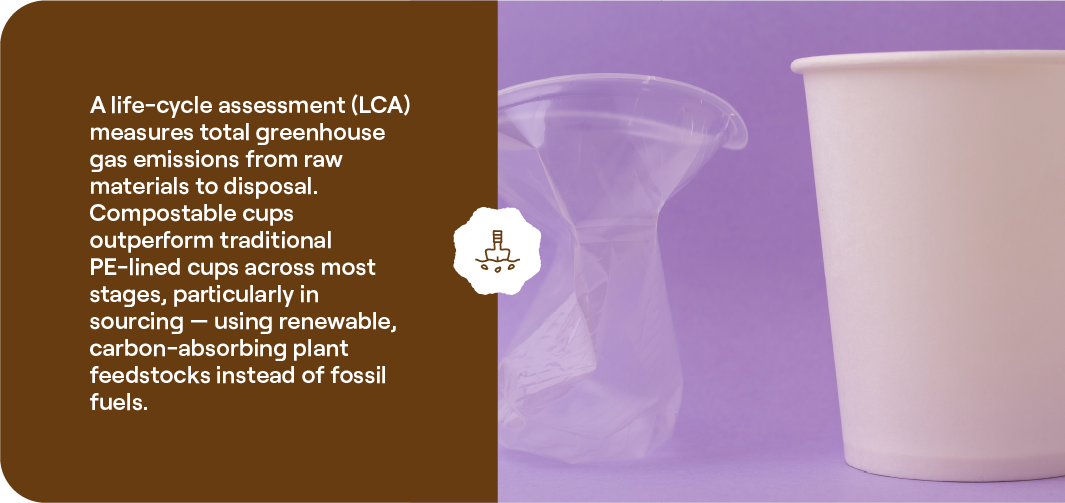
According to published life-cycle assessment research, compostable cups generate fewer greenhouse gas emissions than traditional PE-lined cups across most life-cycle stages. The largest difference appears at end of life.
Let’s walk through each stage so you can see where the gap comes from and why it matters for your operation.
Raw Materials and Sourcing
Traditional cups start with fossil fuel extraction. Producing PE plastic requires crude oil or natural gas as a feedstock. The drilling, refining, and processing of those materials all release significant emissions before a single cup is formed.
Compostable cups draw from renewable plant-based feedstocks instead:
- PLA cups: Use crops like corn as the base material.
- Bio-coated paper cups: Use sustainably sourced wood pulp.
These plant-based inputs absorb carbon dioxide as they grow. This partially offsets the emissions generated during harvesting and processing. The upstream emissions difference between fossil fuel extraction and renewable crop sourcing is one of the clearest advantages compostable cups hold.
Production and Manufacturing
Manufacturing traditional cups involves energy-intensive processes. Petroleum refining produces the PE resin. Then high-heat lamination bonds that resin to paperboard. Each step draws heavily on fossil energy.
Compostable cup production still requires energy, but bio-material processing generally demands less than petroleum refining. The gap widens further when manufacturing facilities run on renewable energy sources.
At Greenprint®, our manufacturing facility is partially powered by wind energy. This reduces the emissions embedded in every cup and product we make. When you’re evaluating cup suppliers, asking about their energy sources gives you another data point for comparing true carbon impact.
Waste Disposal and End of Life
End of life is where the carbon gap between traditional and compostable cups widens the most. Here’s why:
- Traditional cups in landfills: PE-lined cups break down slowly under anaerobic conditions. This means they decompose without oxygen. That process releases methane, a greenhouse gas far more potent than carbon dioxide. Since most traditional cups can’t be recycled, landfill disposal is the default outcome.
- Compostable cups in composting facilities: Microorganisms break the cup down into carbon dioxide, water, and organic matter. That organic matter enriches soil rather than releasing methane into the atmosphere.
Under FTC Green Guides, compostability claims must be tied to specific certifications and composting conditions. This means you need to know whether a cup is certified for industrial composting, home composting (BPI launched home certification in 2025), or both. Our Renewacups™ carry ISEGA certification (certification documentation available upon request) for both pathways.
Why Disposal Method Determines the Real Carbon Impact
A compostable cup only delivers its full carbon benefit when it’s actually composted. This is the most important point in the entire carbon footprint discussion.
If a compostable cup ends up in a landfill, it loses most of its end-of-life advantage. Landfill conditions don’t support the aerobic breakdown that composting requires. Without oxygen and the right microbial activity, even certified compostable materials break down slowly and can still generate some methane.
This is why we build our product strategy around what we call an infrastructure-aware approach. Rather than making broad claims about environmental benefits, we encourage you to match your cup choice to the waste systems that actually exist in your area.
Here’s how to think about it:
- Your area has industrial composting: Compostable cups are a strong fit. Industrial facilities maintain the temperature and conditions needed for complete breakdown.
- Your area has curbside composting: Check whether your local program accepts compostable foodservice items. Some do, some don’t.
- Your area only supports recycling: Factor this into your decision. A compostable cup that ends up in a landfill doesn’t deliver the carbon benefits you’re paying for.
The honest reality is that no compostable product can deliver on its promise if it doesn’t reach the right disposal stream. That’s a shared responsibility between the brand, the operator, and the local waste system.
What Carbon Footprint Data Means for Your Restaurant
We see lower-carbon packaging becoming a competitive advantage for restaurants. It’s not just an environmental nice-to-have anymore. Your cup choice affects customer perception, regulatory readiness, and brand positioning.
Customer perception matters. Diners increasingly look for visible signs that a restaurant shares their values. The cups you serve are one of the most noticeable touchpoints. Serving drinks in certified compostable cups sends a clear message that your business invests in responsible choices.
Regulations are tightening. States and cities across the U.S. are phasing out conventional single-use plastics. BPI certification is required by every U.S. state with compostability regulatory language. Making the switch now means smoother compliance later, without a rushed transition that disrupts your operations.
Brand value builds over time. Consistency in your sustainability practices builds trust and loyalty. Customers notice when your actions match your stated values. That kind of consistency translates directly into repeat business.
The carbon footprint data we’ve covered isn’t just academic. It’s the foundation for practical decisions that affect your bottom line and your reputation.
How to Choose the Right Cup for Your Operation
Picking the right cup comes down to two practical questions: what does your local waste infrastructure support, and what does your menu require? Let’s work through both.
Match Cup Type to Your Local Waste Infrastructure
Start by checking what your municipality actually offers. This single step determines which cup type will deliver on its carbon-reduction potential in your specific location.
- Industrial composting available: Certified compostable cups like Renewacups™ are a strong choice for hot beverages. The ISEGA compostability certification (certification documentation available upon request) and Intertek PFAS verification give you documented credentials for procurement.
- Home composting access: Renewacups™ also carry home compostability certification from ISEGA (certification documentation available upon request). This gives your customers a disposal option right in their backyard.
- Cold beverage needs: Our Clearly Compostable™ line is made from PLA and designed for iced drinks and smoothies. We’re currently pursuing BPI and TÜV Austria certifications for this line. We recommend it for operators comfortable with a plant-based cup while third-party verification is finalized.
If your area lacks composting infrastructure entirely, be honest with yourself about the carbon benefits you can realistically achieve. We’d rather help you make an informed choice than oversell a solution that doesn’t fit your situation.
Balance Cost, Performance, and Carbon Savings
Compostable cups may carry a modest price premium compared to conventional options. That premium reflects the cost of plant-based materials, third-party certifications, and responsible manufacturing practices.
Think of it as an investment rather than an expense:
- Regulatory readiness: Certified compostable cups help you stay ahead of plastic bans and packaging regulations.
- Customer appeal: Sustainability-minded customers notice your cup choices and reward businesses that align with their values.
- Long-term brand value: Consistent action on sustainability builds trust that compounds over time.
The cups also need to perform during service. You can’t afford products that leak, collapse, or fail to hold temperature. Our Renewacups™ are tested for safe hot beverage use, so performance isn’t something you need to sacrifice for a lower carbon footprint. Complete your hot beverage service with upcycled agave coffee stirrers made from the same responsible approach.
Reduce Your Carbon Footprint With Greenprint® Cups
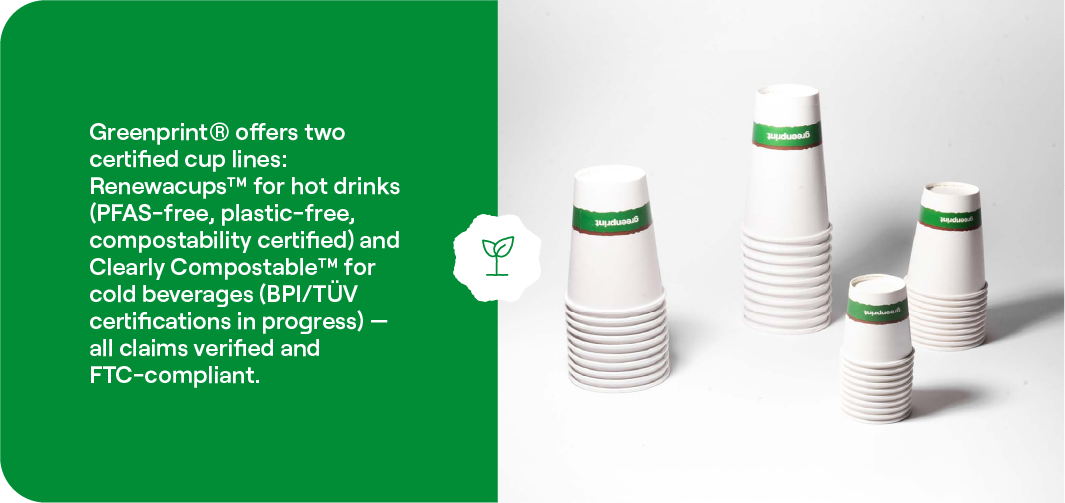
We designed our cup lines to give you verified, certified options for both sides of your beverage menu. Renewacups™ cover hot drinks with documented compostability (ISEGA certification documentation available upon request), plastic-free credentials, and comprehensive PFAS verification. Pair them with our agave sipping lids for a complete hot beverage setup. Clearly Compostable™ covers cold beverages with a plant-based PLA cup, with BPI and TÜV Austria certifications currently in progress.
Every claim we make is tied to a specific product line and a specific certification. We don’t blur the lines between our hot and cold cup families because they use different materials and carry different verified credentials. That’s what honest, FTC Green Guides-compliant communication looks like.
Ready to find the right cups for your operation? Explore our cups or contact our team to get product samples and guidance tailored to your local waste infrastructure.
Frequently Asked Questions About Cup Carbon Footprints
Do compostable cups reduce carbon emissions if my area lacks composting facilities?
The carbon benefits of compostable cups depend on proper composting at end of life. Without access to industrial or home composting, compostable cups may end up in a landfill, where their carbon advantage shrinks significantly.
Which certifications verify a cup’s carbon and compostability claims?
Look for BPI certification for industrial composting in the U.S., TÜV Austria OK Compost HOME and INDUSTRIAL certifications for verified breakdown between 55 and 60°C, and Flustix for plastic-free verification. These third-party certifications substantiate specific compostability and material claims under FTC Green Guides. When evaluating products, ask suppliers for specific certification IDs and documentation.
How do bio-coated paper hot cups compare to PLA clear cold cups on carbon footprint?
Bio-coated paper cups like Renewacups™ and PLA clear cups use different base materials, carry different certifications, and follow different end-of-life pathways. They shouldn’t be treated as interchangeable when evaluating carbon impact because each has distinct sourcing, manufacturing, and disposal characteristics.


Virginia’s plastic ban covers polystyrene foam containers and a local bag tax. See what’s banned, key deadlines, and compliant compostable foodware options.

Compostable straws vs plastic straws: compare materials, breakdown, certifications, and cost to pick the right certified compostable straw for your business.

Compare the best salad bowls with lids for takeout and catering, from bagasse to plastic, and choose industrially compostable options that keep salads fresh.