

Best Salad Bowls With Lids for Compostable Takeout


Content
- What to Look for in a Salad Bowl With a Lid
- Salad Bowl Materials Compared
- Compostable Salad Bowls With Lids for Foodservice
- How to Keep Takeout Salads Fresh and Leak-Free
- Matching Salad Bowls to Your Composting and Disposal Plan
- Find the Right Salad Bowls With Lids for Your Business
- Frequently Asked Questions
Best Salad Bowls With Lids for Compostable Takeout
The best salad bowls with lids keep greens crisp, seal against leaks, and match how you serve and dispose of each meal. For takeout and catering, disposal is the deciding factor. An industrially compostable bowl gives your kitchen a clear end-of-life path that plastic rarely offers. This guide compares materials, formats, and disposal so you can choose with confidence.
What to Look for in a Salad Bowl With a Lid
Lead with fit and function, then check the details that matter in daily service. A few features separate reliable bowls from ones that leak or wilt.
-
Leak-resistant lid: a snug press or dome lid protects dressing and stops spills in transit.
-
Right capacity: size the bowl to single-serve entrées or large catering portions.
-
Sturdy material: thick walls hold up to tossing, heavy toppings, and warm grains.
-
Dressing or topping area: a separate section keeps wet ingredients off the greens.
-
Clear disposal path: pick a material your kitchen can actually recycle or compost.
Capacity guides most of the decision. Side salads fit smaller bowls, entrée salads need a mid-size format, and shareable or catering salads call for the largest option. Sizing to the portion cuts both overpacking and food waste.
Lid style matters as much as the bowl. Press-fit and dome lids seal quickly for high-volume service, while hinged lids stay attached and speed up assembly. Dome lids also add headroom for tall salads and layered grain bowls.
For operators, weigh stacking and storage too. Bowls that nest save shelf space in tight prep areas and cut restock trips. Clear lids show off fresh ingredients and reduce mislabeled orders at the counter. These details separate the best salad bowls with lids to-go from bowls that leak or turn soggy.
Salad Bowl Materials Compared
Material shapes lid fit, durability, and disposal. The table below compares four common options for salad bowls with lids.
Material | Lid Fit | Durability | Best Use | End-of-Life |
|---|---|---|---|---|
Bagasse (Fiberware™) | Press or dome lids | Sturdy for hot and cold foods | Takeout, catering, single-use service | Industrially compostable, certified to TÜV Austria OK Compost INDUSTRIAL |
Plastic | Tight snap lids | Durable, can crack or stain | Reusable lunch packing | Recyclable where accepted, often landfilled |
Stainless steel | Screw or clamp lids | Very durable, long lasting | Personal reusable lunches | Reusable, then recyclable |
Glass | Locking lids | Durable but heavy and breakable | Home and office reuse | Reusable, then recyclable |
Conventional plastic foodware is cheap and durable, but most kitchens cannot recycle it cleanly after food contact. Stainless steel and glass salad bowls with lids last for years, yet they suit reuse, not high-volume takeout. Their weight and breakage risk also make them a poor match for delivery.
Bagasse bowls are single-use and industrially compostable, which fits foodservice that sends organics to a commercial facility. They pair the convenience of disposables with a disposal path that plastic lacks. The right choice depends on whether you serve reusable place settings or pack meals to go.
Compostable and recyclable are not the same disposal path, and mixing them up creates waste-stream problems. For how the two differ, read our guide to compostable vs. recyclable products. That distinction guides which disposable salad bowls with lids fit your program.
Compostable Salad Bowls With Lids for Foodservice
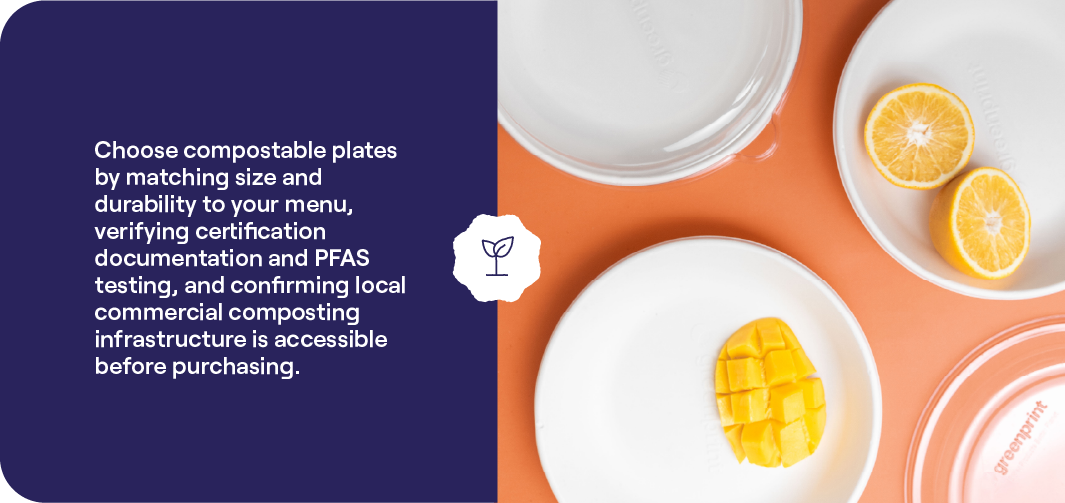
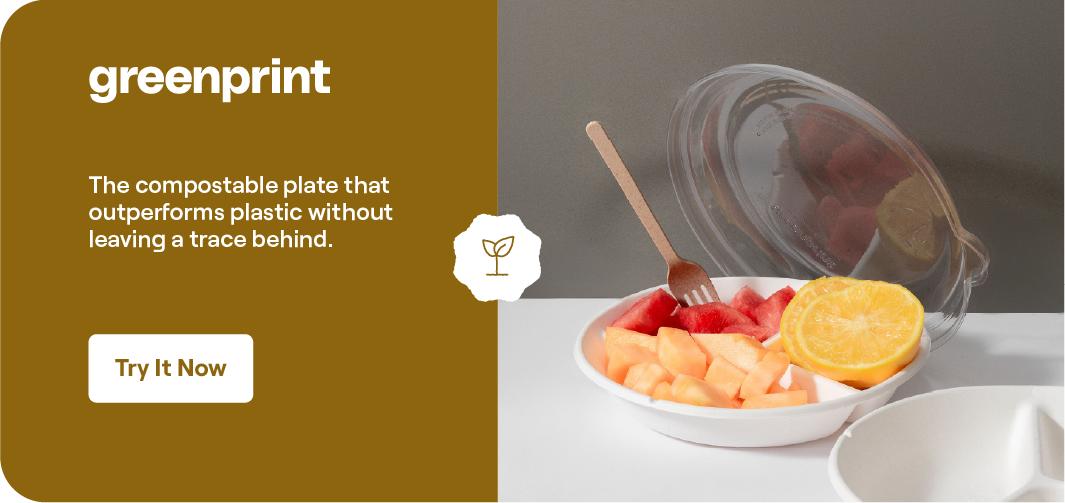
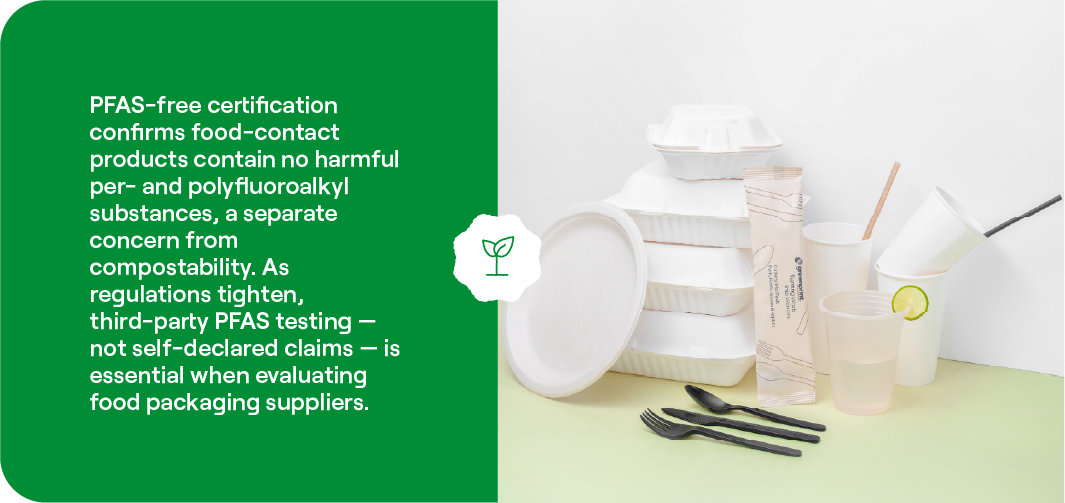
Greenprint® Fiberware™ bowls are made from bagasse, the plant fiber left after sugarcane is pressed for juice. They are industrially compostable and certified to TÜV Austria OK Compost INDUSTRIAL under the EN 13432 standard. Third-party PFAS testing returned no detectable PFAS across every compound in the panel.
Bagasse uses fiber that sugar production would otherwise discard. The material resists oil and moisture, which matters for dressed salads and warm grains. It also holds shape under a heavy load, so bowls do not sag between prep and pickup.
Third-party testing lets you back the sustainability claim with evidence, not marketing language. Procurement teams and customers increasingly ask for that documentation before they buy.
That combination makes Fiberware a strong fit for compostable salad bowls with lids in busy kitchens. Below are three formats, from single-serve to large salad bowls with lids for catering.
Round Fiberware Bowls
Round Fiberware bowls handle everyday single-serve and entrée salads. Bagasse walls stay sturdy under a full load of greens and toppings. Press or dome lids seal the top for pickup and delivery.
Compartment Bowls for Toppings
Compartment bowls separate dressings, proteins, and crunchy toppings from the greens. Diners combine everything at the table, so leaves stay crisp until the first bite. That layout protects texture better than a single open bowl.
Large Bowls for Catering and Serving
Large bowls carry group and catering portions with room to toss. They give you capacity for family-style salads and buffet service. They share the same industrially compostable end-of-life, so big events keep a clear disposal path.
Pair each bowl with a lid built for its rim. A matched lid seals fully and protects the salad from prep through service. You can round out service with matching compostable clamshell containers, all backed by BPI-certified compostability.
How to Keep Takeout Salads Fresh and Leak-Free
Pack dressing in a separate cup or compartment. Added at serving, it keeps greens from wilting inside a salad bowl to go container.
Choose ingredients that travel well. Hardy greens like kale, romaine, and cabbage hold up far better than delicate baby lettuces. Add crisp toppings and cheese in a separate compartment when the trip runs long.
Choose a snug lid and press it fully closed before transport. Layer sturdy ingredients like grains, beans, and roasted vegetables on the bottom, then greens on top. This keeps heavy items from crushing tender leaves.
Keep salads cold from prep to pickup. Cold holding slows wilting and protects both flavor and texture. Hand off orders quickly so bowls spend less time out of refrigeration.
Match the lid to the trip length. A snug press or dome lid handles short delivery windows, while longer routes benefit from insulated bags. Label each bowl with the order and any dressing on the side to avoid mix-ups.
Matching Salad Bowls to Your Composting and Disposal Plan
Fiberware bowls are industrially compostable, not home compostable. They break down in a commercial composting facility that reaches the sustained high heat industrial composting requires, not in a backyard pile. Learn how the process works in our guide to industrial composting for foodware.
We say industrially compostable, not simply compostable, so the claim matches the real disposal path. The FTC Green Guides direct brands to qualify compostable claims this way. Confirm your haulers accept certified compostable foodware before you switch.
For what each mark means, see our overview of composting certifications explained. Without access to a commercial program, even certified disposable salad bowls with lids can end up in landfill.
Clear bin signage helps staff and guests sort bowls into the right stream. Ask your composting partner what packaging they accept, then label your bins to match.
Find the Right Salad Bowls With Lids for Your Business
Match the format to your menu, then confirm your disposal plan supports composting. When both line up, you serve fresh salads and give guests a clear end-of-life story. Browse our industrially compostable Fiberware bowls, explore the full range of sustainable foodware, or contact our team about catering volumes.
Frequently Asked Questions
What size salad bowl with a lid do I need?
Single-serve entrée salads usually fit a mid-size bowl, while catering and group service need large formats. Match capacity to your typical portion plus toppings.
Are compostable salad bowls with lids leak-resistant?
Yes, Fiberware bowls with a snug press or dome lid resist leaks in transit. Pack dressing separately for the best results.
Can compostable salad bowls with lids go in the microwave?
Fiberware bagasse bowls tolerate short reheating, but check the product spec for your format first. Remove the lid before microwaving.
How do I dispose of an industrially compostable salad bowl with a lid?
Send it to a commercial composting facility that accepts certified compostable foodware. It will not break down in a backyard compost pile.
References

Compare the best compostable food containers for restaurants, from bagasse clamshells to PLA deli boxes. Choose certified, PFAS-free packaging with confidence.

Washington DC’s plastic ban covers bags, foam, straws, and utensils. See the single-use plastic laws, the 5-cent bag fee, and how your business can comply.
What can you compost? Learn which food scraps, yard waste, and paper products break down, what to keep out, and how to balance greens and browns at home.