

Straw Life Cycle Assessment: True Environmental Impact


Content
- Key Takeaways
- What Is a Life Cycle Assessment and Why Does It Matter for Straws?
- The Environmental Cost of Disposable Drinking Straws
- How Life Cycle Assessment Compares Straw Materials
- Environmental Impact of Each Straw Type
- Why End-of-Life Matters More Than the Material Label
- How to Verify Compostability and Environmental Claims
- Choose Straws That Match Your Values and Your Waste System
- References
Straw Life Cycle Assessment: The True Environmental Impact Compared
Life cycle assessment is the most reliable way to compare the real environmental footprint of different straw materials. This guide breaks down what LCA findings mean for each straw type so you can make purchasing decisions that align with your values, your local waste systems, and your bottom line.
Key Takeaways
- A life cycle assessment evaluates a straw’s environmental impact across every stage, from raw material extraction to end-of-life disposal, revealing trade-offs that product labels alone can’t show.
- End-of-life disposal is the single most important stage in a straw’s life cycle because many “compostable” straws require industrial facilities that most communities don’t have access to.
- Matching your straw choice to your actual local waste infrastructure delivers the greatest environmental benefit.
What Is a Life Cycle Assessment and Why Does It Matter for Straws?
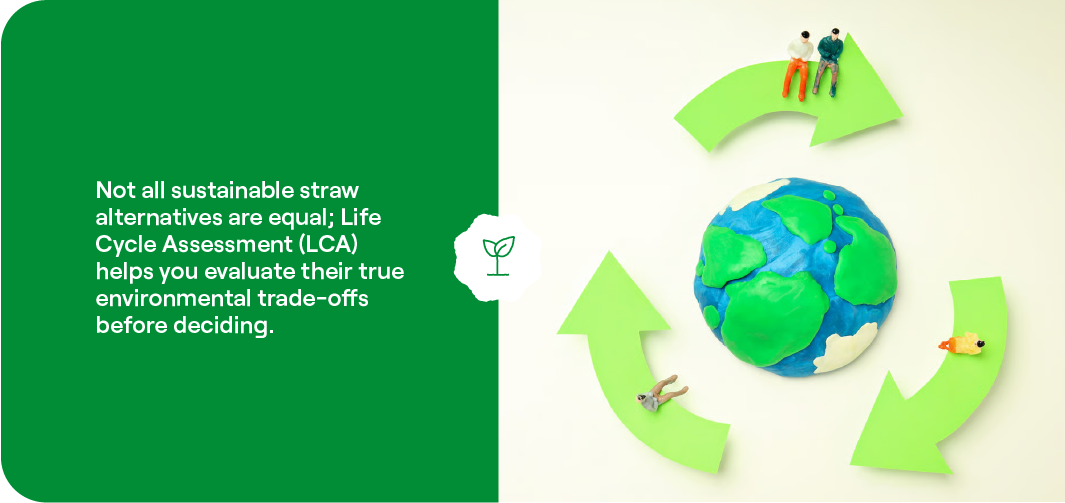
A life cycle assessment (LCA) is a cradle-to-grave analysis that measures the environmental impact of a product across every stage of its existence. This means looking at raw material extraction, manufacturing, transportation, and disposal as one connected system rather than focusing on just one piece of the puzzle.
When you’re choosing straws for your restaurant, the material name on the box only gives you part of the picture. A straw made from plants can still carry a heavy environmental footprint if it requires long-distance shipping, energy-intensive production, or disposal infrastructure that doesn’t exist in your area. LCA cuts through marketing language and examines what actually happens at each stage.
This matters because surface-level “green” labels don’t tell the full story. A product might be made from renewable materials but require industrial composting facilities that your community doesn’t have. Or it might be technically recyclable but never actually get recycled in practice. LCA reveals these hidden trade-offs.
For foodservice operators facing new regulations and growing customer expectations around sustainability, understanding LCA basics helps you ask better questions of your suppliers. You can move beyond vague claims and evaluate products based on their actual environmental performance across the entire life cycle.
The Environmental Cost of Disposable Drinking Straws
Disposable straws create environmental costs at every stage of their life cycle, not just when they’re thrown away. The plastic straws environmental impact begins with petroleum extraction, continues through energy-intensive manufacturing, and ends with products that persist in landfills and marine environments for centuries.
Restaurants are at the center of this issue. State and local regulations in California, New York, Washington, Vermont, and Massachusetts are actively restricting or banning conventional plastic straws. At the same time, your customers increasingly expect sustainable alternatives that actually work during service.
The pressure is real, and it’s coming from both directions. You need straws that perform well for your guests while meeting regulatory requirements and aligning with your values. The challenge is that not all alternatives are created equal.
Paper, bioplastic, and plant-based straws each carry their own environmental trade-offs. Some alternatives solve one problem while creating another. LCA is the tool that helps you see those trade-offs clearly before you commit to a supplier or make a purchasing decision you’ll regret.
How Life Cycle Assessment Compares Straw Materials
LCA breaks a product’s environmental impact into four distinct phases. Understanding each phase helps you evaluate straw options beyond what’s printed on the packaging. Here’s what each phase measures:
- Raw Material Extraction: The environmental cost of sourcing the base material, including land use, water consumption, and resource depletion.
- Manufacturing: Energy consumption, water use, and emissions during the production process.
- Transportation: Fuel consumption and emissions from moving raw materials and finished products.
- End-of-Life Disposal: What happens after the straw is used, including landfill, recycling, or composting pathways.
Raw Material Extraction and Sourcing
The environmental impact of a straw starts with where its raw material comes from and whether that sourcing creates new demand on natural resources. Different materials carry very different sourcing footprints.
Polypropylene straws depend on petroleum extraction, which involves drilling, refining, and all the environmental costs that come with fossil fuel industries. Paper straws require forestry operations that use land, water, and energy. Standard PLA straws use corn, which competes with food and animal feed supply chains.
Upcycled Agave Fibers take a different approach. They’re sourced as post-tequila agricultural waste from farming families in Jalisco, Mexico. This waste stream has no competing use, meaning it doesn’t divert resources from food production or require new agricultural land. It’s a waste-to-value model that turns an existing byproduct into a functional material while creating direct revenue for farming communities.
Manufacturing and Energy Use
Manufacturing is where energy consumption and emissions vary significantly between straw types. The production process for each material requires different inputs and creates different outputs.
Conventional plastic straw production relies on fossil fuel-based processes with significant energy demands. Paper straw manufacturing requires pulping, chemical treatment, and coating steps. Standard PLA production involves industrial fermentation and polymerization.
At Greenprint®, we manufacture our straws at a vertically integrated facility that is partially wind powered. We compound our materials in-house rather than purchasing pre-made compounds, which gives us full control over formulation and reduces the supply chain steps involved in production. Fewer steps and renewable energy translate to a lower manufacturing footprint.
Transportation and Distribution
Where a material originates directly affects its transportation footprint. Products that travel long distances before reaching your restaurant carry higher fuel consumption and emissions.
Bamboo-based products, for example, typically ship from Asia, adding significant transportation impact before they ever reach a North American distributor. Our Agave Fibers are sourced regionally within Mexico and manufactured at our facility in Nuevo León. This regional sourcing and production model keeps transportation distances short compared to materials that cross oceans.
End-of-Life Disposal and Composting
End-of-life is where straw LCAs diverge most dramatically. A straw’s disposal pathway determines whether its environmental story ends well or poorly. The main disposal options include:
- Landfill: Where most straws end up, regardless of material, if proper disposal infrastructure isn’t available.
- Recycling: Technically possible for some plastics but rarely happens in practice for straws due to their small size.
- Industrial Composting: Requires specialized facilities that maintain high temperatures, which many communities lack.
- Home Composting: Allows breakdown in a backyard bin without specialized infrastructure, but very few products are certified for this pathway.
Most “compostable” straws on the market require industrial composting facilities. If those facilities aren’t available in your area, those straws end up in landfill, where they behave much like conventional waste. Home composting is a fundamentally different pathway because it doesn’t depend on specialized infrastructure.
Environmental Impact of Each Straw Type
Each straw material carries a distinct set of environmental trade-offs across the four LCA phases. The table below provides a quick comparison before we examine each type in detail.
| Straw Type | Material Source | End-of-Life Pathway | Key Certifications |
|---|---|---|---|
| Polypropylene (Plastic) | Petroleum | Landfill (rarely recycled) | None for compostability |
| Paper | Forestry (wood pulp) | Limited compostability when coated | Varies by product |
| Standard PLA | Corn (food crop) | Industrial composting only | BPI (industrial only) |
| Agave-Based Compostable | Post-tequila waste | Home or industrial composting | TÜV Austria OK Compost HOME, BPI |
Plastic (Polypropylene) Straws
Polypropylene straws are made from petroleum, a nonrenewable resource. They persist in landfills and marine environments for centuries after disposal. While polypropylene is technically recyclable, straws are rarely accepted by recycling programs due to their small size and light weight.
The plastic straws environmental impact extends beyond disposal. Extraction of petroleum carries its own environmental costs, and the manufacturing process is energy-intensive. These straws represent a linear take-make-dispose model with no circular pathway.
Regulatory bans on polypropylene straws are expanding across the U.S., making them an increasingly risky choice for foodservice operators who need to stay compliant. If you’re still using plastic straws, you may face restrictions sooner than you expect.
Paper Straws
Paper straws are the most common plastic alternative, but LCA reveals meaningful trade-offs. Forestry operations for wood pulp require land, water, and energy. Many paper straws also use chemical coatings to improve water resistance.
Some of those coatings have raised concerns about PFAS (per- and polyfluoroalkyl substances) contamination. PFAS are persistent chemicals that don’t break down in the environment and have been linked to health concerns. Not all paper straws contain PFAS, but it’s a question worth asking your supplier.
From a performance standpoint, paper straws often become soggy during use, which frustrates customers and can lead to higher per-service usage. When coated, they may not break down effectively in composting systems, limiting their end-of-life benefits.
Standard PLA (Bioplastic) Straws
Standard PLA straws are made from corn-based bioplastic, which introduces a renewable material into the equation. However, standard PLA requires industrial composting temperatures to break down. This means it fails home compostability certification.
Without access to an industrial composting facility, PLA straws end up in landfill where they don’t break down meaningfully. They’ll sit there much like conventional plastic would. Corn-based sourcing also competes with food and animal feed supply chains, adding a resource allocation concern.
The gap between what standard PLA promises and what it delivers in the real world is significant. If your community lacks industrial composting infrastructure, these straws won’t provide the environmental benefit you’re hoping for.
Agave-Based Compostable Straws
Our Green Dot Compostable Upcycled Agave Straws offer a different approach. They’re made with Upcycled Agave Fibers and include an enzyme masterbatch integrated during compounding at 160–190°C that catalyzes hydrolysis of PLA polymer chains, enabling full breakdown at ambient temperatures (20–30°C). Standard PLA without enzyme technology requires industrial composting at 55–60°C and cannot achieve HOME certification.
These straws carry TÜV Austria OK Compost HOME certification, which verifies they break down in a backyard compost bin. They also hold BPI Commercial Compostability certification for industrial composting. They are PFAS-free, verified through third-party BPI testing.
Our internal study GP-BIO-001 documented full breakdown by Week 20 under home compost conditions (20–30°C), validated in triplicate, providing supporting evidence alongside the TÜV certification. This combination of TÜV Austria OK Compost HOME certified home compostability, PFAS-free status, and Upcycled Agave sourcing sets these straws apart from other options on the market.
Why End-of-Life Matters More Than the Material Label
A straw’s true environmental impact depends on what actually happens after you throw it away, not what the packaging claims. This is the most important insight from life cycle assessment.
A product labeled “compostable” that requires an industrial facility your city doesn’t have will end up in landfill. According to the EPA, it will take over $14 billion to build the composting infrastructure needed to close that gap. The material label becomes meaningless if the disposal infrastructure doesn’t exist.
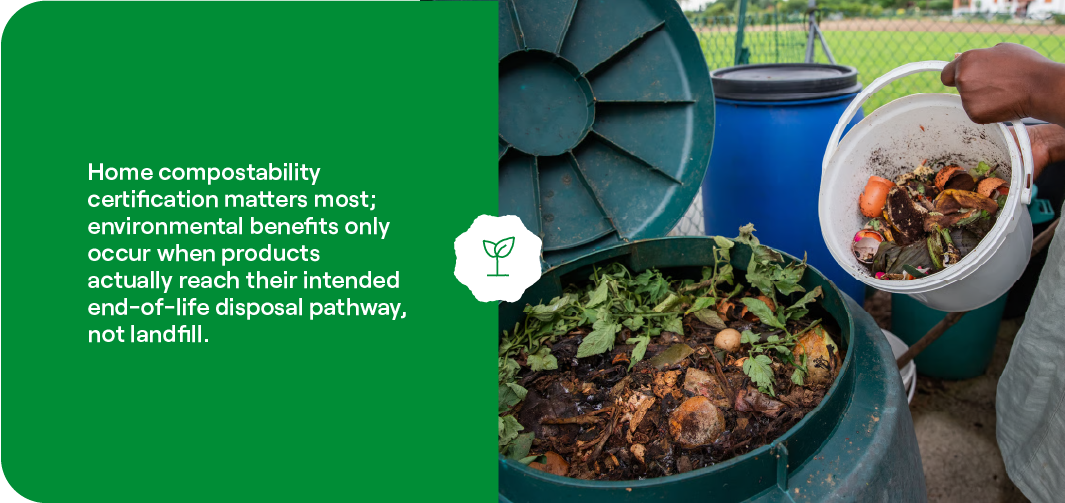
This is why home compostability is such an important distinction. Products certified for home composting, such as those with TÜV Austria OK Compost HOME certification, give your customers a real disposal pathway that doesn’t depend on municipal infrastructure. When evaluating straw options, always ask yourself: “Where will this straw actually go after my customer uses it?”
If the answer is landfill, the material label doesn’t matter much. The environmental benefit only materializes when the product reaches its intended end-of-life pathway.
How to Verify Compostability and Environmental Claims
Look for specific, third-party certifications rather than general “green” language on packaging. Vague claims like “earth-friendly” or “natural” don’t meet the substantiation requirements of the FTC Green Guides.
The FTC Green Guides require that environmental claims be specific, substantiated by competent and reliable scientific evidence, and clearly qualified. Broad claims without supporting detail can be misleading to consumers and may expose your business to regulatory risk if you repeat them.
The two most important certifications for compostable straws in the U.S. are:
- TÜV Austria OK Compost HOME: Verified by the world market leader in bioplastics certification, this confirms that a product breaks down in home composting conditions without requiring industrial facilities.
- BPI Commercial Compostability: Verifies that a product meets ASTM standards for industrial composting.
Third-party PFAS testing adds another layer of verification that matters for both safety and regulatory compliance, as BPI requires certified products to test below 100 ppm total organic fluorine. Ask your supplier for documentation of their certifications and testing results. You can verify certifications directly through the BPI certified company directory.
Our Green Dot Compostable Upcycled Agave Straws carry both TÜV Austria OK Compost HOME and BPI Commercial Compostability certifications, with PFAS-free status verified through third-party testing.
Choose Straws That Match Your Values and Your Waste System
The most effective straw choice is one that matches your local composting or recycling infrastructure. If your area has limited industrial composting access, a home-compostable straw delivers far more environmental benefit than one that requires facilities you can’t access.
We designed our product lines around this reality. Our Green Dot Compostable Upcycled Agave Straws are certified for composting pathways, including home composting (TÜV Austria OK Compost HOME certified). Our Blue Dot PCR Upcycled Agave Straws are made with post-consumer recycled content and Agave Fibers, giving operators in recycling-focused markets a circular option.
You don’t have to choose between doing the right thing and running a profitable business. Both goals can work together when you select products that fit your actual situation. Explore our straws to find the option that fits your operation, or contact our team for guidance on matching the right product to your local waste system.
References
References
- https://bpiworld.org/bpi-launches-commercial-home-compostable-certification-program-bringing-food-waste-diversion-to-our-backyards
- https://en.tuv.at/tag/ok-compost/
- https://bpiworld.org/fluorinated-chemicals
- https://products.bpiworld.org/companies/greenprint-llc
- https://en.tuv.at/ok-compost-home-en/
- https://bpiworld.org/

Industrial composting produces far lower carbon emissions than landfill. Learn how aerobic decomposition reduces methane and why it matters for your business.
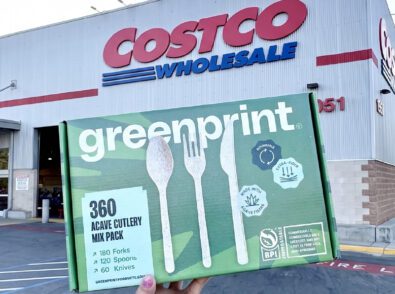
Greenprint compostable cutlery mix pack at Costco: 360 BPI-certified agave forks, spoons, and knives. Heavy-weight, industrial compostable, and built for events.

Cradle-to-gate vs. cradle-to-grave: learn what each LCA boundary covers, when to use it, and why it matters for compostable packaging decisions.