

New Jersey Plastic Bans and Regulations Explained



New Jersey Plastic Bans and Regulations: A Business Guide
New Jersey plastic bans and regulations are among the strictest in the country, and every food business in the state has to follow them. This guide breaks down what is banned, when each rule took effect, who must comply, and what you can use instead. If you run a restaurant, café, or takeout counter, knowing the details of the NJ plastic ban keeps you compliant and confident.
What New Jersey’s Plastic Ban Law Covers
New Jersey’s core rules come from the Plastic Pollution Reduction Act (P.L. 2020, c.117). Governor Phil Murphy signed it on November 4, 2020, and the main provisions took effect on May 4, 2022. Its combined bans on bags, foam, and straws make it one of the most far-reaching single-use plastic laws in the country. The state runs the Get Past Plastic program to help businesses comply.
Lawmakers passed the act to cut litter, reduce landfill waste, and protect the state’s waterways and coastline. For food businesses, the practical result is a clear list of items you can no longer hand out the way you used to.
The rules focus on four areas that touch daily foodservice operations: carryout bags, polystyrene foam foodservice products, plastic straws, and single-use utensils and condiments. Bags, foam, and straws fall under P.L. 2020, c.117, while utensils and condiments come from the newer Skip the Stuff law. The original act set an 18-month runway before its main provisions took hold, which gave businesses time to switch suppliers.
New Jersey is one of a growing number of states restricting single-use plastics, and you can see how it compares in our roundup of which states ban plastic bags or our guide to the Massachusetts plastic ban rules. The sections below explain each rule and what it means for your business.
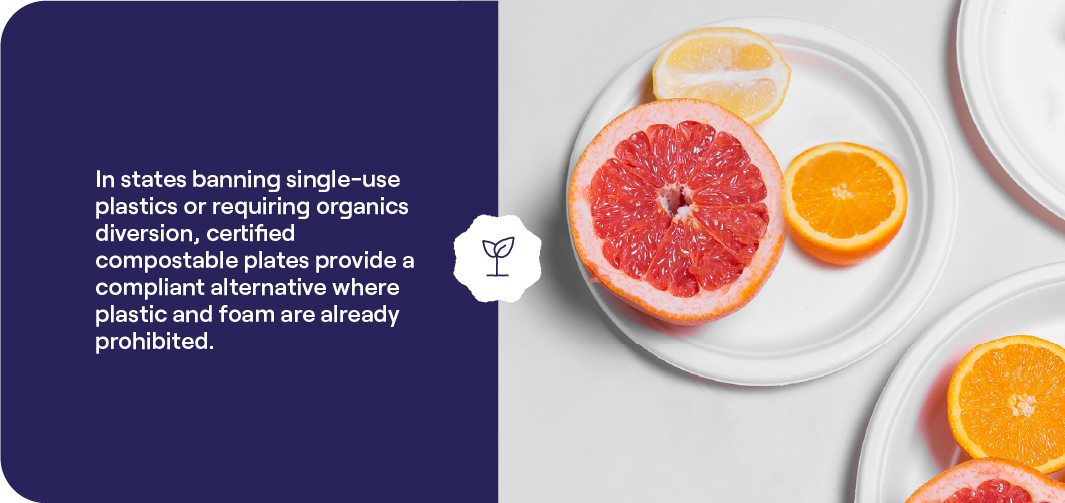
Which Single-Use Items New Jersey Bans
For operators, four product categories matter most. Here is what the new jersey plastic bag ban and the rest of the law cover, and how each rule works day to day.
Plastic and Paper Carryout Bags
New Jersey bans single-use plastic carryout bags at every store and food business statewide. The rule applies whether a customer picks up in person, orders delivery, or uses curbside. There is no thickness that makes a single-use plastic bag legal again.
It also bans single-use paper carryout bags, but only at grocery stores of 2,500 square feet or larger. This paper bag rule is unusual, and few other states share it. Smaller shops and restaurants may still use paper bags, though many choose reusable options to cut ongoing costs.
Bags for loose items, such as produce, uncooked meat, and greeting cards, are exempt. You can still give customers a reusable bag that meets the state standard. We define that standard in the FAQ below, so your staff know exactly what qualifies at the counter.
Polystyrene Foam Foodservice Products
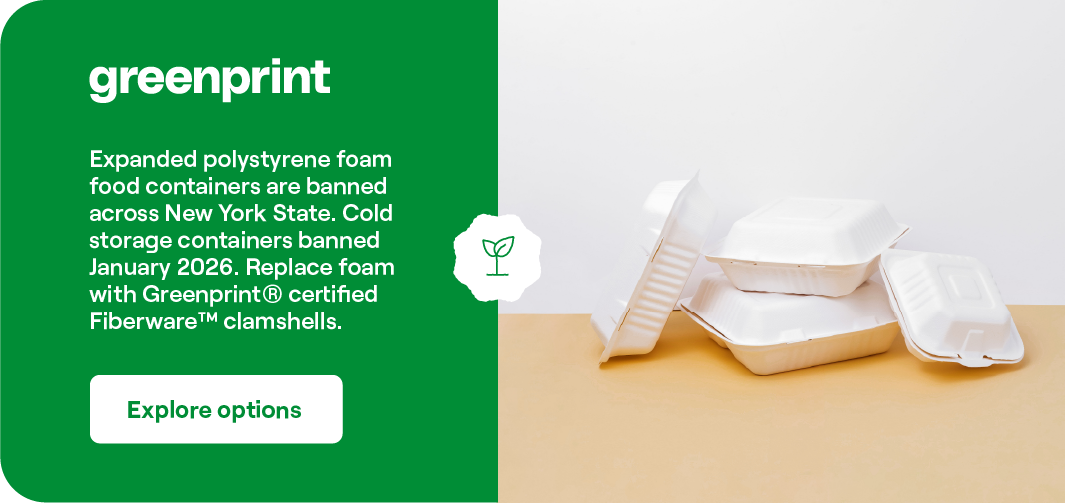
Polystyrene foam, also called expanded polystyrene or EPS, is the lightweight foam used in many takeout containers. New Jersey prohibits foam food containers, cups, trays, plates, and clamshells. If a product squeaks and crushes like a picnic cooler, it is likely the banned material.
Some foam products stay exempt, such as trays for raw or butchered meat, poultry, and fish sold from refrigeration, plus food pre-packaged by the manufacturer in foam like egg cartons. According to the NJDEP bags and foam guidance, those exemptions run through May 4, 2027 unless the NJDEP extends them. Most operations still need a foam-free menu, and fiber-based containers are the common replacement we cover below.
Plastic Straws Available by Request
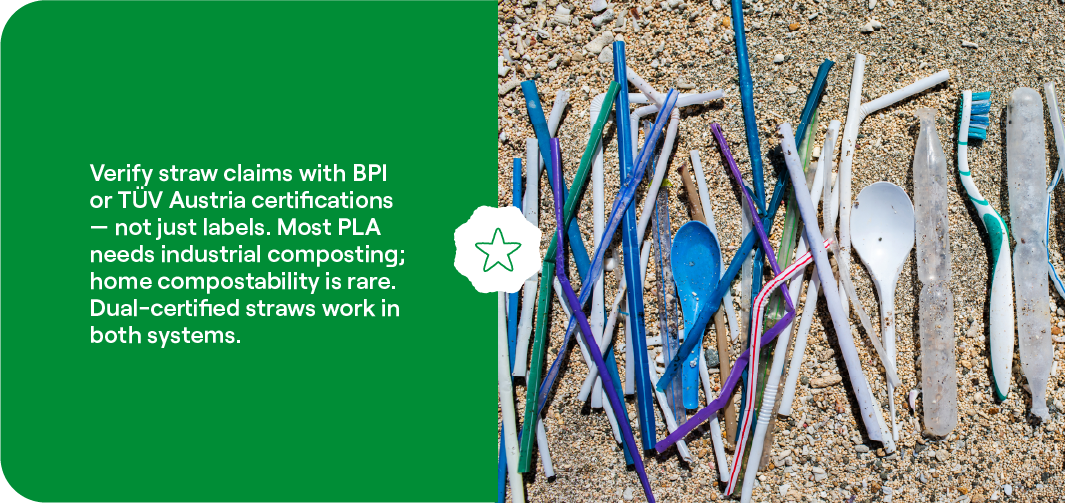
Plastic straws are not fully banned in New Jersey. Food businesses may hand out plastic straws only when a customer asks for one. This by-request rule has been in effect since November 4, 2021, ahead of the main 2022 provisions. When you do stock straws, our compostable agave drinking straws meet the moment without adding plastic.
In practice, that means no straws sitting out for self-service and no straws dropped into every drink by default. Train staff to ask, and set your point-of-sale and delivery apps so straws are an opt-in choice.
New Jersey’s Skip the Stuff Utensil Law
New Jersey’s Skip the Stuff law (bill S-3195) changes how you provide extras with takeout and delivery. Food businesses may no longer include single-use utensils and condiment packets automatically. Customers have to ask for them.
Casual dining spots may still offer utensils and condiments by request or at self-serve condiment stations. Full-service restaurants may include them only when a customer orders online and asks for them. Set your online and mobile ordering so these items come only on request. Our compostable agave cutlery sets give you a compliant option to hand out on request.
The New Jersey Department of Environmental Protection (NJDEP) confirms the law takes effect on August 1, 2026. Beginning August 1, 2027, bundled packages that hold more than one type of utensil or condiment are also prohibited. Food courts have until August 1, 2028 to comply.
Which Businesses Must Comply
The rules reach most retail and food businesses across the state. That includes grocery stores, retail stores, restaurants, cafés, food trucks, caterers, and other food service businesses. Convenience stores and pharmacies that sell food fall under the same bag and foam rules.
Some institutional settings are exempt from the Skip the Stuff rules, including K-12 schools, licensed health care facilities, and county or state correctional facilities. Confirm your exact status with the state rather than assuming an exemption applies. If you sell food or goods to the public in New Jersey, treat the bag and foam bans as covering you.
For a broader approach to auditing your inventory, switching suppliers, and training staff, see our plastic regulation guide for businesses and our steps for adding compostable packaging to your business. The state’s New Jersey Business Action Center guidance also lists approved vendors.
Penalties for Breaking New Jersey’s Plastic Rules
NJDEP, municipalities, and certified county health agencies enforce the bag and foam rules, and the New Jersey Department of Health enforces the straw rule. Penalties climb with each violation. A first offense brings a warning, a second runs up to $1,000 per day, and a third or later runs up to $5,000 per day.
The Skip the Stuff rules carry their own escalating penalties for repeat violations, so build the request-only workflow into your operations early.
Beyond the fines, non-compliant packaging can draw customer complaints and negative reviews in a state where these rules are well known. Compliance costs less than penalties, and it protects your reputation with diners who watch how you handle waste. Switching to compliant products removes the risk before an inspector ever visits.
Compliant Alternatives for New Jersey Foodservice
Staying compliant does not mean giving up performance. Greenprint® makes certified compostable products that replace each banned item while holding up during real service, so these compliant alternatives to the single-use plastic ban in NJ keep your line moving.
For foam replacement, Fiberware™ clamshells, plates, and bowls are molded from bagasse, the fiber left over after sugarcane is pressed. They handle hot, wet, and oily foods and carry TÜV Austria OK Compost INDUSTRIAL certification, which verifies breakdown in commercial composting facilities.
For the Skip the Stuff utensil rules, Compostable Agave Cutlery holds BPI Commercial certification for industrial composting. The forks, knives, and spoons are sturdy enough for full meals, which matters when you supply them only on request.
For by-request straws, Compostable Agave Straws carry both TÜV Austria OK Compost HOME and BPI Commercial certification. Greenprint’s own product testing documents that they break down at backyard temperatures as well as commercial ones, thanks to an enzyme technology that helps the material hydrolyze at 20 to 30 degrees Celsius. The TÜV Austria OK Compost HOME certification corroborates that home-compostable breakdown. Cutlery uses standard PLA and needs industrial composting, so treat the two products as different disposal paths.
Foam cups are covered by the ban too. Clearly Compostable™ cold cups are made from PLA and hold BPI plus TÜV Austria OK Compost INDUSTRIAL certification. Renewacups™ hot cups are PFAS-free, meaning they are tested free of per- and polyfluoroalkyl substances.
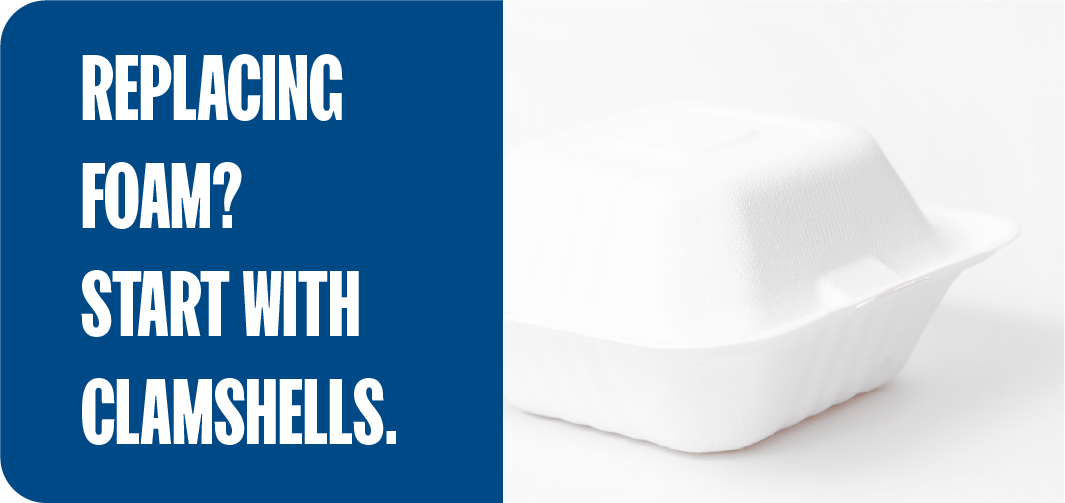
Use the table below to map each New Jersey rule to a compliant Greenprint product and its certification.
Banned or Restricted Item | New Jersey Rule | Greenprint Alternative | Certification |
|---|---|---|---|
Foam containers, trays, and clamshells | Banned statewide | Fiberware™ clamshells, plates, and bowls (bagasse) | TÜV Austria OK Compost INDUSTRIAL |
Foam cold cups | Banned statewide | Clearly Compostable™ cold cups (PLA) | BPI plus TÜV Austria OK Compost INDUSTRIAL |
Foam hot cups | Banned statewide | Renewacups™ hot cups | PFAS-free, third-party tested |
Single-use utensils | Request only (Skip the Stuff) | Compostable Agave Cutlery | BPI Commercial (industrial) |
Plastic straws | Available by request only | Compostable Agave Straws | TÜV Austria OK Compost HOME plus BPI Commercial |
Every claim ties to a named certification and its testing basis, which keeps your marketing aligned with the FTC Green Guide. Explore our certified compostable foodservice packaging and match each product to the rule it satisfies, or contact our team today for help choosing.
Frequently Asked Questions
Are Plastic Bags Coming Back to New Jersey?
No. The ban stays in effect statewide, even though some lawmakers have proposed changes to it.
Does New Jersey Charge a Bag Fee?
No. New Jersey bans single-use bags outright rather than charging a per-bag fee.
Are Plastic Straws Banned in New Jersey?
Not entirely. Businesses may provide plastic straws only when a customer requests one.
What Counts as a Reusable Bag in New Jersey?
A reusable bag is made of washable fabric with stitched handles and designed for at least 125 reuses. A thicker single-use plastic bag does not qualify.
References
- https://dep.nj.gov/get-past-plastic/
- https://dep.nj.gov/get-past-plastic/plastic-bags-polystyrene-foam/
- https://www.njleg.state.nj.us/bill-search/2024/S3195
- https://dep.nj.gov/get-past-plastic/condiments-utensils-straws/
- https://business.nj.gov/pages/plastic-ban-law
- https://bpiworld.org/
- https://en.tuv.at/ok-compost-home-en/


Nanoplastics vs. microplastics comes down to size. Learn how they differ, why researchers worry more about nanoplastics, and simple ways to reduce exposure.

Earth Day facts that show the scale of the environmental crisis, from plastic and landfill waste to CO2 and wildlife loss. See what the numbers mean for you.

Minnesota plastic ban rules for businesses, including city bag fees, Green To Go takeout packaging, PFAS limits, compostable labels, and EPR dates to plan for.