

Nanoplastics vs. Microplastics: Why Size Matters Most


Nanoplastics vs. Microplastics: Why Researchers Worry More
The main difference in nanoplastics vs. microplastics is size. Nanoplastics are far smaller, and that tiny size is why researchers are paying closer attention. This guide covers what each term means, what the science shows so far, and how you can cut exposure.
What Is the Difference Between Nanoplastics and Microplastics?
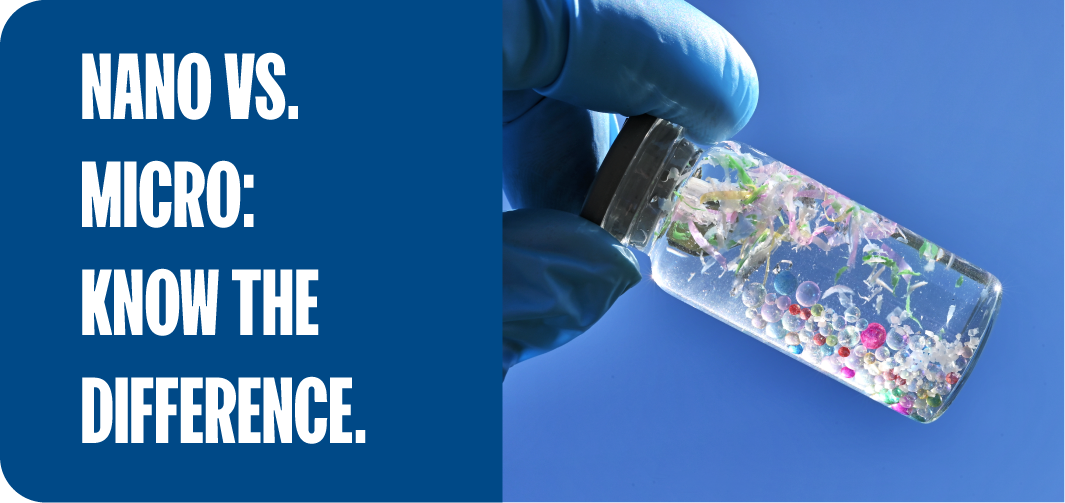
Microplastics are plastic pieces typically under 5 millimeters (mm) long. Nanoplastics are typically under 1 micrometer. That gap is the heart of the nanoplastics vs. microplastics question.
These ranges come from the FDA’s microplastics and nanoplastics guidance. The FDA also notes there are no standard definitions for these sizes. So cutoffs can vary between studies.
This matters when you read headlines about plastic particles. Before you compare two studies, check how each one defines its size classes. A study that counts “microplastics” may or may not include the smallest particles.
A micrometer is one millionth of a meter, and there are 1,000 micrometers in a millimeter. A human hair is about 70 micrometers wide, according to the FDA and Columbia University. That means even the largest nanoplastic is much thinner than a single strand of hair.
NOAA’s microplastics explainer says the largest microplastics are about pencil-eraser size. Nanoplastics size is on another level entirely. Columbia researchers describe nanoplastics as so small they’re measured in billionths of a meter.
If you’re asking what are microplastics and nanoplastics, this table gives the short answer. Each row draws on the FDA, NOAA, or Columbia University.
Trait | Microplastics | Nanoplastics |
|---|---|---|
Typical size | Under 5 mm, down to about 1 micrometer | Under 1 micrometer |
Size comparison | Up to pencil-eraser size (NOAA) | Measured in billionths of a meter (Columbia) |
Ease of measuring | Easier with current lab methods | Harder; methods are less reliable (FDA) |
Standard definition | None (FDA) | None (FDA) |
Where Do Nanoplastics Come From?
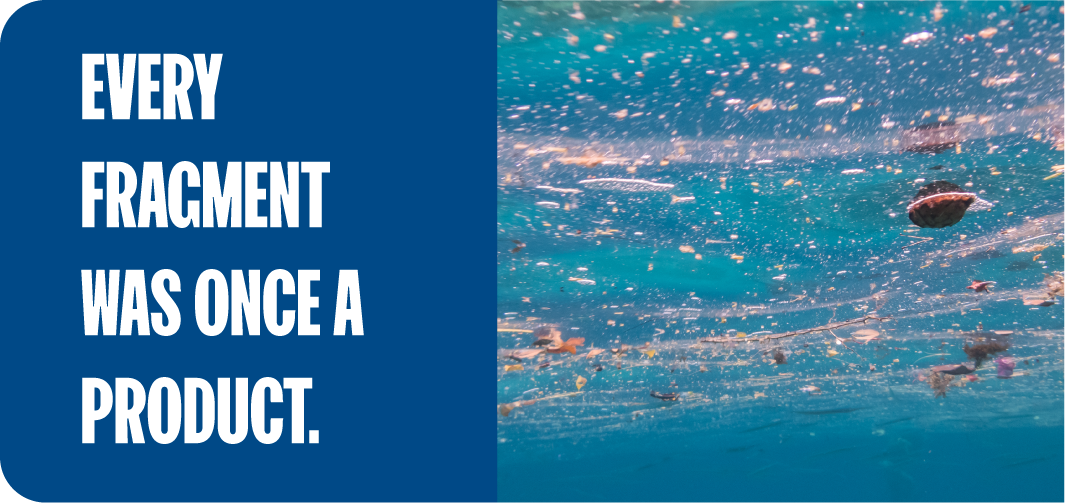
Most nanoplastics start out as larger plastic items. Plastic doesn’t vanish as it wears down. The FDA says plastics weather in the environment over time into small particles called microplastics and nanoplastics.
Nanoplastics are often described as the breakdown products of microplastics. This weathering is part of the problem with microplastics in the ocean. It’s also a question for plastic foodware in landfills.
Some microplastics are made small on purpose, such as resin pellets. A 2024 review of nanoplastic sources in the journal Polymers says nanoplastics can come from similar pathways. For the full breakdown, see our guide to primary vs. secondary microplastics.
Why Do Researchers Worry More About Nanoplastics?
Researchers worry more about nanoplastics because their tiny size may let them go places larger particles can’t. Scientists are still studying this, and harm in people hasn’t been proven.
Columbia and Rutgers researchers say nanoplastics may be small enough to pass into the bloodstream and cells. Researcher Wei Min explains the logic in Columbia’s bottled water report. In his words, “the smaller things are, the more easily they can get inside us.”
Size isn’t the only reason for concern. In the Columbia and Rutgers bottled water study, nanoplastics far outnumbered larger particles. The FDA also says they are harder to measure. That leaves scientists with less data on them than on microplastics.
Finding nanoplastics in humans adds to the concern. The FDA says micro- and nanoplastics have been found in human urine, stool, blood, and organs. The FDA also says not enough is known about what they do there.
So, are nanoplastics worse than microplastics? Nobody knows yet. Columbia reports that medical scientists are moving quickly to study the possible effects.
The open questions are basic ones. How many particles do people take in, and where do they go? Do they cause harm at real-world levels?
Our guide on how microplastics enter the food chain explains one way these particles may reach people.
Why Are Nanoplastics So Hard to Detect?
Nanoplastics are hard to detect because most lab methods weren’t built for particles this small. The FDA says current measurement methods aren’t very reliable at these sizes. There are also no standardized methods yet.
That’s one reason there are fewer studies on nanoplastics than on microplastics. The FDA notes that many past studies used methods of limited accuracy. A 2024 review in Polymers adds that methods often failed to separate and count nanoplastics in real-world samples.
Newer tools are starting to close the gap. Columbia and Rutgers researchers used a laser-based method to count and identify nanoplastics in bottled water. Earlier estimates mostly stopped at around 1 micrometer.
The team tested three unnamed U.S. bottled water brands. On average, they found about 240,000 detected particles per liter, and about 90% were nanoplastics. Counts per liter ranged between 110,000 and 370,000.
According to the Rutgers bottled water study summary, that’s 10 to 100 times more than earlier estimates. The method could pick up particles as small as 100 nanometers, or one tenth of a micrometer.
Keep the limits in mind. The study covered three brands, so it doesn’t describe all bottled water. Only about 10% of the particles matched the seven plastic types the team targeted, and the rest weren’t identified.
Better counts also don’t answer the health question. A higher number tells you more particles are present. It doesn’t tell you whether those particles cause harm.
What Does Research Say About Health Effects?
Right now, research hasn’t shown that micro- or nanoplastics in food harm people. The FDA says current evidence doesn’t show that levels found in foods pose a risk to human health. It also says more research is needed.
That’s the most accurate summary of microplastics effects on humans today. Particles have been found in the body, but what they do there isn’t known.
When you see a scary headline, check two things. Was the study done in people, in animals, or in a lab dish? Did it measure harm, or only the presence of particles?
Are nanoplastics harmful? Researchers are studying the question, and harm in people hasn’t been shown.
Lab results need care, too. The Nebraska microwave study included a cell test in a lab dish. Results like that don’t show what happens inside the body.
Packaging is another open question. The FDA says there isn’t enough evidence that particles from plastic food packaging move into foods. It points to environmental contamination as the primary route.
We look at the packaging side in more detail in microplastics in disposable foodware and microplastics in cups. Particles are also a separate issue from chemical additives. If you’re weighing plastic chemicals, read our take on BPA-free plastic safety.
How Can You Reduce Exposure to Both?
You can’t avoid micro- and nanoplastics completely, but a few habits limit your contact with heated and worn plastic. These steps are reasonable precautions, and none is proven to improve health.
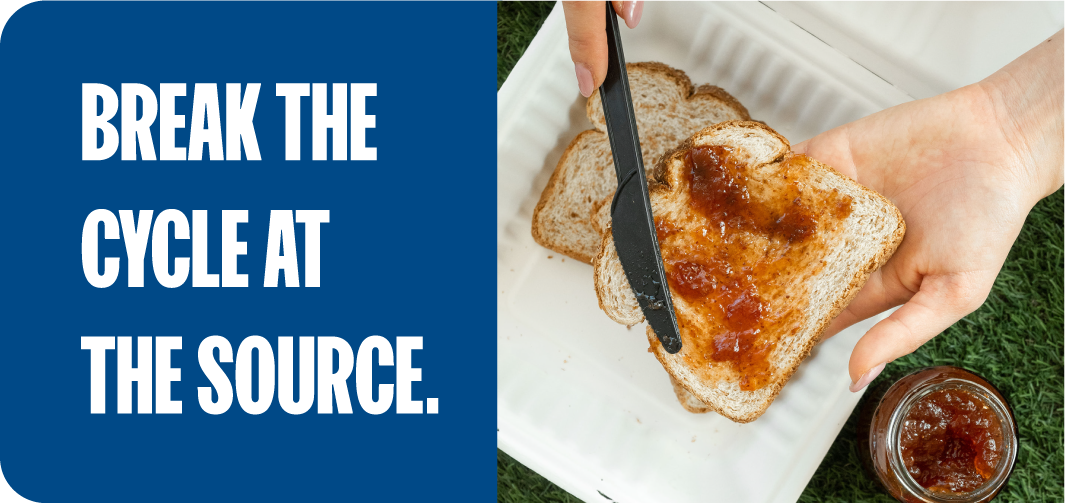
Start with heat, since one lab study linked microwaving plastic to large particle releases. Consider not heating food in plastic containers. At home, reheat and store food in glass or stainless steel instead.
Some people also choose to replace scratched or worn plastic containers with glass or steel. This is a personal preference, and it doesn’t require new equipment.
Wondering how to avoid microplastics in water? A glass or steel bottle is one simple swap to consider. For more ideas on how to avoid microplastics in food, see our guide on how to avoid microplastics.
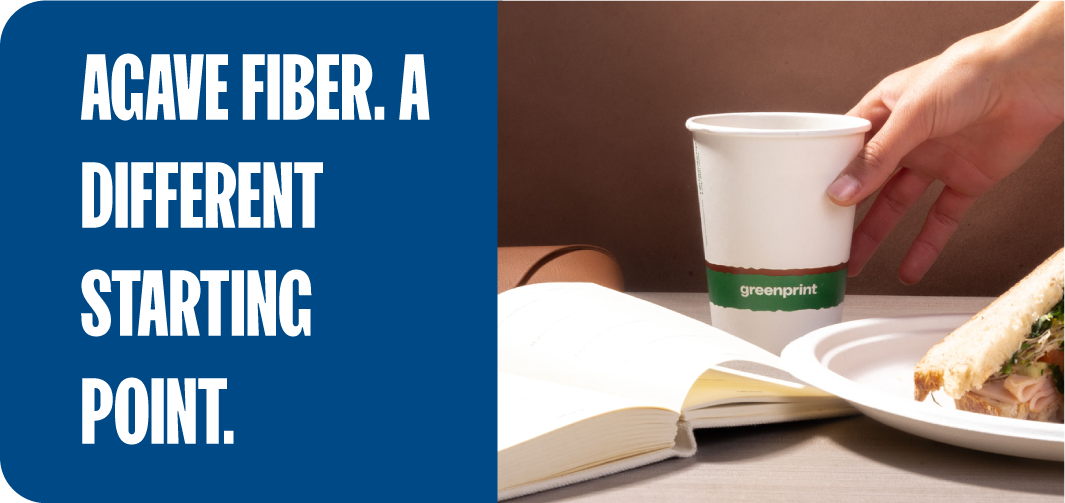
If you run a restaurant, café, or food truck, start with items that hold hot food and drinks. You can replace single-use plastic there with plant-based items.
At Greenprint®, we make plant-based compostable foodservice ware for that swap. Our Compostable Agave straws carry TÜV Austria OK Compost HOME and BPI certification. Our Compostable Agave cutlery is BPI Commercial certified.
Our Fiberware™ plates, bowls, and clamshells are made from bagasse (sugarcane fiber). They carry TÜV Austria OK Compost INDUSTRIAL certification. Learn what each label means in compostable certifications explained.
Match each product to the waste system you actually have. Home compostable items suit kitchens that compost on-site. Industrial compostable items need a commercial composting facility that accepts them, so check with your local hauler first.
We follow the FTC Green Guides, so we tie every compostability claim to a named certification. We don’t claim our products prevent micro- or nanoplastic exposure. Research on whether compostable materials shed particles is still limited.
Frequently Asked Questions
Are There Nanoplastics in Drinking Water?
Researchers have found them in bottled water. A Columbia and Rutgers study of three unnamed brands averaged about 240,000 particles per liter, roughly 90% nanoplastics.
Do Water Filters Remove Nanoplastics?
The research we reviewed didn’t test water filters, so we can’t say how well any filter removes nanoplastics. If this matters to you, ask the filter maker for independent test data on particles under 1 micrometer.
Should You Worry About Nanoplastics?
Researchers are watching closely, but the FDA says current evidence doesn’t show that food levels pose a health risk. Limiting heated plastic is a reasonable step while research continues.
References
- https://www.fda.gov/food/environmental-contaminants-food/microplastics-and-nanoplastics-foods
- https://oceanservice.noaa.gov/facts/microplastics.html
- https://pmc.ncbi.nlm.nih.gov/articles/PMC11174615/
- https://www.publichealth.columbia.edu/news/bottled-water-can-contain-hundreds-thousands-nanoplastics
- https://www.rutgers.edu/news/whats-your-bottled-water-study-suggests-there-may-be-hundreds-thousands-tiny-plastic-bits

Earth Day facts that show the scale of the environmental crisis, from plastic and landfill waste to CO2 and wildlife loss. See what the numbers mean for you.

Minnesota plastic ban rules for businesses, including city bag fees, Green To Go takeout packaging, PFAS limits, compostable labels, and EPR dates to plan for.
Reduce reuse recycle explained in plain terms. Learn what each of the 3 Rs means, why the order matters, and how compost completes the set as the 4th R.