

Oregon Plastic Ban Guide: Bags, Straws, Foam & PFAS Laws



Content
- What Single-Use Plastics Are Banned in Oregon?
- Oregon Plastic Bag Ban Rules
- Are Plastic Straws Banned in Oregon?
- Oregon Foam and PFAS Food Container Ban
- How Oregon's Recycling Modernization Act Affects Foodservice
- Local Plastic Rules in Portland and Other Cities
- What Are the Penalties for Breaking Oregon Plastic Laws?
- How to Choose Compliant Alternatives in Oregon
- Frequently Asked Questions
Oregon Plastic Ban & Single-Use Plastic Laws: Complete Guide
The Oregon plastic ban is a set of laws on checkout bags, straws, foam and PFAS foodware, and packaging. These Oregon single-use plastic laws affect retailers, restaurants, food vendors, and companies that sell packaging into the state. This guide reflects the rules as of November 2026 and isn’t legal advice.
For other states, see our state-by-state plastic ban guides.
What Single-Use Plastics Are Banned in Oregon?
Oregon limits four types of single-use items and adds recycling duties for packaging producers. Here’s the short list as of November 2026:
-
Single-use checkout bags at stores and restaurants.
-
Plastic straws, unless a customer asks for one.
-
Polystyrene foam containers for prepared food.
-
Foodware containers with intentionally added PFAS.
-
Producer duties for packaging and food serviceware under the Recycling Modernization Act.
The statewide single use plastic bag ban is the oldest of these rules. Here’s each law at a glance.
Law | What it covers | Effective date |
|---|---|---|
HB 2509 | Bans single-use checkout bags and sets a 5-cent minimum for retail bags | January 1, 2020 |
SB 551 | Ends reusable plastic and fabric checkout bags, so only recycled paper is allowed | January 1, 2027 |
SB 90 | Limits plastic straws to customer request only | January 1, 2020 |
SB 543 | Bans foam foodware, foam packing peanuts, and foodware with intentionally added PFAS | January 1, 2025 |
SB 582 (Recycling Modernization Act) | Makes producers responsible for packaging and food serviceware recycling | Producer registration by July 1, 2025 |
Some cities, like Portland, add stricter local rules on top of state law.
Oregon Plastic Bag Ban Rules
The Oregon plastic bag ban started with HB 2509 on January 1, 2020. Since then, retail stores and restaurants can’t provide single-use checkout bags. With this law, Oregon joined the states with statewide plastic bag bans.
Until the end of 2026, stores may offer three bag types at checkout:
-
Recycled paper bags with at least 40% post-consumer recycled fiber.
-
Reusable plastic bags at least 4 mils thick.
-
Reusable fabric bags.
Retailers must charge at least 5 cents for each of these bags, and they keep the fee. Restaurants may give recycled paper bags free, but reusable plastic bags cost at least 5 cents. Oregon DEQ’s single-use bag ban guidance explains the current rules.
Bulk produce bags and garment bags fall outside the law. The 5-cent fee is a statewide floor, and cities may set a higher one.
What Changes on January 1, 2027?
If you’re looking for a plastic bag ban 2026 date, Oregon’s next bag change starts January 1, 2027. SB 551 became law in 2025. Until 2027, the HB 2509 rules still apply.
Starting in 2027, stores and restaurants may provide only recycled paper checkout bags. The law ends the reusable plastic and reusable fabric bag allowances. The enrolled SB 551 bill text has the exact wording.
Retail paper bags still cost at least 5 cents, and restaurants may still give them free. It isn’t clear yet whether reusable bags sold separately at checkout are covered. Confirm with DEQ or your city before you buy them in bulk.
This change fits a wider shift to fiber-based packaging across foodservice.
Who Gets Free Bags?
Are bags free with EBT in Oregon? Yes. Retailers must give free bags to customers paying with a WIC voucher or EBT card.
Under current rules, that free bag can be recycled paper or reusable plastic. After January 1, 2027, it must be recycled paper.
Restaurants may give recycled paper bags to any customer at no cost. Until 2027, restaurants may also give reusable plastic bags free to EBT customers.
Are Plastic Straws Banned in Oregon?
Plastic straws aren’t fully banned in Oregon, but they’re limited. Under SB 90, food and drink providers and convenience stores can’t hand out plastic straws unless asked. The SB 90 straw requirements have applied since January 1, 2020.
The law allows a few exceptions:
-
Drive-through areas may offer straws without a request.
-
Convenience stores may sell straws in bulk or at unattended locations.
-
Health care and residential care facilities may provide straws to patients and residents.
-
Straws attached to a beverage container are allowed.
-
Non-plastic straws, such as paper, wood, bamboo, pasta, or sugar cane, fall outside the rule.
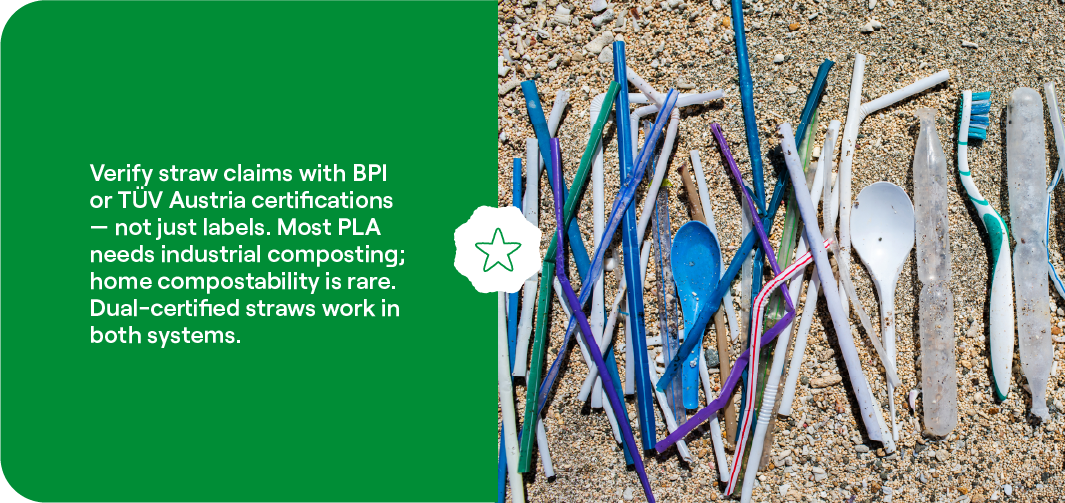
SB 90 defines plastic to include bio-based polymers made from corn or other plants. That means PLA and other bioplastic straws are still plastic straws under Oregon law. Our guide to PLA bioplastics in foodware explains how these materials work.
Greenprint® Compostable Agave straws are made from agave fiber and a PLA/PBAT blend. They carry TÜV Austria OK Compost HOME and BPI Commercial Compostability certifications. In Oregon, they still count as plastic straws, so offer them only when a customer asks.
You can review our sourcing and certification records before you buy.
Oregon Foam and PFAS Food Container Ban
The Oregon foam ban took effect January 1, 2025, under SB 543. Food vendors can’t use polystyrene foam containers for prepared food. No one may sell or distribute foam food containers or foam packing peanuts in Oregon.
The same law bans foodware containers with intentionally added PFAS. PFAS are a group of synthetic chemicals sometimes added for grease and water resistance. See PFAS rules for compostable cups for more compliance context.
The law has no industry exemptions, and businesses couldn’t use up old foam inventory after the deadline. The PFAS rule covers containers that serve or hold prepared food, not items used only for food prep. DEQ’s foam and PFAS FAQ answers common questions.
SB 543 doesn’t require compostable foodware, and Oregon doesn’t certify compostable products.
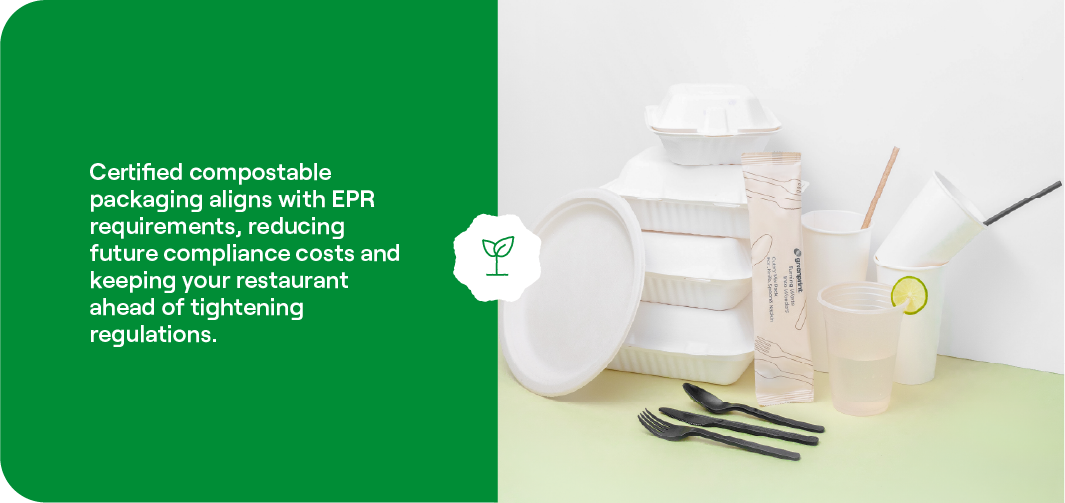
Fiberware™ is our line of bagasse clamshells, plates, and bowls, made from sugarcane fiber. Intertek tested Fiberware™ for 30 PFAS compounds, and all were Not Detected.
Ask any supplier, including us, for PFAS test reports before you switch.

How Oregon’s Recycling Modernization Act Affects Foodservice
The Recycling Modernization Act (SB 582) is the part of Oregon single-use plastic laws that targets producers. It makes producers of packaging and food serviceware help fund and improve recycling.
Our U.S. plastic regulation guide covers the national picture.
For food serviceware, the producer is the company that first sells it into Oregon. That’s usually a manufacturer or distributor, not the restaurant.
By July 1, 2025, producers had to register with a producer responsibility organization. The Circular Action Alliance is Oregon’s approved producer responsibility organization.
Several groups are exempt:
-
Restaurants that aren’t producers of food serviceware.
-
Nonprofits and public bodies.
-
Single-location retailers that aren’t chains and don’t sell online.
-
Producers with under $5 million in global revenue or under 1 metric ton sold into Oregon.
Compostable serviceware still counts as a covered product, whether or not it’s recyclable. DEQ’s RMA producer obligations summary lists the full rules.
A federal court upheld the law on August 27, 2026, and dissolved an earlier injunction. An appeal is possible. Any price impact on restaurants isn’t confirmed.
Local Plastic Rules in Portland and Other Cities
Portland goes further than state law. Businesses can’t automatically include plastic straws, stirrers, utensils, or individually packaged condiments in orders. This applies to dine-in, drive-through, take-out, and delivery.
Portland’s rule also covers compostable plastics. The city’s by-request plastics policy has current details. Portland also has a long-standing polystyrene foam ban for food and beverages.
State law limits what cities can do on bags. Cities may set a higher bag fee or a different penalty, but not different bag rules. Corvallis repealed its bag ordinance in favor of state law, and Eugene’s city bag code mirrors the state rule.
Rules vary by place, so check with your city, county, and waste hauler. For comparison, see Minnesota’s plastic ban approach and Washington, D.C. plastic restrictions.
What Are the Penalties for Breaking Oregon Plastic Laws?
Here’s a penalty summary by law, as of November 2026.
Law | Maximum penalty | Enforcement notes |
|---|---|---|
HB 2509 (bags) | Class D violation, up to $250, and each day is a new offense | Local police and cities enforce it, not DEQ |
SB 90 (straws) | Notices for the first and second violations, then up to $25 per day and $300 per year | State and local health inspectors enforce it |
SB 543 (food vendors using foam) | Up to $100 per day | DEQ may issue civil penalties |
SB 543 (selling foam or PFAS foodware) | Up to $500 per day | DEQ may issue civil penalties |
Producers that break Recycling Modernization Act rules face DEQ civil penalties. The SB 543 amounts come from the Oregon Legislature’s SB 543 fact sheet. In Portland, fines are possible after a warning.
How to Choose Compliant Alternatives in Oregon
Start with the law, then match each item to your local waste system. A legal product can still end up in the trash. As of November 2026, we couldn’t identify an Oregon law on compostable labeling.
Composting options for packaging are limited. Portland’s commercial compost rules say business compost is food only, with no compostable containers. Eugene’s food waste program also excludes compostable serviceware.
State law (ORS 459A.965) says local programs and facilities can’t promote or accept materials that can’t be effectively composted. BPI certified compostable products meet set standards, but your hauler decides what it takes.
Use this checklist:
-
Replace foam containers with fiber or other non-foam options.
-
Ask suppliers for PFAS test reports on any food container.
-
Offer plastic straws, including PLA straws, only on request.
-
Ask your hauler which items it accepts before you choose compostables.
Fiberware carries TÜV Austria OK Compost INDUSTRIAL certification, which means it needs a commercial composting facility. Compostable Agave cutlery carries BPI Commercial Compostability certification and needs an industrial facility. In Portland, offer it only on request.
Our Clearly Compostable™ PLA cold cups carry BPI and TÜV Austria OK Compost INDUSTRIAL certifications. PFAS testing for these cups is still pending. Shop sustainable foodware products, including our foam-free fiber foodware, in the Greenprint store.
Frequently Asked Questions
Does Oregon Charge for Paper Bags?
Yes, retailers must charge at least 5 cents per recycled paper bag, except for WIC or EBT customers. Restaurants may give recycled paper bags for free.
Are Compostable Straws Allowed in Oregon?
Yes, but compostable plastic straws, including PLA, count as plastic under SB 90, so offer them on request. Non-plastic straws, such as paper or bamboo, aren’t limited by the state rule.
Can Oregon Restaurants Give Out Plastic Utensils?
Yes, Oregon has no statewide rule on plastic utensils as of November 2026. In Portland, though, utensils and individually packaged condiments must be offered only on request.
Is the Oregon Bottle Bill Part of the Plastic Ban?
No, the Oregon Bottle Bill deposit program is a separate law with a 10-cent deposit on beverage containers. DEQ lists Bottle Bill containers as exempt from the Recycling Modernization Act.
References
- https://www.oregon.gov/deq/mm/production/Pages/Bags.aspx
- https://olis.oregonlegislature.gov/liz/2025r1/Downloads/MeasureDocument/SB551
- https://olis.oregonlegislature.gov/liz/2019R1/Downloads/MeasureDocument/SB90/B-Engrossed
- https://www.oregon.gov/deq/mm/production/pages/polystyrene.aspx
- https://www.oregon.gov/deq/recycling/Documents/RMAProducerObligationsSummary.pdf
- https://www.stoel.com/insights/publications/federal-court-upholds-oregons-recycling-modernization-act-against-constitutional-challenge
- https://www.portland.gov/bps/garbage-recycling/business-garbage-policies/single-use-plastics
- https://www.portland.gov/bps/garbage-recycling/business-garbage-policies
- https://www.corvallisoregon.gov/publicworks/page/single-use-bag-law
- https://eugene.municipal.codes/EC/6.855
- https://www.oregonlegislature.gov/committees/2023I1-SEE/WorkgroupDocuments/Senate%20Bill%20543%20Fact%20Sheet.pdf
- https://www.oregon.gov/deq/recycling/Documents/CAACompStudyInterviewPre-read.pdf
- https://www.portland.gov/bps/garbage-recycling/compost
- https://www.eugene-or.gov/m/faq?cat=47#question-468
- https://www.oregon.gov/deq/recycling/pages/bottle-bill.aspx


Plan sustainable corporate events with less waste. Follow seven steps for venues, catering, certified foodware, and honest reporting. Start planning today.

The Connecticut plastic ban covers thin checkout bags, and foam and straw bills keep returning. Learn the rules, exemptions, and steps to prepare your business.

Run a zero waste coffee shop with this operator playbook. Audit your bins, put reusable cups first, pick certified compostables, and train staff to sort right.