

Upcycling vs Downcycling: What’s the Difference?
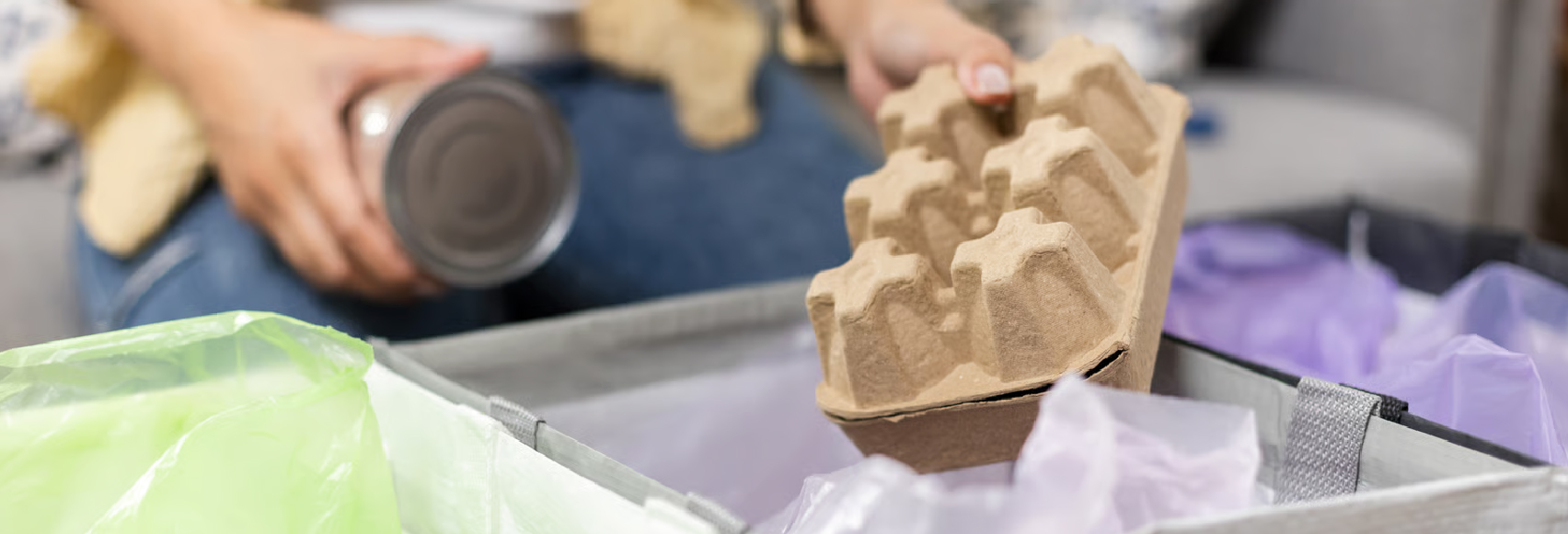


What’s the Difference Between Upcycling and Downcycling?
The difference between upcycling and downcycling comes down to one thing: what happens to a material’s value. Upcycling raises that value. Downcycling lowers it. Both keep waste out of landfills, but they pull in opposite directions. Once you understand the difference between upcycling and downcycling, you can make smarter choices. You will know what to buy and how to dispose of it.
What Is Upcycling?
Upcycling means reusing a material so the new product holds equal or greater value than the original. The material keeps much of its original form. Little energy goes into breaking it down, because you are building on what already exists.
Picture old wood pallets rebuilt into a sturdy table. The wood stays wood. The finished table is worth more than the loose scrap it started as. Nothing was ground up or melted. The material simply moved into a better use.
That is the heart of what is upcycling: value goes up, not down. The original quality carries forward into something people want more. This is why upcyclers hunt for materials that are still strong and still useful. Those materials only need a fresh purpose, not a full breakdown.
Upcycling also tends to use less processing than other reuse methods. You are not melting, shredding, or grinding the material back to raw form. You keep its structure and add value on top. That saves energy and holds onto the work already built into the material.
At Greenprint®, we apply this idea to foodware by using Upcycled Agave fiber left over from tequila production. Instead of treating that fiber as trash, we build it into products with real value. Want the full story? Read our guide on what upcycled packaging means.

What Is Downcycling?
Downcycling means breaking a material down into a new product of lower grade and value. The material loses quality in the process. You may also hear it called open-loop recycling or cascading.
Those two extra terms matter, so let’s define them. Open-loop means the material cannot return to its original product. It exits the loop it came from and enters a lower one. Cascading describes what happens next. The material steps down in grade again and again, like water falling from ledge to ledge. Each step leaves it weaker than before.
A common example is plastic bottles melted down into polyester fleece. The clear, food-grade bottle becomes a fuzzy fabric fiber. That fiber can rarely go back to being a bottle. It has cascaded down a level, and it will likely cascade again.
Here is the part most people miss. Most everyday plastic “recycling” is actually downcycling. When you toss a bottle in the bin, it rarely becomes a new bottle. It gets remade into a weaker product like carpet fiber or plastic lumber. That product usually cannot be recycled again. So the material cascades downward until it finally reaches the landfill, where some materials are among the longest-lasting items in landfills.
This is what makes downcycling vs recycling a confusing pair of terms. Recycling is the broad category for reprocessing used materials, as the EPA’s overview of recycling basics explains. Downcycling is one path inside that category. For plastic, it is by far the most common path. Very little plastic gets truly closed-loop recycled back into the same product.
Downcycling still does useful work. It pulls waste out of the trash stream and gives it another job. But it buys time rather than closing the loop. The material is on a countdown, not a cycle.
This is why the “recycling” label can mislead. A product might be recyclable on paper, yet only downcycle in practice. The bin is not a magic reset button. For most plastics, it is one more step down the cascade.
Key Differences Between Upcycling and Downcycling
Upcycling and downcycling both reuse materials, but they handle those materials in very different ways. The clearest way to see downcycling vs upcycling is to compare three things you actually care about. Those are value, material integrity, and scale.
Factor | Upcycling | Downcycling |
|---|---|---|
Value | Raises the material’s value | Lowers the material’s value |
Material Integrity | Keeps the original material mostly intact | Breaks the material into a weaker grade |
Scalability | Often small-batch or creative | Runs at a large industrial scale |
Value is the first split. Upcycling ends with a product worth more than the input. Downcycling ends with a product worth less. This single difference drives most of the others.
Material integrity is the second split. Upcycling keeps the original material strong and mostly whole. Downcycling shreds, melts, or grinds it into a lesser grade. Once that grade drops, it rarely climbs back.
Scale is the third split. Upcycling often happens in smaller, hands-on, creative batches. Downcycling runs through large industrial systems built to process high volumes. Neither approach is wrong. They simply reuse materials with different goals and at different sizes.
Examples of Upcycling and Downcycling
Real examples make these ideas easier to picture. Here are a few upcycling and downcycling examples you can spot in everyday life.
Upcycling examples:
-
Agave fiber left over after tequila production, turned into durable foodware.
-
Wood pallets rebuilt into furniture like tables and shelves.
-
Glass jars cleaned and reused as storage containers.
Our agave foodware is a strong case study. The fiber is post-tequila agricultural waste with no competing use. Rather than discard it, we give it a valuable second life. You can read the full story on agave waste after tequila production, or explore the science behind agave fiber foodware.
Downcycling examples:
-
Office paper remade into lower-grade tissue or paper towels.
-
Plastic bottles melted into polyester fleece for jackets.
-
Mixed plastics processed into carpet fiber or plastic lumber.
In each downcycling case, the new product is weaker than the original. Office paper becomes tissue, and tissue cannot become office paper again. The bottle becomes fleece, and the fleece has few places left to go. Each item serves a purpose, but it cannot climb back up to its first grade.
How Upcycling and Downcycling Fit Into a Circular Economy
A circular economy keeps materials in use for as long as possible instead of sending them to waste. Upcycling and downcycling both support that goal, a core idea behind circular economy principles. Recycling sits between the two. It can move a material sideways or downward, depending on how it gets processed.
Upcycling extends a material’s life at high value. That makes it the strongest way to close the loop. Downcycling stretches a material’s life too. But each step brings it closer to the end rather than back to the start.
We take a dual-path, infrastructure-aware view of all this. Products should be built for how waste systems actually work today, not how we wish they worked. To see how end-of-life plays out, read our piece on the lifecycle of compostable products and how commercial composting works.
Compostable foodware offers another end-of-life path that avoids the downcycling dead-end. Instead of dropping in grade until it hits the landfill, certified compostable material can return to the soil. Our Compostable Agave straws carry TÜV Austria OK Compost HOME certification. That is backed by enzyme technology, which lets the straws break down in a home compost setting.
Choosing the More Sustainable Option
The more sustainable option depends on your material and the waste infrastructure around you. Upcycling is often the better choice when a material can hold its value and find a fresh use. Downcycling makes more sense for large volumes of low-grade waste with nowhere else to go. The EPA frames this balance through sustainable materials management.
Neither approach is a perfect fix on its own. Upcycling does not scale to every material, and downcycling only delays the landfill. That is why a verifiable end-of-life path matters so much.
Certified compostable products give you a clear, testable answer for what happens after use. That beats vague claims tied to no proof. For more on how these labels compare, read our guide on compostable versus recyclable materials. When you are ready to pick foodware with a documented end-of-life path, explore our certified compostable agave foodware and match the right product to your local waste system.
Frequently Asked Questions
Is Downcycling the Same as Recycling?
Downcycling is a type of recycling, specifically open-loop recycling, where the material’s quality drops with each cycle. So all downcycling is recycling, but not all recycling is downcycling.
What Is an Example of Downcycling?
A common example is melting plastic bottles into polyester fleece, carpet fiber, or plastic lumber. The new product is lower in grade and usually cannot be recycled again.
Which Is Better, Upcycling or Downcycling?
Upcycling preserves more of a material’s value, while downcycling scales better for large volumes of industrial waste. The best choice depends on the material and the waste infrastructure available to you.


Learn how the Colorado plastic ban and single-use plastic laws affect your business, from the bag fee and foam ban to local rules. Get compliant today.

See the Hawaii plastic ban and single-use plastic laws for Honolulu, Maui, Hawaii County, and Kauai, with dates, fines, and compliant foodware tips for 2026.

Nanoplastics vs. microplastics comes down to size. Learn how they differ, why researchers worry more about nanoplastics, and simple ways to reduce exposure.