

School and Campus Plastic Reduction Programs: A How-To Guide


Content
School and Campus Plastic Reduction Programs That Work
Every lunch service sends trays, cups, cutlery, and containers to the trash. School and campus plastic reduction programs work best when they start in the cafeteria, where that waste begins. We’re Greenprint®, a supplier of certified compostable foodservice packaging, and this blueprint covers audits, swaps, compost access, and policy.
What School and Campus Plastic Reduction Programs Include
A clear structure keeps your program focused and easy to explain to staff, parents, and students. Whether you run a K-12 district or a university, a strong program has four parts:
-
Measure what you throw away, so you know which items to target first.
-
Replace high-count plastic items with reusables or certified compostable options.
-
Collect used foodware through a dishwashing or compost path that actually exists.
-
Commit to the change through purchasing specs, student engagement, and campus policy.
Student-led campus networks and national campus waste competitions publish free program models. Borrow their structure, then fit it to your kitchens, budget, and waste haulers.
Zero waste schools and plastic free campus efforts both depend on the right replacement products. Most foodservice plastic alternatives used in restaurants carry over to school kitchens with little change.
Where Cafeteria Plastic Waste Comes From
Foodservice is where your program can make the biggest difference, because the same items repeat at every meal. A school that serves lunch each day multiplies every tray, cup, and fork across the whole year. That repetition is why small swaps in the lunch line add up fast.
Plastic waste in schools doesn’t always stay in the bin, either. EPA’s Trash Free Waters program notes that most trash in rivers, lakes, and oceans comes from sources on land. Single use plastic in schools tends to fall into two groups: bulky foam items and small, high-count items.
Foam Lunch Trays and Clamshells
Foam lunch trays are usually the first item schools replace. They’re bulky, they fill bins quickly, and a fiber tray or compartment plate can hold the same meal. Some states restrict foam foodware, and Vermont’s expanded polystyrene law is one example. That turns styrofoam lunch trays into a compliance question.
Once a foam tray leaves the cafeteria, it rarely gets a second life. EPA’s recycling FAQ notes that most recyclers don’t accept Styrofoam. A tray a student uses for one lunch period can sit in a landfill long after that student graduates. Read more about plastic foodware in landfills and why it lingers.
Plastic Cutlery, Straws, and Cups
Cutlery, straws, and cups weigh very little, but they show up in large numbers during audits. That’s why you should count items, not just weigh bags.
Recycling rules vary by hauler, so check what your local provider actually accepts before relying on a recycling bin.
Compostable cutlery is one of the simplest swaps. Our Green Dot Compostable Upcycled Agave Cutlery carries BPI Commercial Compostability certification. It needs industrial composting and works best for cold and lukewarm meals.
Our Green Dot Compostable Upcycled Agave Straws carry TÜV Austria OK Compost HOME and BPI Commercial Compostability certifications. An enzyme added during compounding is what lets them break down at home compost temperatures.
How to Audit Campus Foodservice Waste
An audit shows you which items to swap first, so your budget goes where it counts. It also gives you a baseline to measure progress. Use these steps:
-
Pick a sample week of normal service, and skip holidays or special events.
-
Collect waste from one or more serving lines, keeping landfill, recycling, and compost bags separate.
-
Sort each bag by item type, such as trays, cutlery, cups, straws, and wrappers.
-
Count each item type, and weigh each pile if you have a scale.
-
Record the results in a simple sheet you can repeat after every change.
Let students run the sort when you can. A student-led audit turns waste reduction in schools into a hands-on science lesson. Students also become your best messengers once they’ve seen the piles themselves.
You don’t need to design the process alone. EPA’s wasted food assessment resources include A Guide to Conducting Student Food Waste Audits: A Resource for Schools. EPA, USDA, and the University of Arkansas developed it, and you can adapt its sorting steps to count packaging.
Wondering how to reduce plastic waste in schools? Your audit gives you the answer for your own buildings.
Reusable and Compostable Swaps for School Dining
The right swap depends on what your kitchen can support. Use reusables where you have dishwashing and a way to collect items. Use certified compostable foodware where disposables can’t be avoided, such as to-go meals, events, and satellite kitchens.
Service setting | Best fit | Why it fits |
|---|---|---|
Dine-in cafeteria or dining hall | Reusable trays, plates, and cutlery | Dishwashing is on site, and items stay in the room. |
Grab-and-go meals | Reusable container program or compostable food containers | Reuse works if you can collect returns. |
Satellite kitchens and classroom meals | Certified compostable trays and cutlery | There’s no dishwashing where students eat. |
Games, events, and large gatherings | Certified compostable plates, cups, and cutlery | Crowds are large, and there’s no return path. |
When Reusables Make Sense
Reusables remove an item from the waste stream every time a student uses one. They fit best in dine-in halls, where reusable lunch trays and plates never leave the room. Refill stations can also reduce bottled water purchases when students carry their own bottles.
Some universities run reusable to-go container programs, where students check out a container and return it for washing. These programs move a campus toward zero waste, but they need clear return points and steady participation.
Be honest about the tradeoffs before you commit. Reusables need dishwashing capacity, labor, water, energy, and storage space. Lost containers and staff time add cost, so pilot reuse in one location first.
Certified Compostable Trays, Containers, and Cutlery
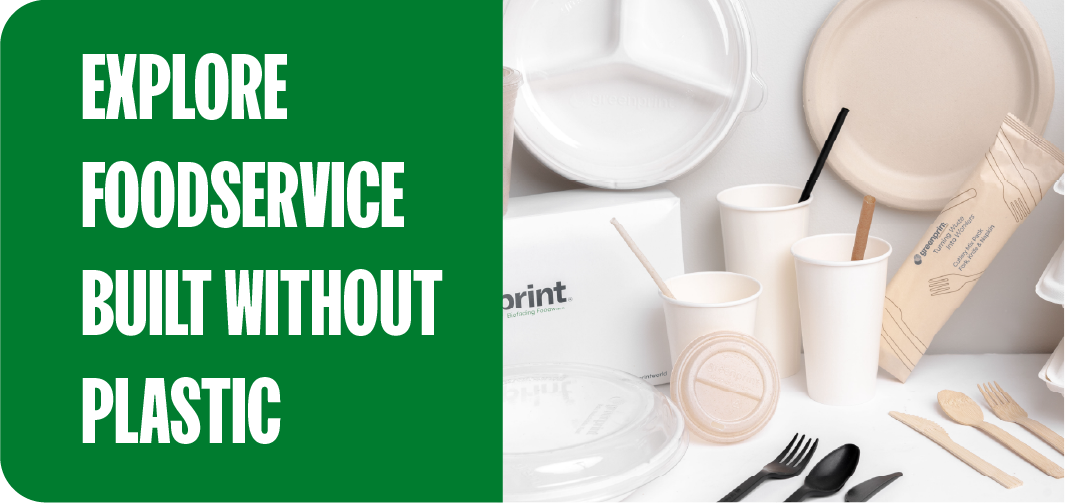
Certified compostable foodware lets you cut plastic even where you can’t wash dishes. Look for compostable lunch trays and clamshells made from molded fiber, plus cutlery made from plant-based compounds. Skip vague “green” labels and ask for third-party certification on every item.
Look for BPI Commercial certification or TÜV Austria OK compost INDUSTRIAL on each product. Ask suppliers for the certificate itself, so your purchasing office can file it with the bid. Our guide on how compost certifications work explains the standards behind each seal.
PFAS testing matters even more when the diners are children. EPA’s PFAS overview describes PFAS as chemicals that break down very slowly.
Ask for third-party test reports on fiber trays before they reach a lunch line. Our guide to PFAS testing for compostables shows what to request.
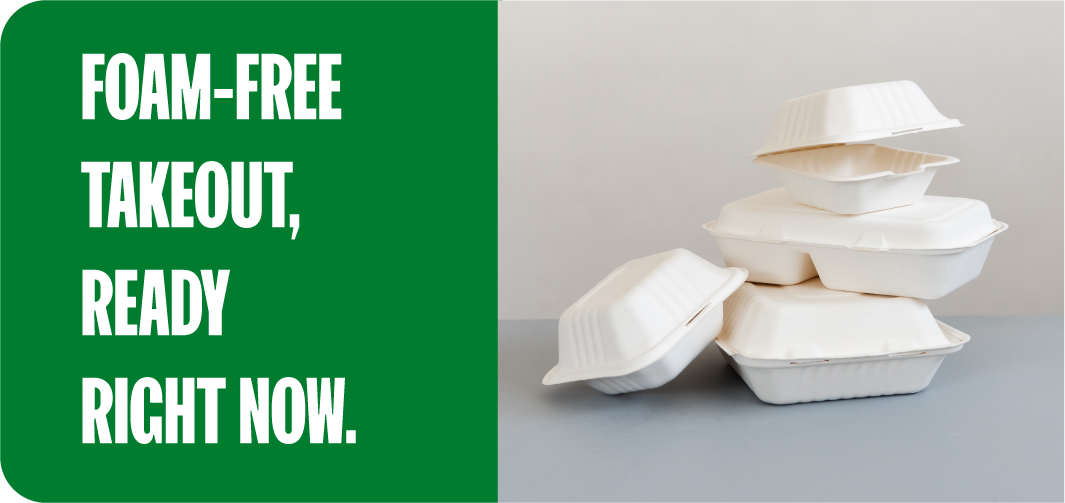
Our Fiberware™ plates, bowls, and clamshells are made from bagasse, a sugarcane fiber. They carry TÜV Austria OK Compost INDUSTRIAL certification, so they’re industrially compostable, and Intertek testing verified them PFAS-free. Compartment plates and clamshells suit school lunch lines and grab-and-go meals.
For cold drinks, our Clearly Compostable™ cups carry BPI and TÜV Austria OK Compost INDUSTRIAL certifications. They’re also industrially compostable, so they need the same commercial compost path as your trays.
Compost Collection Access on Campus
Compostable foodware only delivers its full benefit when it reaches a compost facility. Your options include on-site composting, a municipal program, or a commercial hauler. Clear signs at every bin keep plastic out of the compost stream.
EPA’s guide to composting types explains the main methods, including on-site, windrow, and in-vessel composting. Industrial facilities manage heat and moisture in ways a school garden pile usually can’t.
So industrially compostable trays belong in a hauler’s bin, not the garden bed.
No hauler serving your campus yet? Your audit data can show a hauler or your city how much material you’d send. Until then, read our guide to compostables without composting access to plan your next move.
Student Engagement and Campus Policy
Programs last when students, staff, and purchasing pull in the same direction. Engagement builds daily habits, and policy locks in what your campus buys. A plastic free campus needs both.
EPA supports the education side too. EPA’s youth education resources include policy tools for reducing food waste and packaging at schools.
Green Teams and Plastic-Free Pledges
Green teams give students a real role in the program. Sorting ambassadors can stand at bins during lunch and help classmates choose the right stream. Their work turns a zero waste campus goal into something students see every day.
Pledges add public commitment, and some university systems have adopted campus-wide single-use plastics policies. Tie student work to your audit data, and post before-and-after counts at the bins.
Purchasing Policies and State Plastic Bans
Procurement specs keep swaps in place after the founding team moves on. Write certification requirements into bids, so every vendor must meet the same standard. That keeps single use plastic in schools from creeping back.
State and local rules also shape what you can buy. Check how each rule applies to your campus before you write specs. Our state plastic ban guide is a good starting point.
Ask for named certifications, not broad claims, in every spec. The FTC Green Guides say environmental claims need a reasonable basis, often competent and reliable scientific evidence. A product listing a named compostability certification gives your team something it can verify.
Steps to Launch a Campus Plastic Reduction Program
A short pilot proves the idea before you spend at scale. School and campus plastic reduction programs grow from one location that works. Follow this roadmap:
-
Form a team with food service, facilities, purchasing, and students.
-
Audit a sample week of foodservice waste.
-
Pick the top three items by count from your audit.
-
Pilot swaps in one dining location or school.
-
Confirm a compost hauler or on-site system before compostables go live.
-
Train staff and students on what goes in each bin.
-
Measure again with a follow-up audit.
-
Scale to more locations, then write the swaps into purchasing policy.
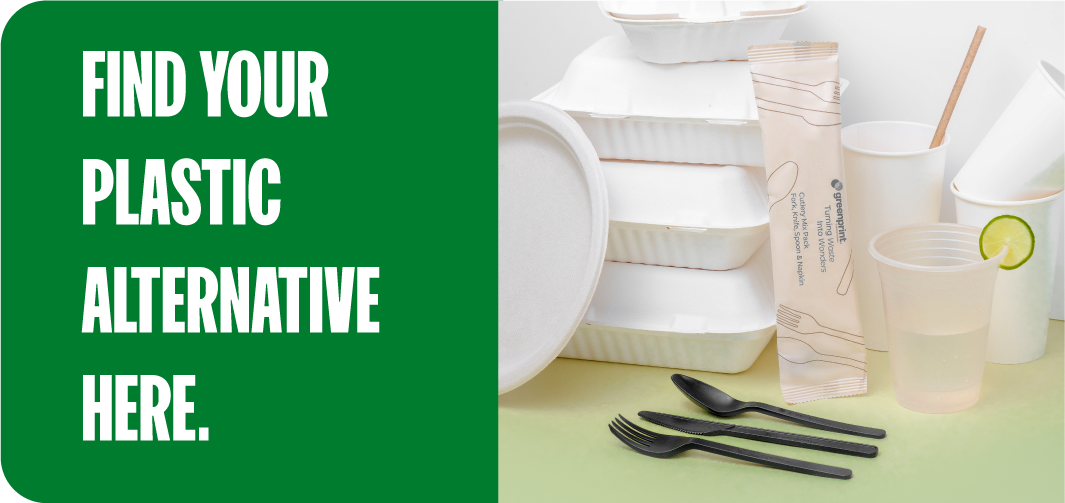
Your pilot is the right moment to test products in a real lunch line. Explore our certified compostable cafeteria foodware, including Fiberware™ compartment plates and clamshells, Green Dot cutlery, and Green Dot straws. Start with your top three audit items, and we’ll help you match each one to the right certified replacement.
Frequently Asked Questions
How Can Schools Reduce Plastic Waste in Cafeterias?
Start with a waste audit, then replace the highest-count items with reusables or certified compostable options. Back those swaps with compost collection, clear bin signs, and purchasing specs.
Are Compostable Lunch Trays Better Than Foam Trays?
Certified compostable lunch trays can go to a commercial compost facility, while styrofoam lunch trays are not compostable and most recyclers don’t accept them. The benefit depends on compost access, so confirm a hauler before you switch.
How Do Colleges Reduce Waste on Campus?
Colleges use reusable dine-in service, reusable to-go container programs, and certified compostables where reuse isn’t practical. Student green teams and campus plastics policies keep a zero waste campus effort going.
What Should a School Waste Audit Measure?
Measure the count and weight of each item type from a sample week, sorted by landfill, recycling, and compost. Those results show which items to target first in your waste reduction in schools plan.
References
- https://www.epa.gov/trash-free-waters
- https://www.ncsl.org/environment-and-natural-resources/state-plastic-bag-legislation
- https://www.epa.gov/recycle/frequent-questions-recycling
- https://www.epa.gov/sustainable-management-food/resources-assessing-wasted-food
- https://bpiworld.org
- https://en.tuv.at/ok-compost-industrial-en/
- https://www.epa.gov/sustainable-management-food/types-composting-and-understanding-process
- https://www.epa.gov/sustainable-management-food/educating-youth-about-wasted-food
- https://www.ecfr.gov/current/title-16/chapter-I/subchapter-B/part-260


Regenerative farming rebuilds soil health with cover crops, no-till and compost. Learn its principles, benefits and limits, and how food businesses can help.
Is it safe to microwave plastic containers? Learn what heat does to plastic, what the microwave-safe label means, and simple ways to reheat food more safely.
Paper vs. plastic environmental impact depends on material, reuse, and disposal. See what life cycle studies show and how restaurants can pick better packaging.