

Paper vs. Plastic Environmental Impact: Which Is Lower?


Content
- Is Paper or Plastic Better for the Environment?
- What Life Cycle Studies Say About Paper vs. Plastic Bags
- How Paper and Plastic Production Compare
- How Reuse Changes the Paper vs. Plastic Result
- What Happens to Paper and Plastic After Disposal
- Why Many Paper Food Containers Still Contain Plastic
- Where Certified Compostable Packaging Fits
- FAQ
Paper vs. Plastic: Which Has the Lower Environmental Impact?
There’s no single winner on paper vs. plastic environmental impact; bag weight and reuse decide most of it. In government studies of shopping bags, thin plastic often did better on production. Plastic, however, is the most common type of debris found in the ocean.
Is Paper or Plastic Better for the Environment?
Neither paper nor plastic is better in every way. In a UK government study of grocery bags, a thin plastic bag had the lowest climate impact per trip. Paper bags are heavier and take more material to make, so they start behind.
Plastic has a different problem once it leaves your hands. According to NOAA, plastic is the most prevalent marine debris found in the ocean and the Great Lakes. Littered plastic persists and breaks into smaller and smaller pieces.
So the honest answer to “is paper or plastic better for the environment” depends on three things. These are how much material an item uses, how many times it’s reused, and how it’s thrown away. Results also vary by location and by how local waste systems handle each material.
Factor | Thin plastic bag | Paper bag |
|---|---|---|
Material per bag | Less | More |
Climate impact per trip (UK study, 2011) | Lower when used once | Higher unless reused a few times |
Water use (European bag studies) | Less | More |
U.S. recycling (EPA, 2018 data) | Recycled at a low rate (EPA) | Paper overall is the most recycled material |
Ocean litter | Persists and breaks into microplastics | Not assessed in these studies |
These studies looked at shopping bags, so use them as a rough guide for takeout packaging. Cups, clamshells, and lined containers weren’t part of the research. For restaurant owners, the better choice depends on what you serve and how customers dispose of it.
What Life Cycle Studies Say About Paper vs. Plastic Bags
A life cycle assessment measures a product’s impact from raw materials through disposal. For bags, it shows which stage causes the most harm, so you know what to change first. Our guide to cradle-to-grave life cycle assessment explains how the method works.
The UK Environment Agency published its UK supermarket carrier bag study in 2011, using bags sold in 2006. The thin plastic grocery bag had the lowest impact in most categories. That’s because it was the lightest bag in the study.
A paper bag would need to be reused a few times to match the plastic bag’s climate impact. The agency said a paper bag is unlikely to last that many trips. Cotton bags needed to be reused many times to break even.
The Danish Environmental Protection Agency reached a similar view in its 2018 Danish grocery bag assessment. Lightweight plastic and unbleached paper bags had among the lowest climate impacts. Heavier bags, such as cotton and bleached paper, needed many reuses to lower their overall impact.
Paper looked good on climate in the Danish study. It scored worse on other measures, such as water use and nutrient pollution.
In a plastic bag vs. paper bag life cycle assessment, weight and reuse matter most. Both studies found that making the bag caused more harm than shipping it or throwing it away. The UK study also left out litter, which is where plastic causes some of its most visible harm.
Keep the limits of these studies in mind. Both studied European grocery bags with data that’s now years old. Neither looked at U.S. takeout packaging.
How Paper and Plastic Production Compare
Most of the harm in paper vs. plastic bags happens before anyone uses them. Both government studies found that making the material and the bag drove most of the impact.
Paper bags start as wood fiber that’s pulped and pressed into sheets. A paper bag is heavier than a thin plastic bag, so each one takes more raw material. The Danish study, and a French study the UK agency reviewed, found paper used more water than plastic.
Plastic bags start as resin made from fossil fuels. They use less material per bag, which is the main reason they scored well on climate in these studies. The trade-off shows up later, when plastic is littered and stays in the environment.
Energy is harder to call. The studies don’t support a simple claim that one material always uses more energy than the other.
For your business, lighter items that use less material usually start with a smaller footprint. To compare more options, see our breakdown of the carbon footprint of packaging materials.
How Reuse Changes the Paper vs. Plastic Result
Reuse is the biggest variable in the paper vs. plastic environmental impact comparison. A heavier bag starts with a bigger footprint, so you have to use it more to break even. Both government studies treat the number of uses as the key factor.
In the UK study, a paper bag needed a few uses to match a thin plastic bag on climate. A cotton tote needed many uses. If the plastic bag gets reused as a bin liner, the paper bag has to work even harder.
This points to one of the main disadvantages of paper bags. Paper has low durability, so many bags won’t last enough trips to break even. The UK agency called that level of reuse unlikely.
The practical rule is to reuse whatever you choose. A reusable bag only pays off when you keep using it.
Heavier plastic totes follow the same rule. The Danish study found that polypropylene and polyester bags also need many reuses to pay off.
Used plastic bags also have a hard exit. Delaware and many other places keep them out of curbside recycling bins. Instead, Delaware points residents to participating store drop-off bins.
For restaurants, the same idea applies to the bags you hand out at the counter. Asking customers whether they need a bag at all is the simplest way to cut bag waste.
Rules on single-use bags also vary by location. Check our list of states that ban plastic bags before you change what you stock.
What Happens to Paper and Plastic After Disposal
Paper has the edge on recycling, but neither material has a clean exit. What happens next depends on whether an item is recycled, littered, or sent to a landfill.
In paper vs. plastic recycling, paper comes out well ahead. The EPA paper recycling data shows paper had the highest recycling rate of any U.S. trash material in 2018. Paper packaging other than cardboard boxes was recycled at a much lower rate, though.
Plastic bags and film have a weak recycling path. Our guide to the limits of plastic recycling explains why so little of it gets a second life.
The environmental impact of plastic bags lasts longest when they escape into the environment. Plastic breaks into tiny fragments that wildlife can eat. Learn how those fragments form in our guide to primary and secondary microplastics.
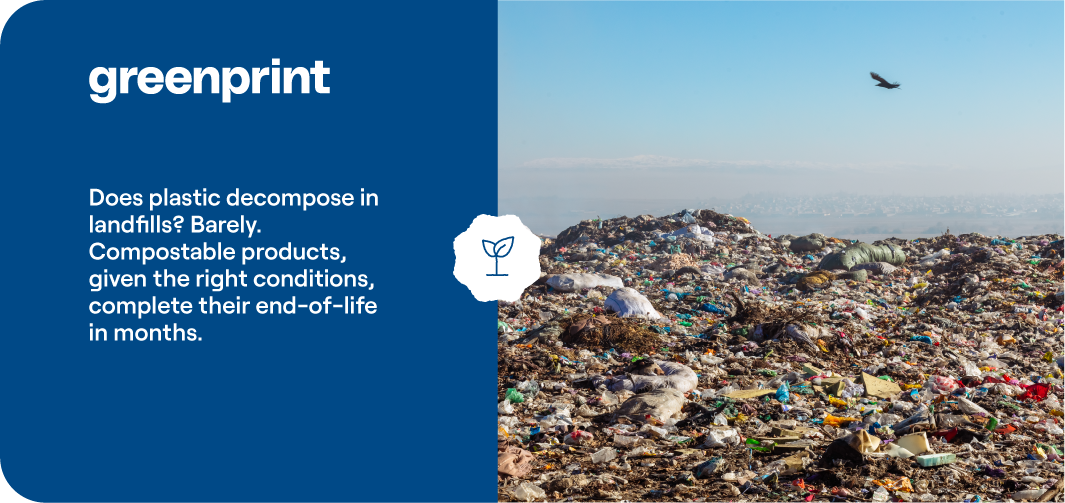
Landfills create their own problem. Organic material, including paper, breaks down in low-oxygen landfill conditions and releases methane. EPA’s overview of landfill gas from organic waste calls methane a potent greenhouse gas.
Our guide to plastic foodware in landfills covers what happens to buried plastic after the trash truck leaves.
For your restaurant, the bin matters as much as the material. The same EPA data shows cardboard boxes are recycled at a very high rate. Used takeout items need their own plan.
Why Many Paper Food Containers Still Contain Plastic
A paper cup or takeout box can still contain plastic. Many paper cups use a polyethylene lining, which is hard for traditional paper mills to recycle. A 2024 peer-reviewed cup study describes this plastic layer as the most common cup coating.
Some paper takeout containers also use a thin plastic coating or lining, as covered in the FAQ below. That blurs the paper vs. plastic packaging choice, because you may be buying both.
Before you switch, ask your supplier what keeps the liquid in. If they can’t tell you, treat that as a warning sign. Our guide to fiber-based barrier coatings explains how the industry is moving away from plastic linings.
Some paper packaging also used PFAS chemicals to resist grease. FDA says these coatings were applied to items like fast-food wrappers and take-out paperboard containers. After a voluntary PFAS grease-proofing phase-out, FDA says manufacturers no longer sell them for U.S. food packaging.
FDA didn’t issue a ban, so independent testing still matters. Our guide to PFAS testing for compostables shows what documents to request.
Where Certified Compostable Packaging Fits
For food-soiled items, certified compostable packaging gives you a third option beyond paper or plastic. It works when your area has a commercial composting facility that accepts it.
EPA guidance on compostable plastics says plastic labeled compostable is generally meant for industrial or commercial facilities. Without that access, the composting benefit doesn’t happen.
Those bag studies didn’t cover compostable takeout packaging like clamshells or cups. So they can’t tell you how it stacks up against paper or plastic for food.
Check for a third-party certification on the package, and confirm what it covers. Our composting certifications guide walks through the main labels and standards. Then ask your hauler which packaging items they accept before you switch.
Claims need the same care. The FTC Green Guides summary says marketers should qualify compostable claims in one key case. That’s when composting facilities aren’t available to a substantial majority of consumers.
You can learn to spot compostable greenwashing in our cup buyer’s guide.
At Greenprint®, we make our Fiberware™ clamshells from bagasse (sugarcane fiber) with no plastic lining or coating. Our Fiberware clamshells, plates, and bowls carry TÜV Austria OK Compost INDUSTRIAL certification under EN 13432. That means they’re industrially compostable and need a commercial composting facility.
Intertek tested our Fiberware line for 30 PFAS compounds, and none were detected. If your area has commercial composting, explore our certified compostable takeout packaging and confirm acceptance with your local hauler.
FAQ
What Are the Disadvantages of Paper Bags?
In European bag studies, paper bags took more material and water to make than thin plastic bags. They also have low durability, which makes it hard to reuse them enough to break even.
Are Reusable Bags Always Better Than Single-Use Bags?
No. A reusable bag only comes out ahead after enough uses. Heavy cotton totes need many uses to break even.
Can Paper Food Packaging Go in the Compost?
Only if it’s certified compostable and your local composter accepts it, so check the label and ask your hauler. Some paper cups and containers have a plastic lining. In some Bay Area cities, StopWaste lists plastic-coated paper foodware as not compostable, so rules vary by city.
References
- https://oceanservice.noaa.gov/facts/microplastics.html
- https://assets.publishing.service.gov.uk/media/5a7bff74ed915d01ba1ca7c7/scho0711buan-e-e.pdf
- https://www2.mst.dk/udgiv/publications/2018/02/978-87-93614-73-4.pdf
- https://dnrec.delaware.gov/waste-hazardous/recycling/plastic-bags
- https://www.epa.gov/facts-and-figures-about-materials-waste-and-recycling/paper-and-paperboard-material-specific-data
- https://www.epa.gov/lmop/basic-information-about-landfill-gas
- https://bioresources.cnr.ncsu.edu/resources/effect-of-material-properties-on-the-paper-cup-manufacturing-process/
- https://www.fda.gov/food/hfp-constituent-updates/fda-announces-pfas-used-grease-proofing-agents-food-packaging-no-longer-being-sold-us
- https://www.epa.gov/trash-free-waters/frequently-asked-questions-about-plastic-recycling-and-composting
- https://www.ftc.gov/business-guidance/resources/environmental-claims-summary-green-guides
- https://resource.stopwaste.org/curbside/richmond


Learn how the Colorado plastic ban and single-use plastic laws affect your business, from the bag fee and foam ban to local rules. Get compliant today.

See the Hawaii plastic ban and single-use plastic laws for Honolulu, Maui, Hawaii County, and Kauai, with dates, fines, and compliant foodware tips for 2026.

Nanoplastics vs. microplastics comes down to size. Learn how they differ, why researchers worry more about nanoplastics, and simple ways to reduce exposure.