

Finding Industrial Composting Facilities by Region


Content
- What Is an Industrial Composting Facility?
- Why Does Facility Access Matter for Compostable Packaging?
- Where Can You Find Industrial Composting Facilities?
- Regional Directory of Composting Resources
- How Do Haulers and Drop-Off Programs Fit In?
- How to Confirm a Facility Accepts Compostable Packaging
- What If There Is No Industrial Composter Near You?
- Choose Packaging That Matches Your Local Composting Access
- FAQ
Finding Industrial Composting Facilities: A Regional Guide
Certified compostable packaging only pays off when it reaches a composter that accepts it. Finding industrial composting facilities near your business is the step that closes that loop. This guide shows you where to look by region and how to confirm a site will take your packaging.
What Is an Industrial Composting Facility?
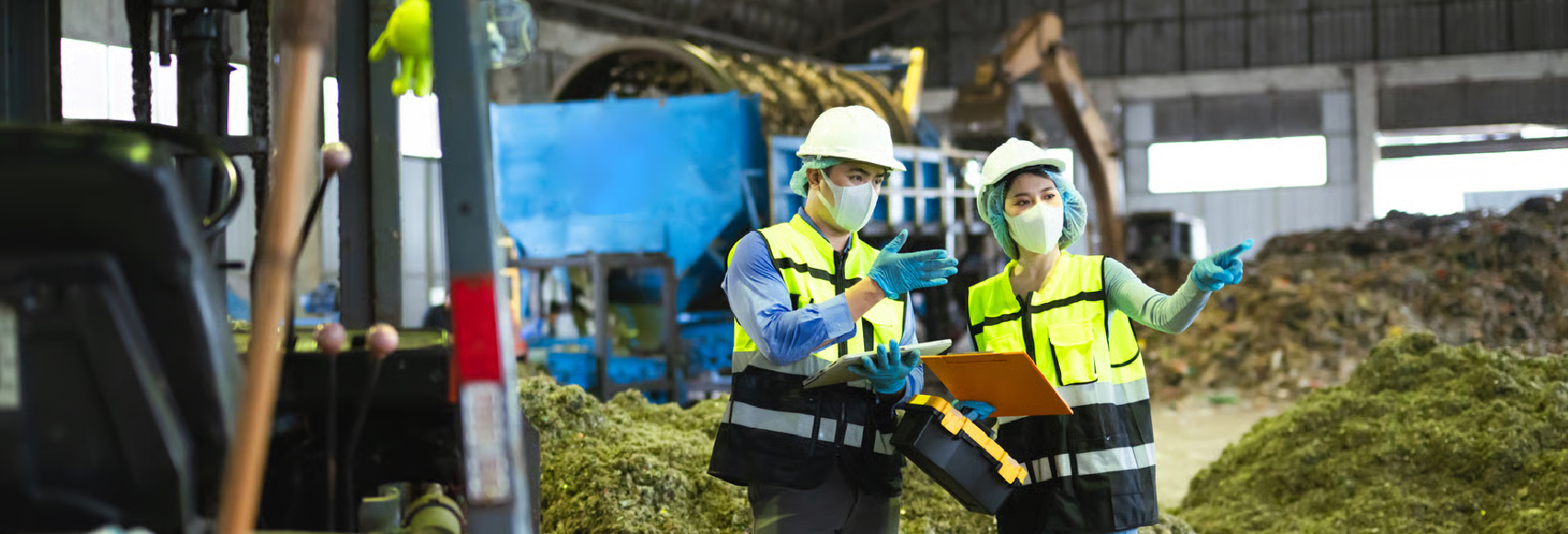
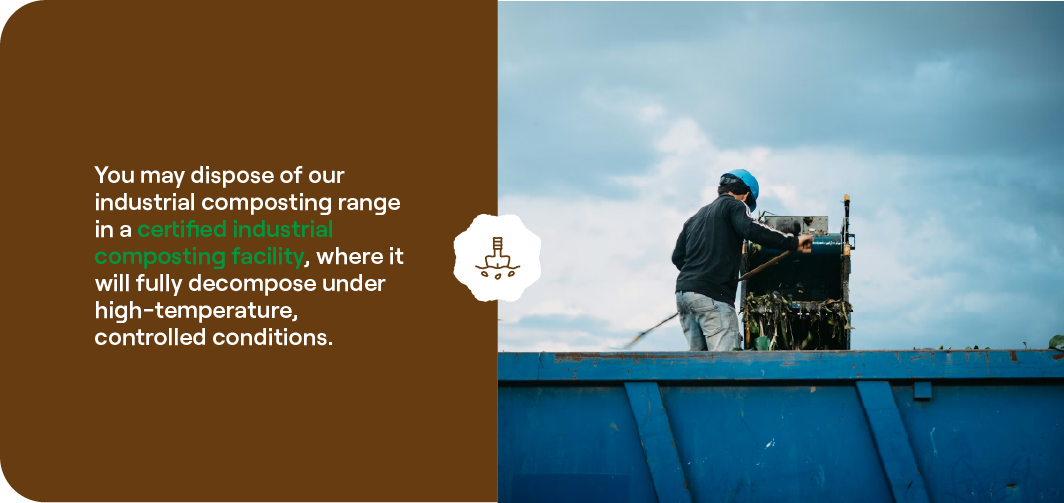
An industrial composting facility is a permitted site that processes food scraps and certified compostable packaging. It manages heat, moisture, and airflow so materials break down under controlled conditions. You’ll also hear these sites called commercial composting facilities.
A search for “commercial composting facility near me” usually returns a mix of processors, haulers, and drop-off sites. Only the processor actually turns your waste into compost. Even a site that takes food scraps may not take packaging.
That difference shapes every step below. You can read how commercial composting works for the full process.
Why Does Facility Access Matter for Compostable Packaging?
A certified compostable cup only becomes compost if a facility accepts it. The BPI compost infrastructure overview reports almost 5,000 composting facilities in the US, but most accept only yard trimmings. That narrows your options for food scraps and packaging.
The Sustainable Packaging Coalition (SPC) offers interactive composting facility maps. They show where facilities are, which accept compostable packaging, and where laws ban food waste from landfills. In those areas, finding a composter matters even more.
BPI also points to contamination as a key concern for composters that already take compostable products. When the wrong items show up in a load, it can push a facility to stop accepting packaging. Matching your products to a facility’s rules protects that access for everyone.
Certification tells a composter what your packaging is designed to do. BPI and TÜV Austria are two certifications you’ll see on compostable foodservice packaging. Our composting certifications guide explains what each one means.
Where Can You Find Industrial Composting Facilities?
No single list covers every site. The best approach combines national maps, state agency lists, and composter or certifier networks. Each source fills gaps the others leave.
Researching commercial composting facilities in the US takes some cross-checking. A listed site may have closed, changed owners, or stopped taking packaging. Use each source to build a short list, then verify every name on it.
National Maps and Directories
The EPA Excess Food Opportunities Map shows businesses that generate excess food and the places that can take it. Those recipients include composting facilities. You can zoom in on your area to see what’s listed nearby.
The SPC composting maps add a helpful layer by showing which facilities accept compostable packaging. Treat any national map as a starting point, then confirm details with the facility.
State Agency Facility Lists
Many state environmental agencies publish lists of permitted or registered compost facilities. These lists typically reflect sites the state has permitted or registered.
Check whether a list notes accepted materials. If it doesn’t, plan to follow up. A quick call to the site usually settles the question.
For one example, see the Illinois EPA permitted compost facilities list. In California, CalRecycle’s Solid Waste Information System (SWIS) search lets you look up sites. To find your state’s list, search your environmental agency’s name plus “compost facilities.”
Composter and Certifier Networks
Composter networks tell you what their member facilities accept. The Compost Manufacturing Alliance (CMA) publishes an accepted items list and an affiliate facility map. Its listings also tag products by the composting technology they work in.
Many operators search for “BPI compostable facilities near me” and expect a certifier-run directory. BPI certifies products, while composters decide what their facilities accept. Pair your BPI-certified packaging with a composter network like CMA to find sites that take it.
Regional Directory of Composting Resources
Coverage varies by region, so your first stop depends on where you operate. Use the resources below alongside the national maps. If you run locations in several states, check each state’s list separately.
Northeast
The Cornell Waste Management Institute publishes a Cornell compost facilities map for New York State. It also covers surrounding states, and you can search by city and state. Pair it with your state environmental agency’s list for permit details.
Midwest
Illinois EPA’s compost facility list shows permitted sites across the state. The Minnesota Pollution Control Agency (MPCA) offers guidance on community composting. Michigan’s Department of Environment, Great Lakes, and Energy (EGLE) publishes a list of registered composting facilities.
West
California operators can use the CalRecycle SWIS search to find permitted sites. City programs in the West often set their own packaging rules.
The WM Portland commercial compost program shows how these rules can change. It now collects only food waste and no longer accepts non-food items, including compostable packaging and utensils. Always check current rules before you order packaging for a city program.
South and Southwest
If your state has no published list, start with the EPA and SPC maps. They show what’s listed in your area. Then check your state environmental agency and call local haulers, who often know which composters take food waste.
How Do Haulers and Drop-Off Programs Fit In?
Haulers and composters do different jobs. BPI describes collection as the programs that move organics from where they’re created to a facility. Processing is the composting itself, and the composter sets the rules on what it accepts.
BPI groups collection into municipal programs, private programs, and drop-off programs. Businesses usually contract a private hauler for regular pickup. Your hauler can tell you which composter receives your material, so ask that question first.
Searches for “compost drop-off near me” or “food scrap drop-off near me” often surface household sites. These can work for small events or pilot programs. Check volume limits and packaging rules before you bring anything.
Event and sustainability managers should confirm the hauler’s composter before the event. Share the accepted items list with every vendor. That way each booth serves packaging the site can take.
Is food your main waste stream? Our guide to food waste composting for businesses covers next steps.
How to Confirm a Facility Accepts Compostable Packaging
A facility listing is only a lead until the composter confirms it. Whether you found it on a map or by searching “food composting near me,” cover these points first. Ask the composter directly, or have your hauler confirm the answers in writing.
-
Confirm which items they accept, such as cups, plates, bowls, clamshells, cutlery, and straws.
-
Ask which certifications they require, such as BPI or TÜV Austria.
-
Ask how they handle contamination and what happens to rejected loads.
-
Get the fees for pickup or drop-off, plus any contamination charges.
-
Confirm pickup frequency, bin types, and who supplies the bins.
-
Request the accepted items list in writing so your staff can follow it.
The CMA accepted items list is a helpful reference when you talk with a CMA affiliate. Our overview of what you can compost helps you sort items before that conversation.
If a composter gives vague answers, keep looking or ask your hauler to check. Once a facility says yes, train staff and label bins to match its list. Our guide to adding compostable packaging walks through the rollout.
What If There Is No Industrial Composter Near You?
Ask your hauler whether it delivers food scraps to a composter outside your area, or join a community program. Where it fits your menu, choose home-compostable items instead. Our guide to packaging without composting access covers each option in full.
Choose Packaging That Matches Your Local Composting Access
Your composter’s accepted items list should guide what you buy. At Greenprint®, we tie each product line to named third-party certifications. That lets you show a composter exactly what you’re sending.
Bring product names and certification marks to your first call with a composter. Clear documentation makes the confirmation step faster and avoids guesswork.
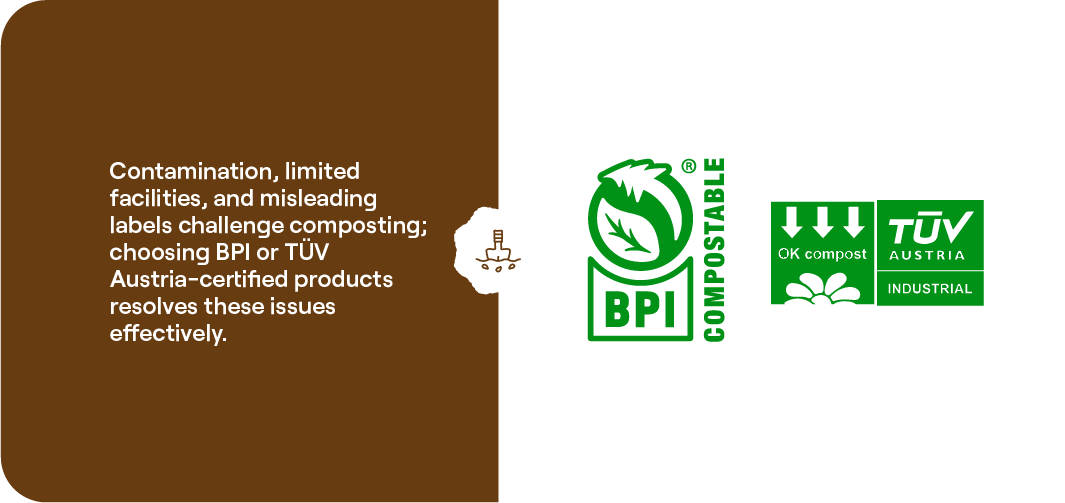
Our straws carry BPI and TÜV Austria OK Compost HOME certification. Our cutlery is BPI certified for commercial composting. Our plates, bowls, and clamshells carry TÜV Austria OK Compost INDUSTRIAL certification.
Our clear cold cups are BPI and TÜV Austria OK Compost INDUSTRIAL certified. You can compare options in our full cup range. If you’re replacing plastic, our list of plastic alternatives for restaurants can help.
The FTC Green Guides call for specific, supported environmental claims. Named certifications help you back up what you tell customers about your packaging. When you’re ready, explore our certified compostable foodservice packaging or contact our team.
FAQ
Is Industrial Composting the Same as Commercial Composting?
Yes, the two terms usually mean the same thing. Both describe permitted facilities that compost food scraps and certified packaging under controlled conditions.
Can Compostable Packaging Go to a Yard Waste Composting Site?
Usually not, because many sites accept only yard trimmings. Check with the facility first, since the composter decides what it accepts.
How Often Should You Recheck a Facility List?
Recheck whenever you change packaging, switch haulers, or renew a hauling contract. Rules change: WM’s commercial compost program in Portland now collects only food waste.
Is There an Industrial Composting Facility in Every State?
Coverage varies widely by state, and some areas have few sites that take packaging. Check the SPC maps and your state environmental agency for current options.
References
- https://bpiworld.org/infrastructure
- https://sustainablepackaging.org/public-resources/compostmaps/
- https://www.epa.gov/sustainable-management-food/excess-food-opportunities-map
- https://epa.illinois.gov/topics/waste-management/permitted-facilities/compost-facilities.html
- https://compost.css.cornell.edu/maps.html
- https://www.wmnorthwest.com/portland/comcompost/
- https://cdn.airops.com/rails/active_storage/blobs/proxy/eyJfcmFpbHMiOnsiZGF0YSI6MjU3ODg3NDg3LCJwdXIiOiJibG9iX2lkIn19--bdafb6919647e5a84fbb61a0898bc3fa6e48afa2/21.%20EPR%20for%20plastics.png
- https://compostmanufacturingalliance.com/partner-facility-locator/
- https://www.ecfr.gov/current/title-16/chapter-I/subchapter-B/part-260


School and campus plastic reduction programs start in the cafeteria. Learn how to audit waste, swap in certified compostables, and build lasting campus policy.

Regenerative farming rebuilds soil health with cover crops, no-till and compost. Learn its principles, benefits and limits, and how food businesses can help.
Is it safe to microwave plastic containers? Learn what heat does to plastic, what the microwave-safe label means, and simple ways to reheat food more safely.