

Is It Safe to Microwave Plastic Containers? What Heat Does


Is It Safe to Microwave Plastic Containers? What Heat Does to It
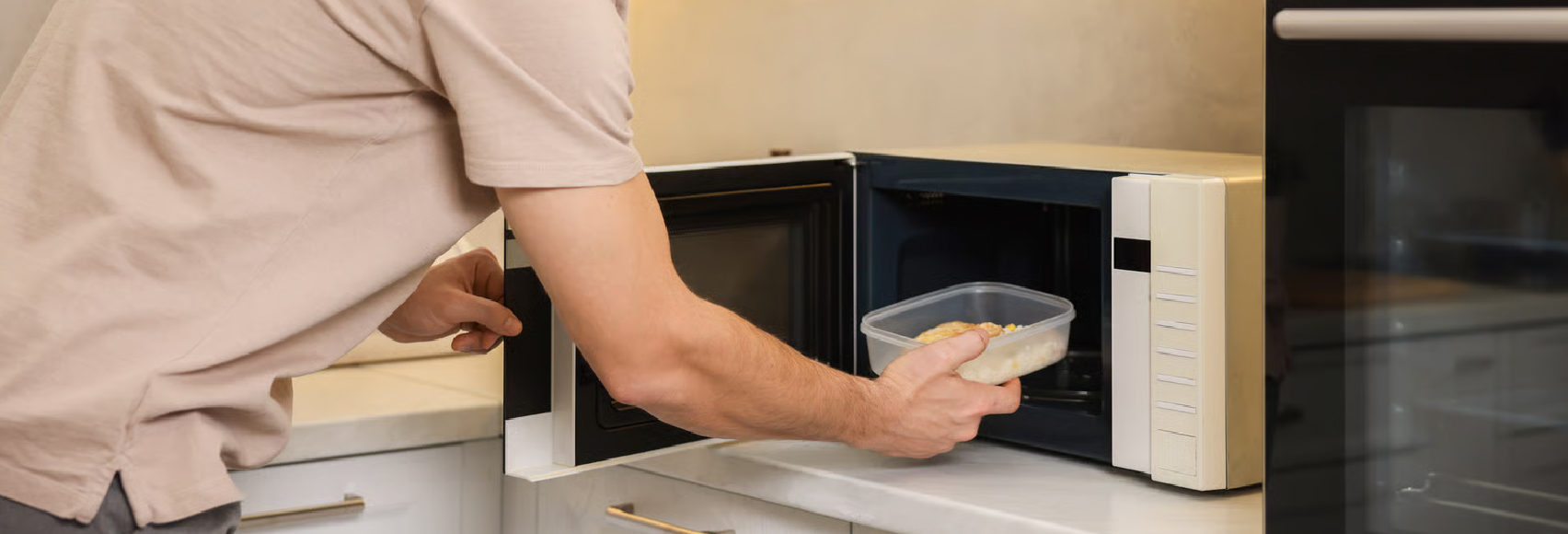
Most of us microwave plastic containers without a second thought. But heat changes how plastic behaves, and that affects what ends up in your food. So is it safe to microwave plastic containers? The honest answer depends on the container, the food, and the container’s condition.
What Happens to Plastic When You Microwave It?
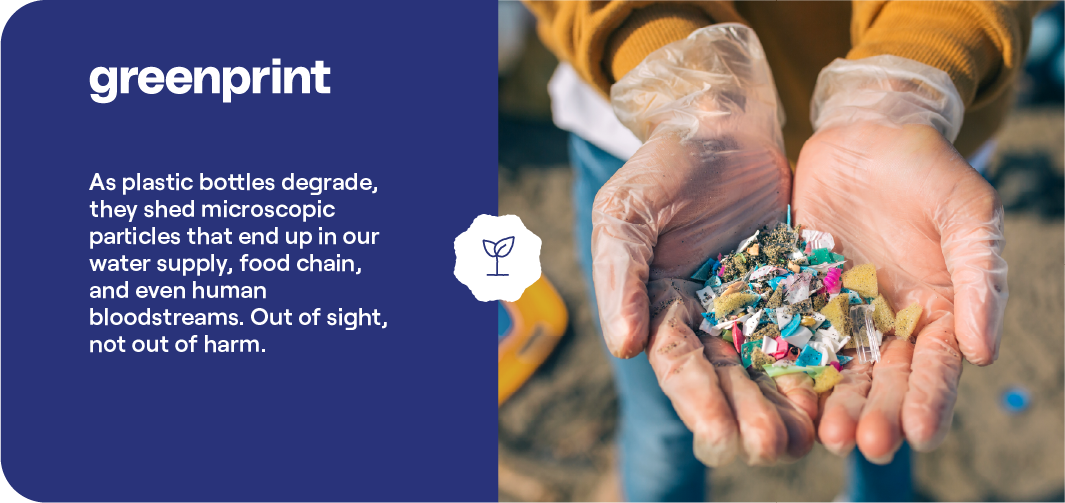
Microwaving can make some plastic shed tiny particles, according to a Nebraska study. USDA also warns that plastic wraps and foam trays that melt or warp may release chemicals into food.
“Migration” is the general term for substances in packaging moving into the food they touch. A 2025 food packaging review notes that the probability of migration rises with temperature. Particle shedding is a separate issue, and it’s where the newest data comes from.
In a 2023 University of Nebraska-Lincoln study, researchers tested two polypropylene baby food containers and one polyethylene pouch. They heated each for 3 minutes at full power in a 1,000-watt microwave.
The study, published in Environmental Science & Technology, reports results per square centimeter of container. Some released as many as 4.22 million microplastic and 2.11 billion nanoplastic particles.
Microwaving released the most particles of any scenario the team tested. The researchers used water and a mild acid as food stand-ins rather than real food.
Heat isn’t the only factor, though. The same study found that storage also released particles. Refrigeration or room-temperature storage for over six months released millions to billions.
So does microwave-safe plastic release microplastics? This study suggests heated plastic can shed particles, but it tested only three products in a lab.
Takeout packaging adds more contact points, which we cover in our guide to microplastics in disposable foodware. To follow these particles past your plate, read how microplastics reach food.
What Does “Microwave-Safe” Actually Mean?
According to Harvard Health, the microwave-safe label means a container passed FDA testing for microwave use. It doesn’t promise that nothing moves from the plastic into your food.
As Harvard Health Publishing’s 2017 explainer describes it, the FDA requires manufacturers to test containers using FDA standards. The FDA then reviews that test data before approving a container for microwave use. Only containers that pass can carry a microwave-safe icon or the words “microwave safe.”
The FDA food contact review assesses food contact substances for their intended use. FDA says the process includes “analyzing testing data” on how much of a substance migrates to food.
Check the bottom of the container or its packaging for the microwave safe symbol or printed words. If you see neither, the container hasn’t been cleared for the microwave.
What about containers with no label? Harvard says they aren’t necessarily unsafe, since the FDA simply hasn’t determined whether they are. Harvard’s article dates to 2017, so check current FDA guidance for regulatory detail.
The label also has limits. It reflects testing for microwave use, while particle release is still being studied. Think of the microwave safe plastic symbol as a minimum bar, not a promise of zero release.
The same label logic applies to plastic wrap. Use only wrap labeled for microwave use, and keep it from touching your food.
Is Microwaving Plastic Bad for Your Health?
Scientists don’t have a final answer yet, and the evidence is still developing. Per Harvard Health, BPA and phthalates “are believed to be” endocrine disrupters, while the FDA reviews migration test data.
The main concern is endocrine disruptors. The NIEHS endocrine disruptor overview says these chemicals may mimic, block, or interfere with the body’s hormones. It lists BPA and phthalates among the most common and well-studied.
BPA is used to make polycarbonate plastics and epoxy resins, according to NIEHS. Polypropylene and polyethylene containers aren’t BPA-based, but “BPA-free” labels raise their own questions. We unpack those in is BPA-free plastic safe.
Phthalates are plasticizers found in some food packaging, per NIEHS. Harvard Health notes that old, scratched, or cracked containers may leach more plasticizers.
For micro- and nanoplastics, the Nebraska researchers say the health effects remain unclear. Their cell experiment used lab-grown cells at high concentrations, so it doesn’t show what happens in people. If you’d like to cut exposure now, start with our everyday microplastic reduction tips.
One old warning you can set aside is the dioxin myth. Harvard Health explains that plastics don’t contain dioxins, which form when materials are burned.
A Johns Hopkins researcher has also called the dioxin claim an urban legend. NIEHS describes dioxins as a byproduct of processes like herbicide production and paper bleaching.
So is microwave safe plastic really safe? It meets the FDA’s review bar, but research on long-term effects is still catching up. Cutting back on heated plastic is a reasonable step while research continues.
Which Plastic Containers Should Never Go in the Microwave?
Skip the microwave for any plastic that wasn’t made for heating. USDA guidance names several common examples.
-
Cold-storage tubs for margarine, cottage cheese, and yogurt aren’t approved for cooking, per USDA FSIS microwave guidance.
-
Single-use takeout containers and other one-time-use containers should stay out, according to a USDA microwave safety leaflet.
-
Plastic wrap shouldn’t touch your food, even when the wrap is labeled for microwave use, per USDA.
-
Old, scratched, or cracked containers may leach more plasticizers, according to Harvard Health.
USDA warns that foam trays and plastic wraps that melt or warp may let harmful chemicals migrate into food. That’s one more reason to keep wrap off your food.
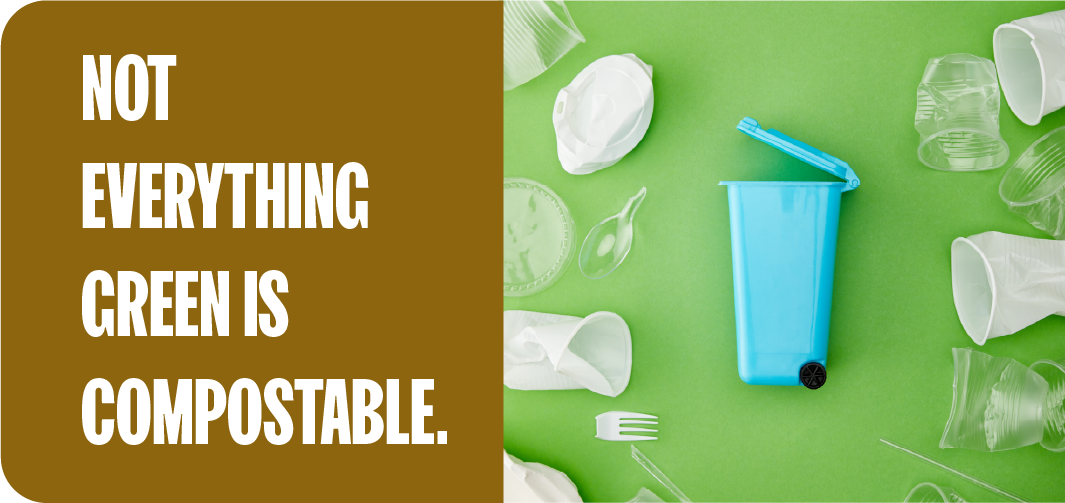
Can you microwave plastic takeout containers? Only if the package says so. The American Osteopathic Association says frozen-meal trays are “intended for one-time use only,” and Harvard Health agrees.
Can you put plastic Tupperware in the microwave? USDA says plastics that are safe to use “usually will be labeled for microwave oven use.” Look for that label before heating a reusable container.
Foam containers follow the same label rule, and foam raises its own concerns, covered in are Styrofoam cups safe. Per ASTM D7611, resin codes are “used solely to identify the plastic resin,” so they aren’t heat ratings. Our plastic resin code guide explains the full system.
If you run a restaurant, your customers may reheat food in whatever box you hand them. Our roundup of plastic alternatives for restaurants covers other to-go materials.
How to Reheat Food More Safely
A few small habits lower your exposure without changing your routine much. Most take less than a minute.
-
Move food to glass or ceramic dishes labeled for microwave use, as Harvard Health advises.
-
Leave enough space so plastic wrap doesn’t touch the food, as USDA advises.
-
Loosen or vent the lid or wrap to allow steam to vent, per USDA FSIS.
-
Retire scratched or cracked containers, since Harvard says worn plastic may leach more plasticizers.
-
Never reheat in cold-storage tubs or one-time-use takeout containers.
Can you microwave a plastic container with the lid on? Yes, if both are labeled microwave safe. USDA says to cover the dish, then loosen or vent the lid so steam can escape.
For restaurant operators, we suggest a short printed note on to-go bags. Something like “Transfer to a microwave-safe dish before reheating” puts these steps in your customer’s hands.
The same heat questions apply to hot drinks. Our look at microplastics in hot cups explores the same questions for cups.
What Are Safer Alternatives to Plastic Containers?
At home, glass and ceramic labeled for microwave use are the simplest swap. They let you reheat leftovers without plastic touching hot food.
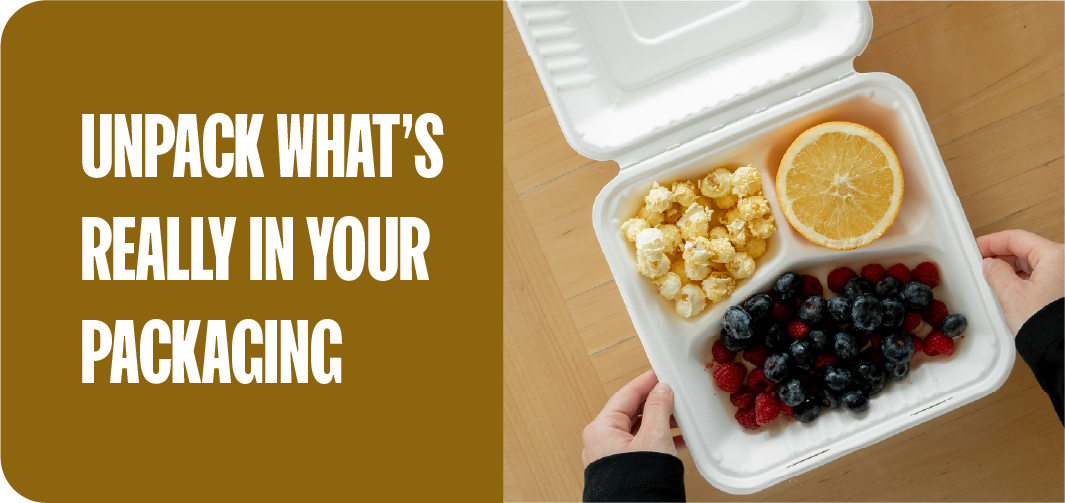
For restaurants and caterers, the question shifts to takeout packaging. Plant-fiber containers take plastic out of the box your customer carries home.
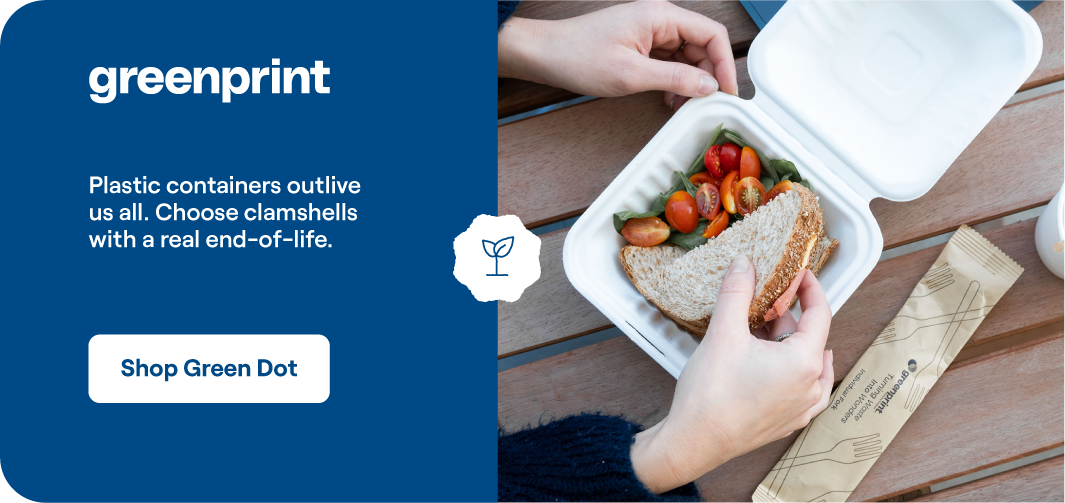
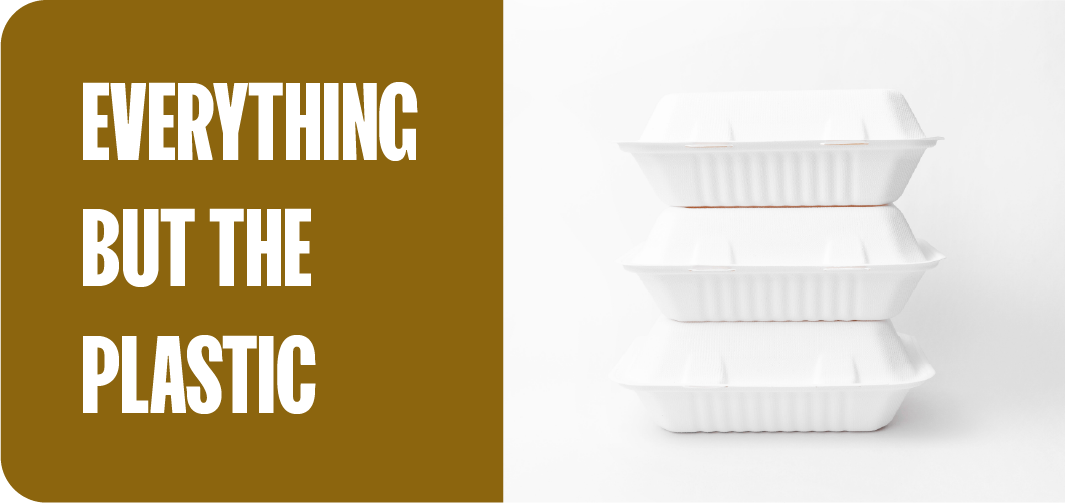
Our Greenprint® Fiberware™ line is made from bagasse, a fiber left over from sugarcane processing. Fiberware™ bagasse clamshells have no plastic lining or coating. Plates and bowls in the same line use the same bagasse material.
Intertek tested Fiberware™ for 30 PFAS compounds, and all were Not Detected. That gives your procurement team third-party documentation, not just a label. Our guide to PFAS testing and certifications covers that testing in more depth.
Fiberware™ holds TÜV Austria OK Compost INDUSTRIAL certification under the EN 13432 standard. Following the FTC Green Guides, we call it industrially compostable. It needs a commercial composting facility at 55 to 60°C, not a backyard bin.
We aren’t making microwave claims for Fiberware™ in this article. If your menu involves reheating, ask our team about specific products.
Your container choice also shapes what customers do next. Pair fiber packaging with a short reheating note so food moves to a plate before it’s heated.
Option | Made from | Best fit | What to know |
|---|---|---|---|
Glass or ceramic labeled microwave safe | Glass or ceramic | Home reheating | Use only dishes labeled for microwave use. |
Plastic labeled microwave safe | Plastic resin | Home reheating | Passed FDA review; particle release is still being studied. |
Greenprint® Fiberware™ clamshells | Bagasse (sugarcane fiber) | Restaurant takeout | No plastic lining; TÜV Austria OK Compost INDUSTRIAL. |
If you’re replacing plastic or foam to-go boxes, browse our plastic-free fiber takeout containers. Sizes include 6×6, 8×8, and 9×9 clamshells, a hoagie box, and a 3-division taco box.
FAQ
Does Microwaving Plastic Cause Cancer?
No research we reviewed shows that microwaving plastic causes cancer, and Harvard Health notes plastics don’t contain dioxins. Health effects of micro- and nanoplastics are still unclear, so limiting heated plastic is a reasonable precaution.
What Happens If You Accidentally Microwave Plastic With Food?
Per USDA, chemicals may migrate from melted or warped foam and wrap, so discard that food as a precaution. If the plastic looks unchanged, switch to glass or ceramic next time.
Is Plastic #5 Microwave Safe?
Resin numbers like #5 identify the plastic type for recycling. The American Osteopathic Association notes they don’t indicate heat safety, so look for a microwave-safe label instead.
Can You Microwave Plastic Takeout Containers?
Only if the package says it’s microwavable, and then only as directed. USDA advises against reheating in one-time-use takeout containers, so transfer food to a labeled glass or ceramic dish.
References
- https://pmc.ncbi.nlm.nih.gov/articles/PMC12096275/
- https://news.unl.edu/article/nebraska-study-finds-billions-of-nanoplastics-released-when-microwaving
- https://www.health.harvard.edu/healthy-aging-and-longevity/microwaving-food-in-plastic-dangerous-or-not
- https://www.fda.gov/food/food-ingredients-packaging/food-packaging-other-substances-come-contact-food-information-consumers
- https://www.niehs.nih.gov/health/topics/agents/endocrine
- https://www.fsis.usda.gov/food-safety/safe-food-handling-and-preparation/food-safety-basics/cooking-microwave-ovens
- https://www.fsis.usda.gov/node/3355
- https://osteopathic.org/what-is-osteopathic-medicine/microwaves-and-plastics/


Regenerative vs organic farming compared, covering USDA organic rules, regenerative goals, and ROC labels. See what each label proves before you source food.

Use menu engineering to reduce food waste with five practical steps. Track waste, cost dishes, share ingredients, and right-size portions to protect margins.

The Vermont plastic ban covers bags, straws, stirrers, and foam containers. See what Act 69 requires, what is exempt, and how your business can comply.