

PLA vs. Bagasse vs. Paper: Best Compostable Cup Guide


Content
- Key Takeaways
- Why Your Cup Material Choice Matters More Than You Think
- What Are PLA, Bagasse, and Paper Compostable Cups?
- Which Compostable Cup Handles Hot Coffee Best?
- Compostability Claims vs. End-of-Life Reality
- PFAS-Free Cups and Food Contact Safety
- Cost, Durability, and Everyday Restaurant Use
- Side-by-Side Comparison Table for PLA, Bagasse, and Paper Cups
- Which Compostable Cup Fits Your Restaurant?
- Plastic Bans, PFAS Laws, and What They Mean for Your Cups
- Find the Right Compostable Cup for Your Business With Greenprint®
- Frequently Asked Questions About Compostable Cups
PLA vs. Bagasse vs. Paper: Choosing the Right Compostable Cup
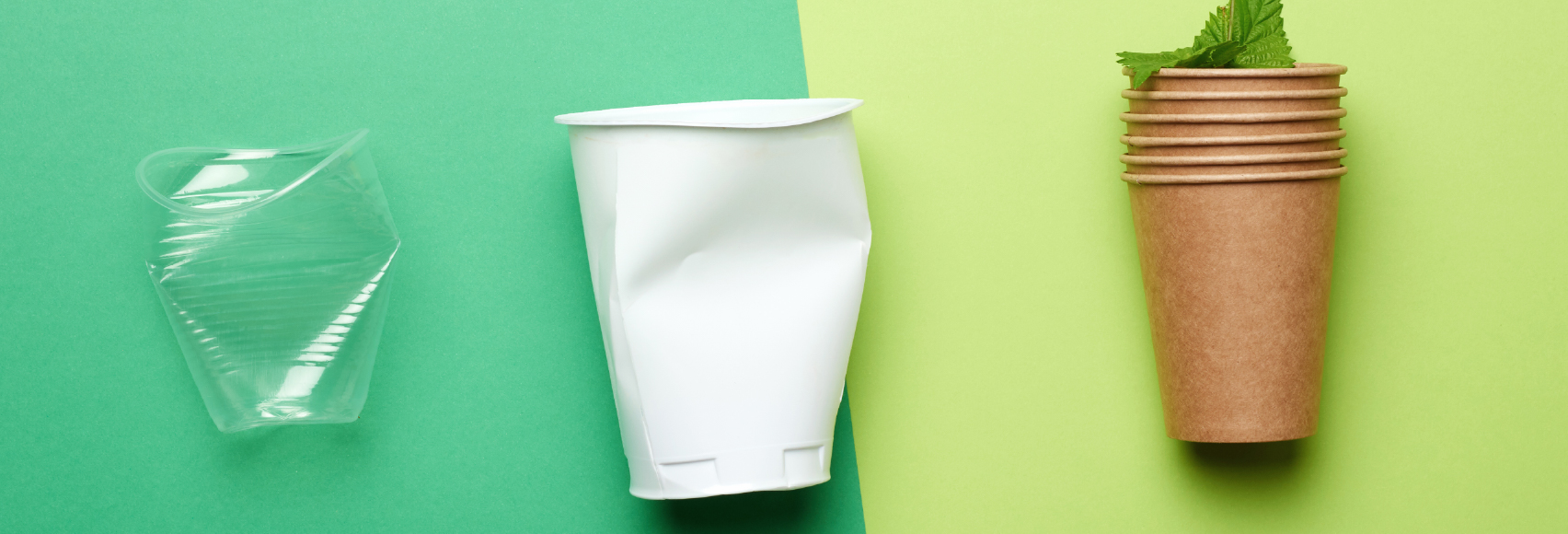
Choosing the right compostable cup for your restaurant means matching the material to your menu, your local waste systems, and the regulations in your area. This guide breaks down the three most common compostable cup materials, compares their real-world performance, and helps you make a confident purchasing decision.
Key Takeaways
- Paper, PLA, and bagasse cups each serve different purposes. The right choice depends on whether you’re serving hot or cold beverages and what composting infrastructure exists near you.
- A “compostable” label alone doesn’t guarantee a cup will break down properly. Third-party certifications; such as BPI Commercial Compostability or TÜV Austria OK Compost INDUSTRIAL; separate verified claims from marketing language.
- PFAS-free verification through independent lab testing is critical for food-contact cups. Self-declared claims don’t carry the same weight as documented testing under FTC Green Guides.
Why Your Cup Material Choice Matters More Than You Think
The wrong compostable cup can warp during service, expose your business to emerging PFAS regulations, or end up in a landfill because it doesn’t match your local composting infrastructure. This makes cup material selection a business decision, not just an environmental one.
Think about what happens when a cup fails. A customer’s hot latte collapses in their hand. An iced drink sweats through onto their table. These moments cost you trust. They also cost you money in replacements and complaints.
Beyond daily service, your cup choice affects compliance. States across the country are passing laws that restrict PFAS in food packaging, and the FTC Green Guides set standards for how environmental claims about packaging must be substantiated. If your cups haven’t been tested, you may not be able to prove they meet new requirements. Choosing verified products now protects you from scrambling later.
Compostable paper cups, PLA cups, and bagasse cups all have different strengths. A cup that works perfectly for iced tea may fail with hot espresso. A cup labeled “compostable” may require an industrial facility that doesn’t exist in your area. Understanding these differences before you place an order saves you money and keeps your operation running smoothly.
What Are PLA, Bagasse, and Paper Compostable Cups?
Three materials dominate the compostable cup market. Each one takes a different approach to replacing conventional plastic. Let’s define what these materials actually are before we compare their performance.
Paper Cups and Their Inner Linings
Paper cups are made from paperboard, but they need an inner lining to hold liquid without leaking. The lining material determines whether a paper cup is compostable, recyclable, or neither.
Traditional paper cups use a polyethylene (PE) plastic lining. This is the shiny coating you feel on the inside. PE makes cups water-resistant, but it also makes them difficult to recycle and impossible to compost.
Bio-coated paper cups replace that PE lining with a plant-based coating. This creates a cup that’s verified plastic-free. Our Renewacups™ line uses bio-coated paper that has earned Flustix/Control Union plastic-free verification. The cup contains virtually no conventional plastic, giving it a clear composting and recyclability pathway.
PLA Cups Made From Plant-Based Bioplastic
PLA stands for polylactic acid. It’s a bioplastic made from plant starches like corn. This means it comes from renewable sources rather than petroleum.
PLA is most commonly used for clear cold cups; often paired with compostable straws; because it offers the transparency of conventional plastic. You get that polished, professional look for iced coffees and smoothies. However, standard PLA has a low heat threshold. Hot liquids will cause it to warp or deform, so it’s only suitable for cold beverages.
Our Clearly Compostable™ cups are made from PLA and bio-based materials. They’re designed for iced drinks and cold beverages. Certifications for this product line are currently in progress, so we describe them by material and intended use rather than making specific compostability claims.
Bagasse Cups Made From Sugarcane Fiber
Bagasse is the fibrous material left over after sugarcane stalks are crushed to extract juice. It’s a byproduct of sugar production, which means using it for foodware gives agricultural waste a second life.
Molded bagasse products have a natural heat tolerance and a sturdy feel that customers notice. The material provides good insulation, making it practical for hot food and beverages.
Our Fiberware™ line of clamshells, plates, and bowls is made from sugarcane bagasse. This line carries TÜV Austria OK Compost INDUSTRIAL certification. Bagasse cups in general are valued for their rigidity and premium feel compared to paper alternatives.
Which Compostable Cup Handles Hot Coffee Best?
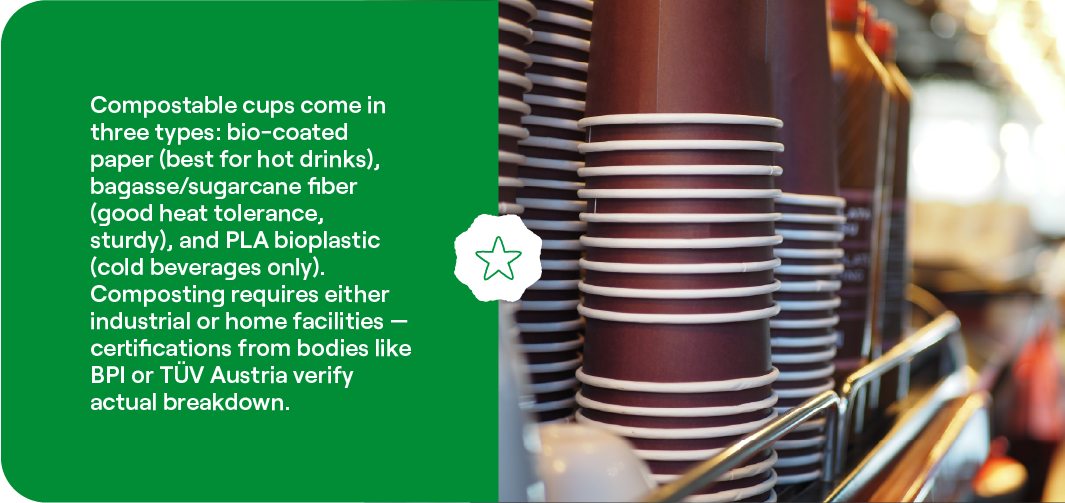
Bio-coated paper cups perform best for hot beverages. Bagasse comes second. PLA cups are not designed for hot liquids at all.
This is the most important distinction if your menu centers on coffee, tea, or soup. Here’s how each material handles heat:
- Bio-coated paper: Handles hot beverages reliably. Our Renewacups™ have been tested and documented as migration-safe for hot beverage use, meaning the bio-coating remains stable at serving temperatures.
- Bagasse: Provides good insulation and holds up well with hot contents. Its natural fiber structure makes it sturdy for soups and hot drinks.
- PLA: Will warp or deform with hot liquids. It’s designed exclusively for cold beverages.
PLA’s heat limitation isn’t a flaw. It’s simply a material characteristic. If you’re serving cold beverages, PLA performs well. But if hot coffee is your core business, paper or bagasse is where you should focus.
Compostability Claims vs. End-of-Life Reality
A “compostable” label on a cup doesn’t mean it will break down in every environment. The composting pathway depends on the specific material and whether the product carries a verified certification.
There are two main types of composting, and they work very differently:
- Industrial composting: Requires sustained high temperatures and controlled conditions found only at commercial facilities. Standard PLA typically requires industrial composting conditions; BPI tests disintegration at 58 ±2°C; to break down fully.
- Home composting: Happens at lower temperatures in a backyard bin. Products certified for home composting must meet stricter standards because conditions are less controlled.
The distinction matters because industrial composting facilities aren’t available everywhere. If your local waste system doesn’t include one, a cup certified only for industrial composting may end up in a landfill despite its label.
This is why certifications from recognized bodies like BPI or TÜV Austria, the world market leader in bioplastics certification, are essential. They verify that a product actually breaks down under the specific conditions claimed on the packaging. Without certification, a “compostable” claim is just marketing language; and may not comply with FTC Green Guides.
PFAS-Free Cups and Food Contact Safety
PFAS are a group of synthetic chemicals often called “forever chemicals.” They’ve historically been used in food packaging for grease and moisture resistance. The problem is they don’t break down easily in the environment and have raised significant health concerns.
States across the U.S. are passing laws to restrict or ban PFAS in food-contact materials. This is where verified testing matters most.
Many brands self-declare their products “PFAS-free.” But self-declarations don’t carry the same weight as independent lab verification; BPI, for example, requires certified products to test below 100 ppm total organic fluorine. Under FTC Green Guides, claims about what a product doesn’t contain need competent and reliable scientific evidence.
Our Renewacups™ have undergone Intertek-verified PFAS testing using both LC-MS/MS and GC-MS methods. Every compound tested came back as not detected. This gives operators documented proof for procurement reviews, inspections, and ESG reporting.
For our Clearly Compostable™ cups, PFAS verification has not yet been completed. We don’t make PFAS-free claims for that product line until testing is documented.
Cost, Durability, and Everyday Restaurant Use
Sustainable cups need to work during service, not just in a composting facility. A cup that collapses in a customer’s hand creates a poor experience regardless of its environmental credentials.
Here’s how the three materials compare in practical terms:
- Bio-coated paper: Generally the most cost-accessible option for hot cups. Lightweight, familiar to customers, and performs reliably for standard coffee and tea service; pair them with agave stirrers for a complete setup.
- Bagasse: Slightly higher cost due to the molding process, but offers a premium feel and natural insulation. Works well when you want a sturdier cup.
- PLA: Competitive pricing for cold cups. Provides the clear, polished look customers expect for iced drinks and smoothies.
Your customers notice packaging quality. A well-made compostable cup signals that you care about their experience. It’s a small detail that builds trust and loyalty over time.
Side-by-Side Comparison Table for PLA, Bagasse, and Paper Cups
| Feature | Bio-Coated Paper (Renewacups™) | PLA (Clearly Compostable™) | Bagasse |
|---|---|---|---|
| Material Source | Bio-coated paperboard | Plant-based bioplastic (corn starch) | Sugarcane fiber (agricultural byproduct) |
| Best Use | Hot beverages | Cold beverages | Hot beverages, soups |
| Heat Tolerance | High (migration-safe for hot use) | Low (will deform with heat) | Moderate to high |
| Composting Pathway | Industrial and home compostable (supplier material certified) | Industrial composting (certifications pending) | Composting certification depends on specific bagasse cup product (Fiberware™ clamshells, plates, and bowls carry TÜV Austria OK Compost INDUSTRIAL) |
| PFAS Status | Intertek verified, all compounds not detected | Verification pending | Verification status depends on specific bagasse cup product (Fiberware™ clamshells, plates, and bowls are Intertek verified) |
| Relative Cost | Cost-accessible | Competitive for cold cups | Moderate |
| Customer Perception | Familiar, lightweight | Clear and polished | Sturdy, premium feel |
Which Compostable Cup Fits Your Restaurant?
The best compostable cup for your business depends on what you’re serving and how your local waste system works. Here are practical scenarios to guide your decision:
- Coffee shops and cafés serving primarily hot drinks: Bio-coated paper cups like Renewacups™; paired with sipping lids; are your best match. They handle heat reliably and carry verified PFAS-free documentation.
- Smoothie bars and iced beverage operators: PLA cold cups with matching lids give you the clear, attractive presentation your customers expect. Our Clearly Compostable™ cups are designed for this exact use case.
- Restaurants with soup, hot chocolate, or mixed menus: Bagasse cups; served with agave spoons for soups: offer the insulation and rigidity that heavier, hotter contents demand.
- Operators in areas with industrial composting access: You can confidently use options carrying specific compostability certifications (such as TÜV Austria OK Compost INDUSTRIAL or BPI Commercial Compostability), knowing there’s infrastructure to process them.
- Operators in areas without composting facilities: Focus on cups with recyclability pathways or specific home compostability certifications (such as TÜV Austria OK Compost HOME) to avoid products that end up in a landfill.
Plastic Bans, PFAS Laws, and What They Mean for Your Cups
States across the U.S. are passing legislation that restricts single-use plastics and limits PFAS in food-contact packaging. These laws are accelerating, and operators who wait to adapt risk compliance penalties and supply chain disruptions.
Choosing cups with specific third-party certifications; such as TÜV Austria OK Compost INDUSTRIAL or BPI Commercial Compostability; and documented PFAS testing protects your business before regulations reach your market. Our Renewacups™ come with Intertek PFAS verification and Flustix/Control Union plastic-free certification. This documentation satisfies procurement requirements and regulatory inspections.
Having paperwork on hand turns a potential compliance headache into a competitive advantage. When inspectors or corporate buyers ask for proof, you’ll have it ready.
Find the Right Compostable Cup for Your Business With Greenprint®
The right compostable cup isn’t one-size-fits-all. It depends on your beverage menu, your local waste infrastructure, and the regulations shaping your market. At Greenprint®, we designed our cup lines to give you distinct, verified options for both hot and cold service.
Explore our cup lines at greenprintproducts.com/our-store to see which products match your operation. Or contact our team at greenprintproducts.com/contact for guidance on choosing the right cup for your specific needs.
Frequently Asked Questions About Compostable Cups
Can PLA cups handle hot coffee without warping?
No. Standard PLA has a low heat threshold and is designed for cold beverages only. Hot liquids will cause PLA cups to warp or deform, making them unsuitable for coffee, tea, or soup service.
Are bagasse cups certified for home composting or industrial composting?
It depends on the specific product’s certification. Our Fiberware™ line carries TÜV Austria OK Compost INDUSTRIAL certification, meaning it requires a commercial composting facility. Always check the product’s specific certification before making disposal claims to your customers.
Do conventional paper cups release microplastics into beverages?
Conventional paper cups with polyethylene (PE) plastic linings can shed microplastics into beverages. Bio-coated alternatives like our Renewacups™ are verified plastic-free through Flustix/Control Union certification, eliminating the PE lining that causes microplastic release.


Microplastics in common disposable foodware shed into hot food and drinks. Learn the top sources, the health questions, and compostable options you can trust.

Material traceability tracks raw inputs from source to finished product. See how chain of custody, certification, and testing back your sustainability claims.
Of the nearly eight million tons of plastic waste, plastic straws make up about 4% of that total . They are also among the top 10 contributors to ocean marine debris. Plastic straws are not recyclable, partly because of their size but also because most are tossed into the trash and end up in a landfill.